

SASKATOON — Canadian farm groups are crossing their fingers as Canadian Prime Minister Mark Carney crosses the ocean.
Carney is travelling to China from Jan. 13-17, where he will be meeting with Chinese President Xi Jinping, Premier Li Qiang and other Chinese government and business leaders.
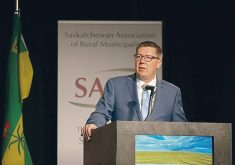
Saskatchewan Premier Scott Moe is joining Carney in China.
Read Also
Strong Turkish durum crop could boost exports
Turkey has a big durum crop on the way and could be competing with Canada again in the export market.
The purpose of the trip is to elevate engagement on trade, energy, agriculture and international security.
That’s music to the ears of Canadian farmers, who’ve been shut out of the lucrative Chinese market for some of the key products they produce.
WHY IT MATTERS: China is a top market for Canadian canola and peas.
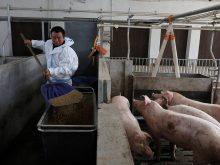
On March 20, 2025, China’s State Council Tariff Commission imposed a 100 per cent tariff on Canadian peas, canola oil and canola meal as well as a 25 per cent tariff on pork and seafood.
On Aug. 14, 2025, China’s Ministry of Commerce imposed a 75.8 per cent duty on Canadian canola seed shipments.
This will be the first visit to China by a Canadian prime minister since 2017.
The relationship between the two countries has been frayed since 2018, when Canada detained Huawei executive Meng Wanzhou at the behest of the United States.
Tensions escalated in 2024 when Canada imposed a 100 per cent tariff on Chinese electric vehicles and a 25 per cent tariff on Chinese steel and aluminum in alignment with U.S. duties on those same products.
However, the temperature appears to have turned down a bit lately, and Canadian farm groups are expressing optimism that the two sides are at least talking.
“This is the beginning of a potential thawing, the prime minister being invited to China is indicative of that in and of itself,” said Rick White, president of the Canadian Canola Growers Association.
“We have known from the start that this problem that we have with canola is a political issue and it requires a political solution.”
He doesn’t know what to expect from this trip and he doubts that Carney does either, but it is important to initiate high-level dialogue on the tariff issues.
White said it is impossible to quantify how much of the 2025-26 canola price drop is due to China’s tariffs.
“It can’t be helping prices, put it that way,” he said.
There is a mounting urgency to resolve the issue, as evidenced by all the canola still stashed away in grain bins across Western Canada.
“There’s a new crop going in in about three months, and farmers need stability here,” said White.
Other farm groups are also sensing that relations between the two countries are improving.
Pulse Canada attended the Canada China Business Council’s 2025 Agri-Food Mission to Beijing and Shanghai in November.
Industry officials said it was evident that the two countries have made visible efforts to rebuild their bilateral relationship over the past several months.
“Both Canadian and Chinese official spoke more positively than they have in years, setting a clearer stage for engagement,” Pulse Canada stated in an insider article following the trip.
“While the 100 per cent tariff on Canadian peas remains in place, the diplomatic climate for dispute-resolution discussions has materially improved.”
In discussions with China’s pea fractionators, Pulse Canada learned that Canadian pea inventories are nearing depletion, forcing China to rely on peas from other suppliers.
Pulse Canada noted that Chinese officials emphasized that their tariffs remain tied to broader political issues and they are waiting for Canada to signal a next step.
“The indication that Canada is now preparing such a framework represents a positive development,” stated the organization.
China’s 100 per cent tariff on Canadian peas has taken a toll on sales. Exports were 1.08 million tonnes through week 22 of the 2025-26 crop year, a 21 per cent decline from the same period a year ago.
“However, the combination of three factors — improving diplomatic relations, growing pressure on Chinese fractionators and active engagement from Canadian officials — creates a more favourable context than we have seen in several years,” said Pulse Canada.
“These signals do not guarantee outcomes, but they matter. They shape the negotiating space, position peas as a logical starting point for progress and ensure that growers’ interests remain central as discussions evolve.”