

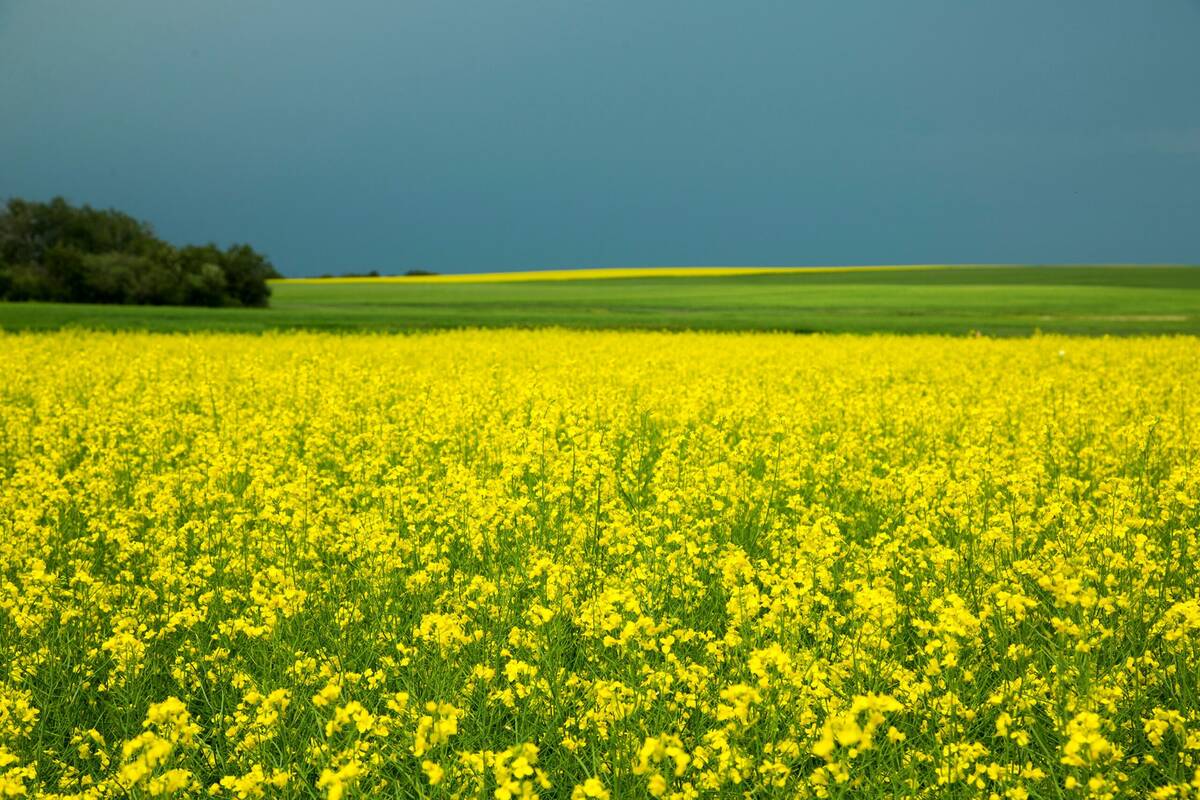
Canola’s yield plateau isn’t just a weather story, says BASF agronomist Clinton Jurke.
Management decisions, particularly around nutrients, may be playing a bigger role than many growers realize.
Why it Matters: Canola yields have stalled across the Prairies, and research suggests management choices, especially around fertility and input intensity, may be reinforcing that plateau.
Read Also

Tips on getting your planter ready for spring planting
Eric Bossuyt with AgWest offers tips on what growers should check on their planter before heading into the field for planting season.
Canola yields across the Prairies have largely stopped climbing over the past decade, settling into an average in the low 40 bushels per acre range after years of steady gains.
Yield data since 2016 show similar flattening across spring wheat, barley and field peas, suggesting a broader constraint affecting cool-season crops. Weather is the explanation most often cited for the slowdown, and Jurke doesn’t dispute it.
“Weather caused the plateau,” Jurke told an audience at the Manitoba Agronomists Conference late last year.
“But why was it 40? Why was it not 42, 45 or 50? That’s where things become more interesting.”
Jurke, who previously worked with the Canola Council of Canada, said at a national level, fertilizer-use surveys show average fertility programs appear calibrated to maintain the plateau rather than push beyond it.
He stressed this is not a criticism of individual farms. Fertility strategies vary widely across the Prairies, and many growers are already managing for higher yield potential.
“But at a macro level, this is what we’re feeding,” he said.
“We’re at the 40 bu. mark because we’re feeding a 40 bu. crop.”
The complete package
That pattern is reinforced by long-term research.
A multi-year study led by Agriculture Canada in the 2010s compared canola systems using what researchers described as a “full package” and an “empty package” of inputs.
The full-package system combined strong genetics, higher seeding rates, adequate fertility and robust weed control. The empty-package system did the opposite, cutting seed quality, fertilizer and herbicide use.
The results were clear. Full-package systems produced the highest yields and the strongest profitability.
When inputs were dialed back, yields declined, but profitability often fell even faster. Cutting fertility caused the largest yield penalty of all.
“This is an important realization, and why I like to communicate this particular study,” said Jurke.
Reducing inputs can feel like prudent risk management, particularly when weather-driven uncertainty is high, but Jurke said the data suggest that approach often works against growers in canola, which responds best when best management practices are applied together rather than selectively.
Jurke said the contrast is evident when looking at how canola responded to hybridization and herbicide tolerance in the late 1990s and early 2000s, compared with its struggle to break out of the current range.
The tools that drove earlier gains are still in place, but they only deliver when growers are willing to invest across the full management package.
“Anytime we have growers considering dialing back, they’re potentially putting themselves in a situation where they’re reducing their productive capacity,” Jurke said.
Factors beyond fertility also contribute to yield drag.
National data suggest disease pressure, including blackleg and verticillium stripe, is trimming a couple of bushels from average yields. Tight rotations add further pressure because shorter breaks between canola crops increase stress and reduce resilience.
Jurke said the broader lesson remains straightforward. Managing conservatively may reduce risk in the short term, but it can also lock the crop into a lower-yield, lower-return equilibrium.