


SASKATOON — The grain market outlook for 2026 does not look a whole lot better than 2025 right now, says an analyst.
Western Producer markets desk analyst Bruce Burnett is slightly more optimistic about the cereal crop outlook than he is about oilseeds and pulses.
Nearby wheat futures continue to flirt with contract lows as 2025 draws to a close, so there is not a lot of downside potential.
Read Also
Red lentils priced higher than large greens
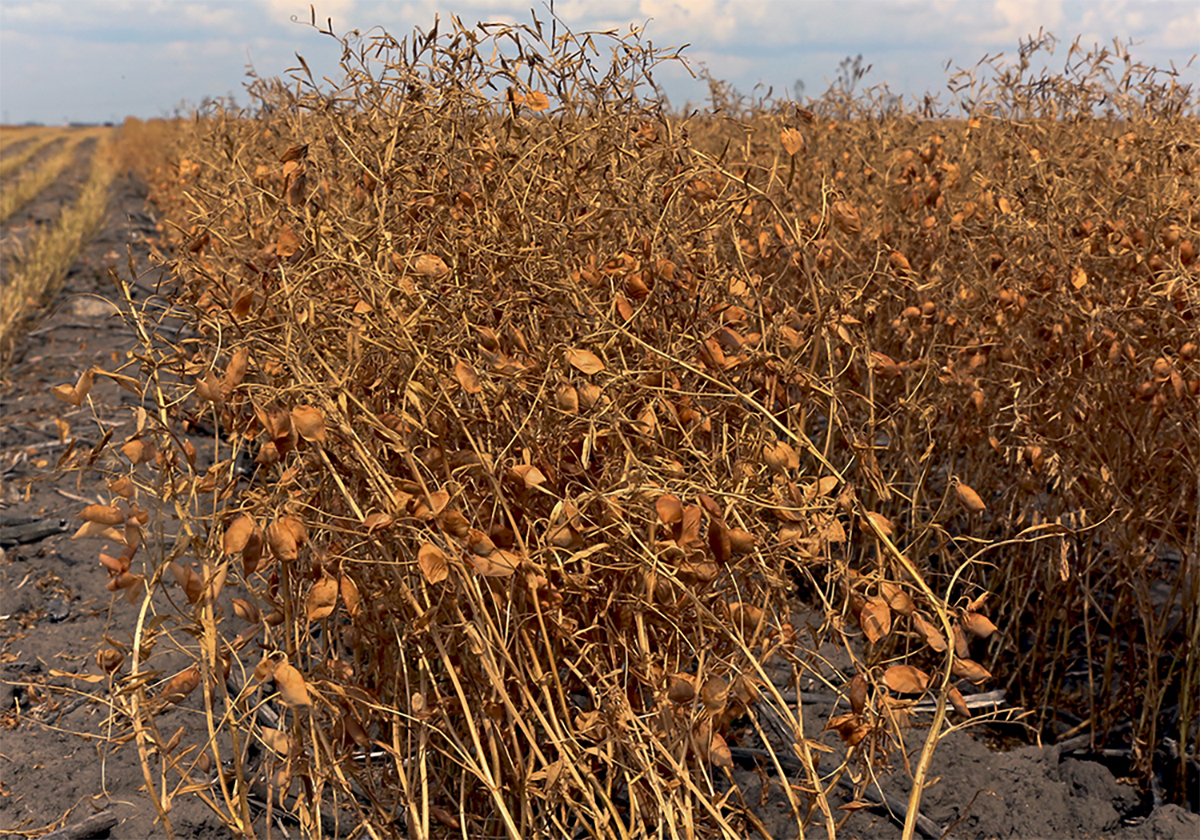
Red lentil prices have eclipsed large green lentil prices for the first time since 2014.
“Prices should move higher in the first months of (2026) because all the bad news is in,” he said.
And then the market will turn its attention to the 2026 crop.
U.S. winter wheat area will likely be down and there are winterkill concerns in the Black Sea region, but probably not enough to shift the bearish market sentiment.
The good news is that demand is strong. Canadian wheat has been leaving the country at a record pace, but there will still likely be a burdensome carryout of the crop.
If the 2026 global wheat crop is smaller than it was in 2025, prices should level out or even climb somewhat, but don’t expect fireworks.
“Are we going back to levels of two or three years ago? Not with the current fundamentals,” said Burnett.
Why it Matters: Winter is decision-making time for farmers contemplating what to plant.
U.S. corn acres are forecast to fall. The U.S. Department of Agriculture is calling for 95 million acres, down from 98.7 million last year.
Like wheat, corn has been seeing strong demand that is helping prop up prices.
Burnett thinks there could be a small corn rally over the next two to three months. However, that will depend on whether the USDA drops its 2025-26 U.S. production and carryout estimates in its January report as some in the trade are anticipating.
The hope is that the ending stocks estimate falls below 1.9 billion bushels from the December forecast of 2.03 billion.
The barley market will be closely linked to corn prices. The surprisingly strong early-season barley exports will likely cool down in the coming months as Australia’s crop is exported.
Canada’s domestic feed market is strong because U.S. corn is priced too high.
The oat market is its “own animal” this year.
“Oats are probably going to be pretty independent of any market because of the fact that we have this large crop that we’re going to have to chew through,” said Burnett.
The same can be said for durum. Exports have been good, but carryout will be substantial due to the massive crop Canadian farmers produced.
Some durum will find its way into feed channels, but that could take some time.
Burnett sees flat durum prices despite growers switching out of durum and into competing crops next year.
His canola outlook could be summarized in two words.
“Who knows?” he said.
Prices will remain under pressure given the current bloated carryout projections.
He doesn’t anticipate any type of rally unless China drops its tariffs on Canadian seed, oil and meal. If that happens, the outlook would be entirely different.
Burnett doesn’t think anything will happen with China until the Canada-United States-Mexico Agreement has been reviewed, which is scheduled to wrap up on July 1, 2026.
On a global scale, he expects more canola/rapeseed production in the European Union and the Black Sea, which won’t help matters.
Canada’s canola acres will likely fall because there will be plenty of product stashed away in bins come seeding time.
Canola will not be getting much help from other oilseeds.
Brazil has another record soybean crop on the way, and the USDA is forecasting 85 million acres of the crop, up from 81 million acres in 2025.
“If the Americans plant more and have good yields, then I don’t have too much hope for the soybean market,” said Burnett.
“It’s going to be very, very flat.”
Palm oil stocks have been building and prices are falling, which will put additional pressure on soybean oil and canola prices.
Burnett thinks there could be a small canola rally in winter or early spring, and then prices will fall back to the current range unless there is a supply shock with soybeans or palm oil.
Global oilseed demand has been strong, but it appears supplies have caught up and surpluses are accumulating, especially with soybeans.
Canadian farmers are likely to plant more flax next year, but that is a risky gambit because export markets for Canadian flax have dried up except for the U.S.
“When we produce enough to saturate that market, the prices are going to drop very dramatically,” said Burnett.
He expects continued price pressure in the pulse market following Australia’s bumper harvest and the expectation that Black Sea producers will plant more next year.
Peas face the biggest obstacle with restricted sales to China and India, the top two markets for the crop.
Plant protein markets have been “fairly buoyant” and there is emerging demand from the domestic feed market, but those are not big enough to replace the lost offshore demand for peas.
“That’s going to keep prices under pressure,” he said.
The wild card is China and India. If they drop their tariffs, that could give peas a much-needed shot of adrenaline.
The world will likely produce enough lentils in 2026 to prevent any big price jump like the crop has experienced the past few years.
A lot will depend on Canada’s production. Growers will likely be tempted to plant more lentils, but if they harvest another big crop with decent quality, prices will likely drop.