

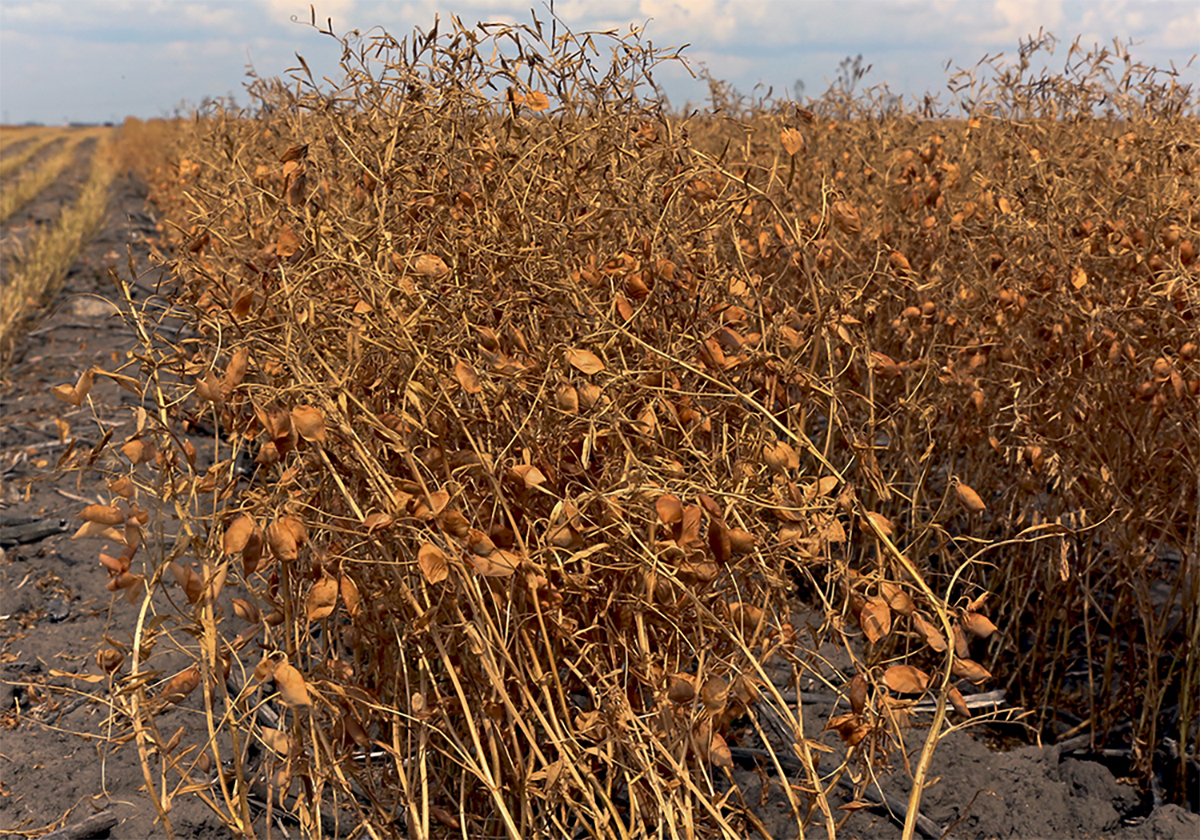
SASKATOON — Canadian red lentil prices have eclipsed large green lentil prices.
“This is highly unusual,” said Stat Publishing editor Brian Clancey.
“It rarely happens.”
Read Also
Phosphate prices not soaring as much as urea
Phosphate fertilizer prices have not climbed nearly as much as urea because farmers are cutting back and also the peak application season is a ways off in Brazil and India.
Red lentils were selling at a $0.01 to $0.02 per pound premium to greens as of mid-April.
The last time that happened was in 2014 when reds held a slight premium for a 27-week period from February through August.
“If it follows the same pattern, the prices won’t adjust back to a normal relationship until harvest,” said Clancey.
The reason behind the strange market dynamic is the overproduction of green lentils in 2025 due to a North American acreage increase combined with “stupendous” yields.
Stat estimates Canadian farmers produced 1.01 million tonnes of large green lentils in 2025, up from 450,277 tonnes the previous year.
It pegs small green production at 518,424 tonnes, up from 224,656.
Combined production of the two classes of green lentils was more than double the previous year.
Why it Matters: Growers will likely slash green lentil acres this spring due to the lackluster prices.
The United States produced an estimated 492,000 tonnes of lentils in 2025, up from 423,000 tonnes the previous year. Nearly the entire U.S harvest is green lentils.
Key buyers of the crop include the European Union, North Africa, Turkey, India and Latin America.
However, they are unable to mop up the excess North American production, which is why large green lentil values are less than half of what they were a year ago.
There is a little optimism creeping into the green lentil market stemming from weather modeling agencies in the European Union and the U.S. forecasting that a strong El Nino is on the way.
That would result in dry conditions for India.
India’s Skymet was already forecasting below average monsoon rains for the country, calling for 94 per cent of the long-term average for the June through September period.
That could have negative acreage and yield impacts on the country’s kharif crops, which includes pigeon peas. Imported green lentils are sometimes used as a substitute for pigeon peas.
In the meantime, Statistics Canada is forecasting Canadian growers will plant 4.14 million acres of lentils in 2026, down from 4.38 million acres last year. It does not break down acreage by class.
Clancey believes 1.42 million acres will be greens, which would represent a typical 34 per cent share of total lentil acres.
That would be down from the 2.22 million acres planted last year, which was a 51 per cent share.
Howeer, there is a chance green lentil acres won’t drop that much because returns on the crop were decent until January. Farmers who made their seeding decisions before the new year may not have slashed their green lentil acres, he said.
U.S. growers intend to plant 854,000 acres of mostly green lentils, down from 1.1 million acres last year, according to the U.S. Department of Agriculture.
Production would sink to 337,000 tonnes in 2026, down from 492,000 tonnes last year if yields match the five-year average, according to Stat.
However, total U.S. supplies could still reach a record 768,000 tonnes due to a record 342,000 tonnes of carryout. That would put further downward pressure on prices in that market to encourage exports.