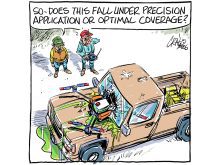

The rising cost of production has changed the conversation on whether the time is right for farms to improve their precision agriculture practices.
Land prices on the Prairies continue to see strong growth despite relatively high interest rates, and the sticker price for large tractors and combines now reach into seven figures.
Getting tradespeople out to the farm to work on buildings or equipment is out of reach for many farmers, and the record price of diesel will affect the scope and number of farm-improvement projects producers take on this summer.
Read Also

Alberta reporter passes one year mark at Western Producer
February marked my one-year anniversary working for Glacier FarmMedia, writing primarily for The Western Producer and Alberta Farmer Express.
But even with all these inflationary pressures, locking a farm into major investments during uncertain times is a difficult decision to make.
Every rural community has examples of local farms that stopped operating due to poorly timed spending decisions.
In times like these, it wouldn’t be surprising to see some operators liquidate lower quality holdings to focus their resources on land parcels that offer a higher potential for return on investment.
The investment decisions that are easy for farmers to make offer significant and relatively quick returns. A well-used example of this is autosteer, which immediately and significantly reduced seed and fertilizer costs.
Investments in time and money that have a longer pay-back period are harder to justify, and many farmers seem to have decided technologies and processes that enable precision agriculture, including variable rate (VR) applications, falls into this category.
For instance, Fertilizer Canada published its 2024 Fertilizer Use Survey in March, and it suggests low levels of soil testing is leading to the over-application of nitrogen in Canadian crop production.
The organization said only 34 per cent of canola acres met the right rate criteria of the 4R fertilization approach in 2024.
Setting rates according to field zones that have different fertilization needs is a proven approach to improve fertilizer efficiency, but it does take more effort and investments compared to using blanket rates.
For some farmers, reducing costs through improving the logistics of covering many acres has shown a better return compared to investments into precision agriculture.
Broadcasting urea is a good example. It quickly gets the nitrogen down, but unless the timing and weather line up, this approach tends to violate a few of the sacred 4R rules of fertilizer applications, even when enhanced efficiency products are used.
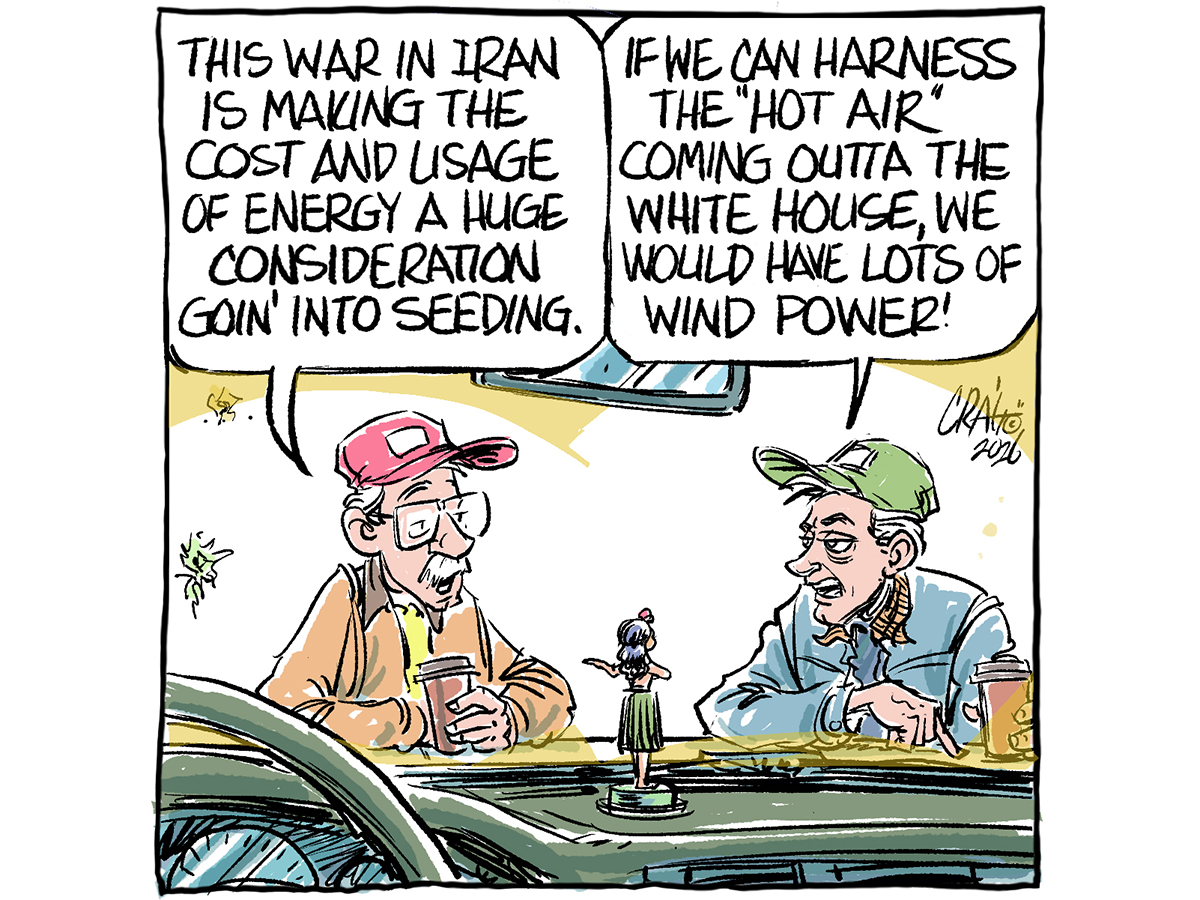
Elevated fertilizer prices due to the war in Iran has changed the return on investment calculation for equipment and technologies that enable precision agriculture.
The disruption to the fertilizer trade caused by Iran’s blockage of the Strait of Hormuz could persist for many months, and there are already calls within multiple fertilizer producing countries, including the United States, to enact export restrictions.
Increasing fertilizer efficiency has moved further into farms’ risk management territory because it is unclear how long the fertilizer industry will be in flux or how high prices could rise.
When it comes time for producers to update their drill or sprayer, spending the extra money on platforms that can help reduce the nitrogen bill through precision and staged applications, without reducing yields, has a shorter return on investment then it used to.
It also helps that digital products that enable VR applications are more user friendly than they used to be, operating in the background with very little fiddling required by farmers.
Higher fertilizer prices also make it worthwhile for more intensive management, including taking unproductive acres out of crop production.
Creating another job of mowing or baling areas seeded to a forage because they never seem to produce a crop is a hard sell for most growers, but so is a double-digit percentage increase to the fertilizer bill that some farms will see this spring.
Any strategy that helps farms improve their fertilizer and land use is worth another look this spring because the cost of farming is not what it used to be.