
It is a weird world when an American farm leader says “it’s Christmas early for farmers” when the government coughs up a $12 billion farm bailout that was needed only because president Donald Trump launched a trade war with China and others, limiting sales and pressing crop prices lower and costs higher.
Maybe the farm leader’s experience is with an old style European St. Nick who travels with the menacing Krampus, giving out lumps of coal and a birch switch for beating misbehaving children.
At the same Oval Office event launching the bailout, Trump threatened steep tariffs on fertilizer imports from Canada.
Read Also

Farm practices must respond to soaring fertilizer prices
The rising cost of production has changed the conversation on whether the time is right for farms to improve their precision agriculture practices.
If he follows through, it would force up costs for American farmers — another lump of coal.
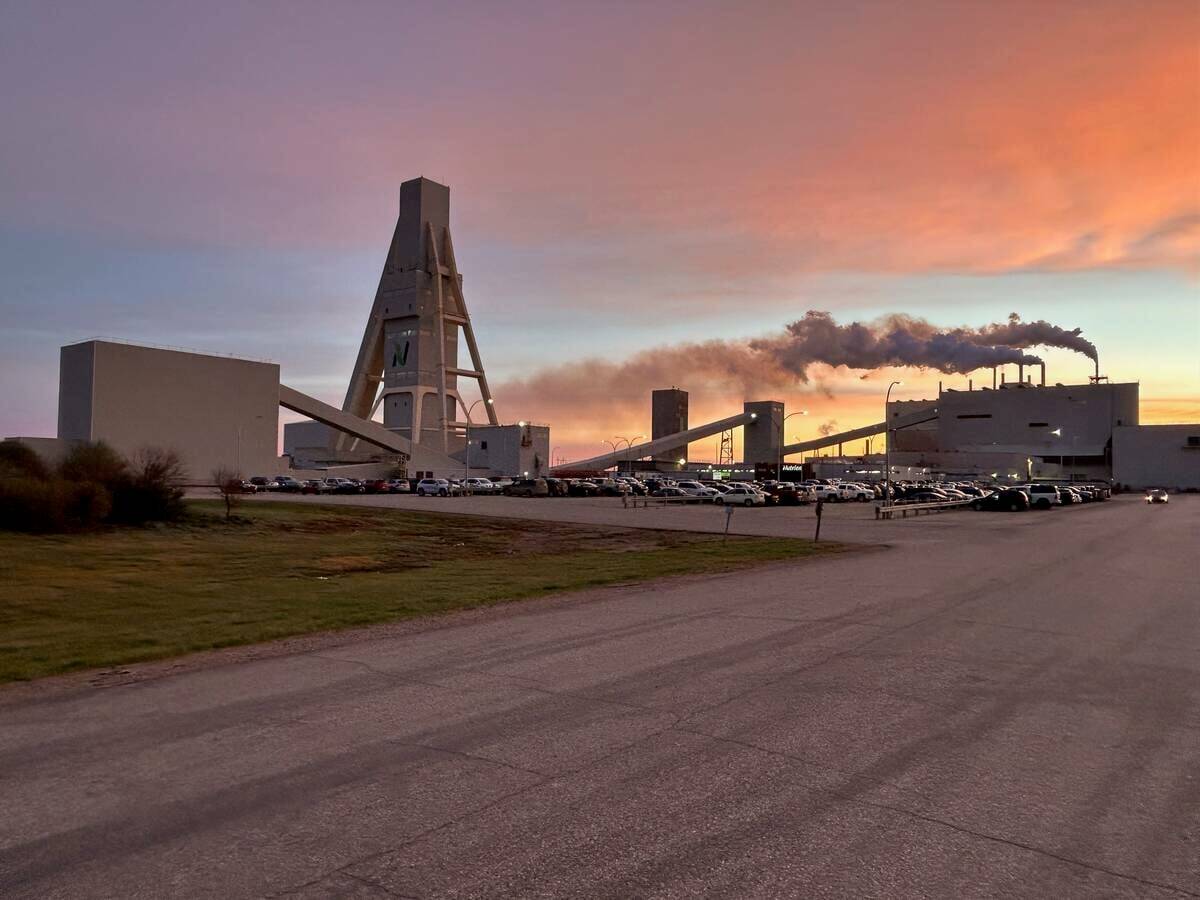
The big target is potash, almost all of it provided by mines in Saskatchewan.
The United States has little domestic production and imports 90 percent of its needs. Of that, 80 percent or more comes from Canada.
It would take many years to build new U.S. mines to meet its needs, and in the meantime, a tariff on Canadian production would simply increase costs for American farmers.
And with production growing elsewhere, will U.S. mines be profitable or will they need continuous protection from government?
To be so dependant on imports of a critical mineral could be considered a strategic risk, but until now there has been no question about a friendly Canada ever using this supply relationship as a weapon.
However, the American market is becoming a little less important to Canadian producers.
In 2000, Saskatchewan potash (potassium chloride KCI) sales were 14.1 million tonnes. This year they are just shy of 25 million.
America was and remains the largest buyer, but growth has also come from other buyers.
U.S. potash consumption over the past 25 years has been mostly steady, deviating with marginal shifts in corn acreage and farm income.
U.S. Geological Survey figures show potash imports from all sources between 2000 and 2024 ranged roughly from 7.5 million to 9.5 million tonnes, with a stand-out year in 2021 when 10.7 million tonnes were imported.
With American demand relatively static, Canada’s potash export growth has been helped by increased shipments to Brazil, China and other Asian countries.
The people worried about access to potash have gained the ear of Trump.
Earlier this year, the U.S. added potash to its list of critical minerals, considered vital to the economy and national security and facing potential risks from disrupted supply chains.
The U.S. has potash reserves that could be developed, and Washington is supplying loans and grants to increase domestic production.
Under the previous Biden administration, the U.S. Department of Energy gave a loan guarantee of up to $1.26 billion to Michigan Potash & Salt Company, a proposed solution mine. The state kicked in hundreds of millions in assistance.
Recent cost estimates are unavailable, but at one time it was estimated at about $1.3 billion, so it looks like the majority of its cost will be government backed.
The Trump administration is fast tracking it through the permitting process. It plans to produce 800,000 tonnes of potash and one million tonnes of food-grade salt annually.
Another solution miner, Sage Potash, based in Canada but with plans to tap a potash source in Utah, received a US$14 million grant from the U.S. Department of Agriculture to help determine the feasibility of that 300,000 tonne per year project.
These projects would take many years to build.
In the meantime, Canadian mines will soon add huge amounts of new production.
The first phase of the C$14 billion BHP Jansen mine will start producing in mid 2027, adding about four million tonnes a year to global capacity.
If a planned second phase gets built, it would add another four million tonnes some time in the 2030s.
K+S’s two million tonnes per year solution mine at Bethune began an expansion program this fall, designed to gradually increase production to four million tonnes a year.
Nutrien forecasts global potash demand to rise to 74 to 77 million tonnes in 2026, up one to two million from this year.
In 2021, BHP produced a forecast that estimated demand by 2050 would rise to 118 million tonnes.
China is the world’s largest consumer of potash, and while it has significant domestic production, it still imports a lot.
To increase supply in the region, a Chinese company, Asia-Potash, invested US$4.3 in production in nearby Laos. It now produces three million tonnes with plans to expand to five million.
While potash demand is rising, there is potential for supply to grow faster, pressuring its price lower.
It happened before, in the late 1960s and early 1970s, when the first wave of Saskatchewan potash overwhelmed demand, and then in the 1990s when production from the former Soviet Union washed into the world market.