

SASKATOON — Canadian flax growers could be facing stiff competition in 2026 as Russia becomes the world’s largest exporter of the crop.
Shipments from that country are estimated at 1.2 million tonnes in 2025, a nine per cent increase over 2024 levels, according to a recent APK-Inform article.
The same firm is reporting that Russian farmers will boost flax planting by 370,500 acres in 2026.
Read Also
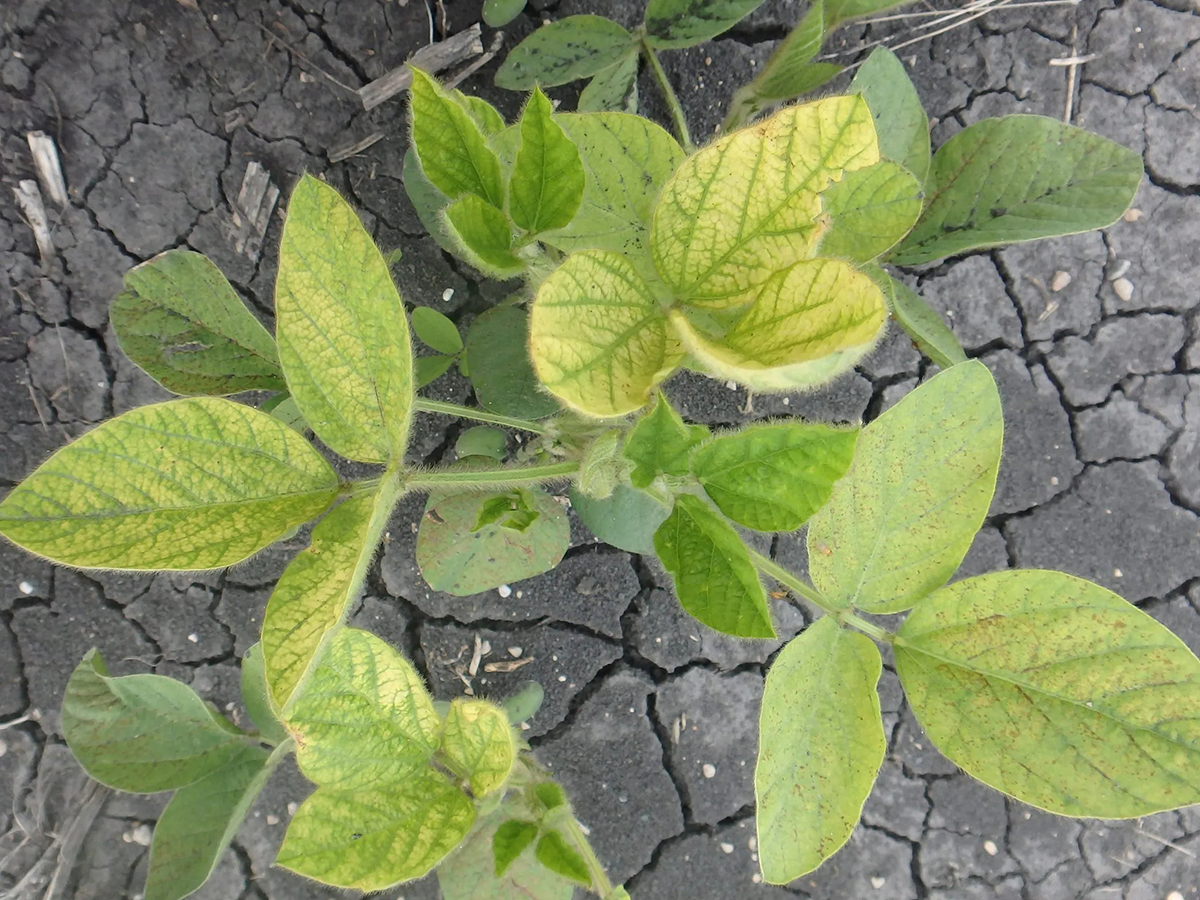
Selecting IDC-tolerant soybeans does not reduce yield, Manitoba study confirms
University of Manitoba research shows soybean varieties selected for iron deficiency chlorosis (IDC) tolerance protect yield in affected areas without reducing performance elsewhere in the field.
Sergey Pluzhnikov, chief executive officer of Russian Pulses Analytics, offered up slightly different numbers.
He noted that Russia’s ministry of agriculture has allocated 4.69 million acres for flax, which would be a drop from the 4.91 million planted last year.
He believes that will still result in 1.6 million tonnes of production, which would be another big crop.
Rayglen Commodities said other key exporters are likely boosting production as well.
“Early indications suggest increased flax acres in the U.S. and Kazakhstan, which could lead to a potential oversupply scenario and could explain lacklustre new crop markets,” the firm stated in a recent edition of its Rayglen Market Comments report.
Why it Matters: Black Sea producers continue to steal acres away from Canada.
Kazakhstan has come on like gangbusters in the global flax market.
Growers in that country planted 3.33 million acres of the crop in 2025, a 55 per cent increase over the previous year, according to a recent blog by Kazakhstan’s Flax Producers Association.
“Thanks to favourable economic conditions, climate changes and government support, the country is shifting from grain crops to oilseeds, including flax,” stated the association.
European Union tariffs on Russian flax created an opportunity for Kazakhstan. Those tariffs are rising to 50 per cent in 2026 from 20 per cent in 2025.
Pluzhnikov said it is hard to say what will happen with flax acres in Kazakhstan this year.
“In my opinion, part of the area occupied by lentils last season may well be redistributed and flax may well receive an increase,” he said in a text message.
“I’m noticing an upward trend in oilseeds.”
He does not anticipate “explosive growth” but something along the lines of a 10 per cent increase in flax plantings.
Planting has not yet begun in the Black Sea region. Soil moisture reserves are sufficient heading into spring.
Kazakhstan harvested a record 1.35 million tonnes of flax in 2025, up from 760,000 tonnes the previous year and 362,000 tonnes in 2023, according to APK-Inform.
The country exported 634,400 tonnes of the oilseed between September 2025 and January 2026. That is more than double the same period of the previous marketing year.
Belgium and China accounted for 69 per cent of total export volumes.
Kazakhstan had 1.21 million tonnes of flax stocks on hand as of Jan. 1, 2026, up from 627,000 tonnes the same time a year ago, according to APK-Inform.
Kazakhstan’s Flax Producers Association said global demand for flax remains high due to limited supply and logistical challenges.
It has seen forecasts indicating that the EU will be importing 751,000 tonnes of the oilseed worth US$613 million by 2035.
Pluzhnikov said 2026 exports from the Black Sea region will depend on the import appetite of China and the EU.
“We can definitely say that (Black Sea) production will be the same or slightly higher,” he said.
Exports will also depend on prices and domestic demand from the growing processing sector.
“The problem of overproduction of raw materials will be solved by increasing processing,” said Pluzhnikov.
Farmers in the United States intend to plant 230,000 acres of flax in 2026, down seven per cent from last year, according to the U.S. Department of Agriculture. That contradicts what Rayglen is reporting.
Statistics Canada expects growers in this country to seed 753,000 acres of the crop, a 21.4 per cent increase over last year.