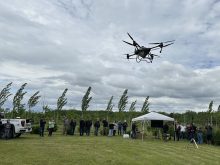

CAMROSE, Alta. — Flying drones in steep mountain areas, above narrow pipeline routes or over fire-burned timber areas is not for the faint of heart or the inexperienced operator, said two drone operators who specialize in flying the machines in unreachable places.
Jody Stump of Malakwa, B.C. said flying drones in remote areas requires a lot of planning and preparation, especially in areas that may be a five or six hour drive into the bush.
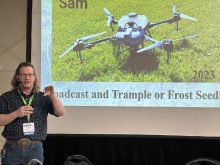
“Something eventually will go wrong when you get out there. Get to know your drone,” Stump told the recent Canadian Agricultural Drone Association conference.
Read Also
Red lentils priced higher than large greens
Red lentil prices have eclipsed large green lentil prices for the first time since 2014.
Stump said operators need to always keep the drone serviced, carry spare parts and know how to change out the parts to ensure the seed or fertilizer is flowing smoothly.
“Know what you are seeding and what works best with the drone and its parts,” she said.
“Seed companies will put an inoculant powder on the seed. It is a great product, but it is not so great in a drone. If you are flying on a day with high humidity, it will eventually bind up.”
On the Prairies, where temperatures can be as high as 40 C or more or as low as -40C, battery life will be affected by either extreme and require a heater or cooler.
“In my case, not unusual to get plus 35 to minus 40 C, and the charger won’t actually charge the battery to full capacity in 40 degree weather if you don’t have some kind of cooling system on the charging station and battery,” said Stump, whose McCall Management work with drones takes her to remote areas for mine site reclamation, post wildlife seeding, oilfield reclamation or forestry reclamation.
Mike Friesen of Pineview Vegetation Management works in British Columbia’s Peace River country but has worked extensively with his drone in difficult situations, reclaiming oilfield pipelines and other tricky situations.
Friesen said it is not uncommon to have a dozen different kinds of seeds in one mixture, butit’s important to know that brome grass seed is prone to bridging and that the seed in the hoppers needs to be monitored and managed.
“When you have brome mixed with a smaller grass seed, the application can be way out of whack. Understand there can be bridging.”
Friesen also recommends getting to know the drone and its limitations, especially in areas where the drone may need to lift heavy loads up the mountain.
Friesen said he once worked in a valley and bad weather arrived with little warning. He now checks two or three weather apps throughout a project to ensure they are flying the drone in the best conditions possible.
Wind is one of the most critical factors when flying in extreme terrain.
Steady wind is not usually a problem, but gusty winds, in combination with humidity or near freezing conditions can cause problems controlling the drone in extreme terrain.
He also recommended possibly reducing the amount of weight added to the drone when flying in extreme conditions.
“With a full payload, you are asking 100 per cent of your drone. It may not be good if you are dealing with weather, steep slopes and climbing.”
Friesen said it takes practice to be able to fly a drone and work in extreme conditions. He didn’t start out on reclamation and pipeline work, but spent hours practicing and learning the capability of each drone.
“You need lots of practice. If you have a testing area, use it and fly your drone often, even if you are not on a project. It just gives you more familiarity with how your drone reacts in different weather if you get into an intense situation.”
While drones are still relatively new to agriculture, Friesen said it is not the wild west where anything goes. Drone operators need to act responsibly.
“Know your policies and regulations and act in a professional manner and know your limitations so when people see you flying safely, getting the job done efficiently, you start growing excitement in the industry.”