

SASKATOON — A leading U.S. grain market analyst does not put much stock in reports of a looming food crisis due to the war in Iran.
The United Nations is one of the groups issuing the dire warnings.
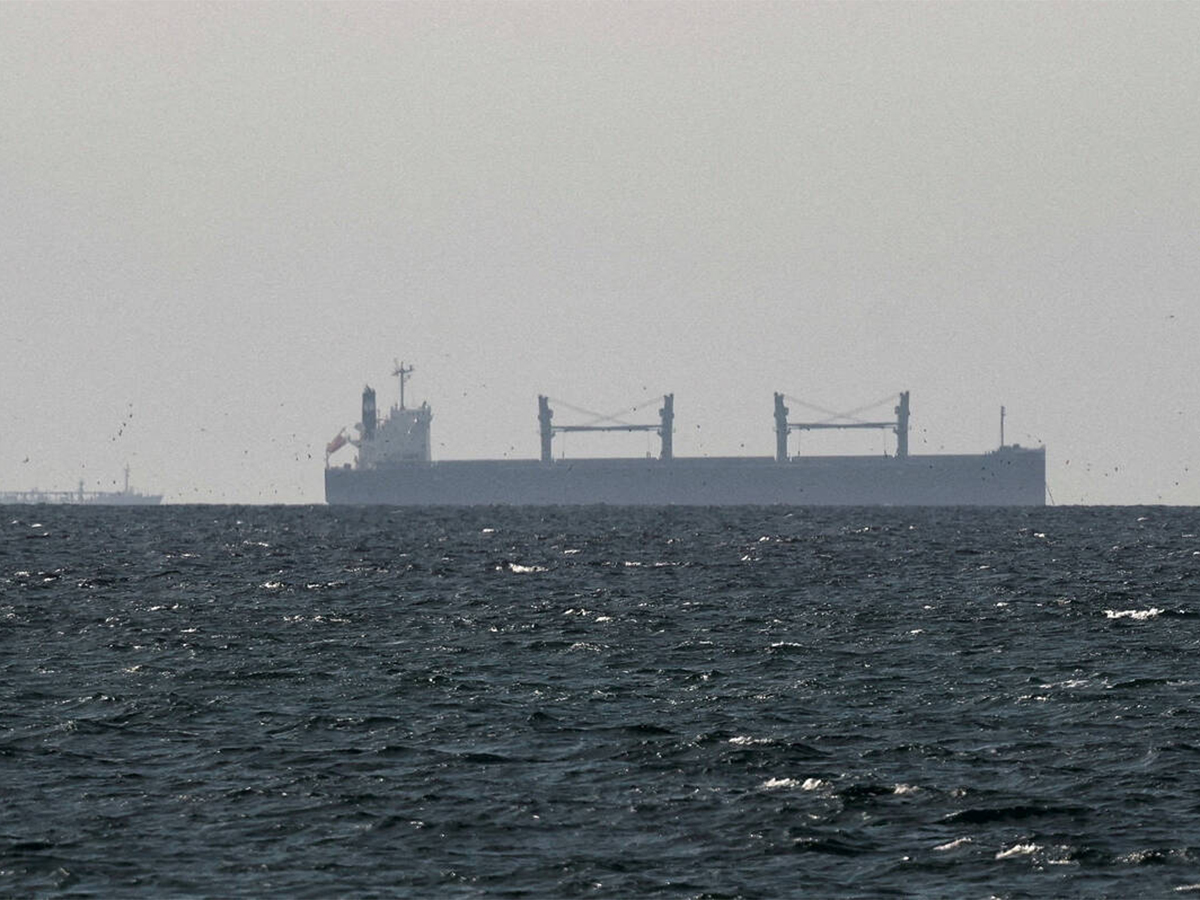
“The clock is ticking for global food systems as disruptions in the Strait of Hormuz threaten to choke off the flow of fuel and crucial fertilizers needed for the next planting season,” the UN stated in a recent article on its website.
Read Also
Farm practices must respond to soaring fertilizer prices
The rising cost of production has changed the conversation on whether the time is right for farms to improve their precision agriculture practices.
That raises the risk of higher food prices and a new wave of inflation, it said.
Why it Matters: Reduced global production would drive up grain prices.
UN chief economist Maximo Torero said 30 to 35 per cent of the world’s crude oil, 20 per cent of its natural gas and 20 to 30 per cent of its fertilizer are not moving out of the Middle East.
Much of the cargo that left the Persian Gulf before the war has already reached its destination, and the world is now entering a phase where supplies could start to tighten.
The Food and Agriculture Organization’s Food Price Index for March showed only modest increases.
“We have enough supplies and good stocks which allow the agri-food system to be resilient to this shock,” said Torero.
However, he warned that the buffer may be short-lived as farmers around the world reduce input use or shift crops.
That would result in lower yields, which will drive up food prices later in the year and into next year, he said.
Higher oil prices are also diverting crops such as corn, sugar and oilseeds toward biofuel production.
“If we have rising demand because biofuels start to consume more, and lower supply because we have less inputs, food prices will go up,” said David Laborde, director of the agrifood economics division of the Food and Agriculture Organization of the UN.
Arlan Suderman, chief commodities economist for StoneX, agreed that the war is having a profound impact on fertilizer prices, but not to the degree of when Russia invaded Ukraine in 2022.
Fertilizer manufacturers are raising prices to ration demand.
“The lower income countries are going to have the most difficulty affording fertilizer,” he said during a recent webinar.
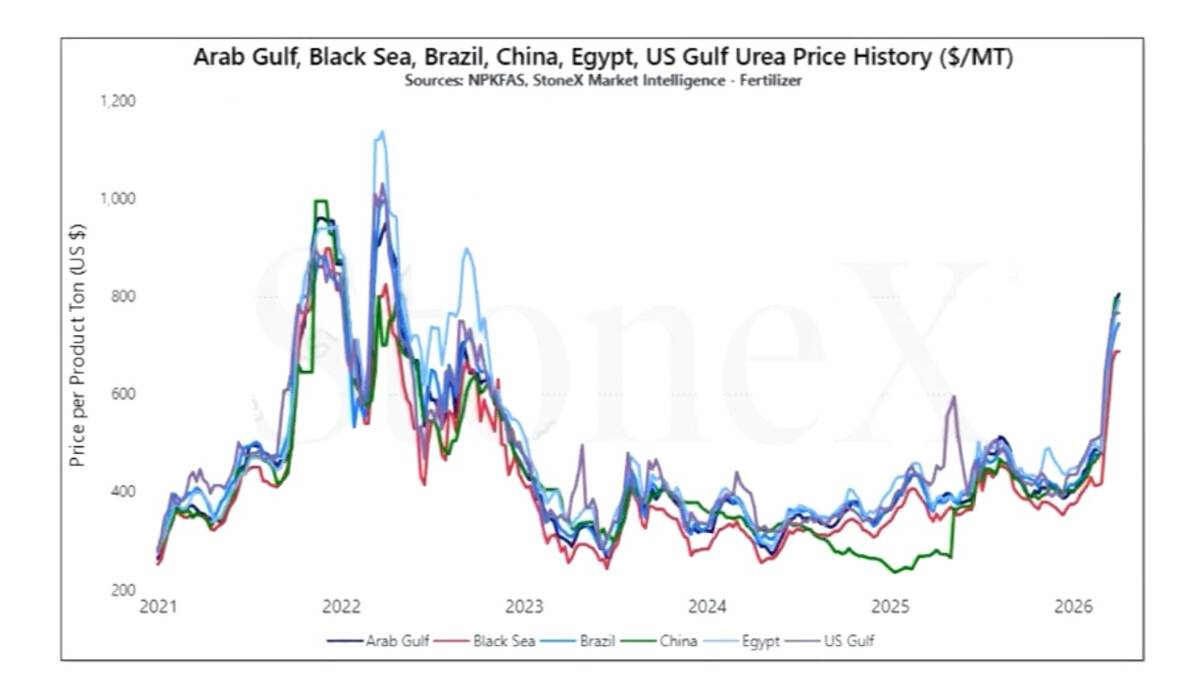
Suderman believes wheat will be the crop most affected by rising input costs because it has the narrowest profit margins of the major crops.
However, fertilizer was already in position for farmers in the Northern Hemisphere, so he doubts there will be a big profitability impact for those growers.
“What we’ll be watching is going to be Argentina wheat areas and Australian wheat areas,” he said.
However, Suderman does not believe a food crisis is looming because of ample supplies of all the major crops.
For instance, ending stocks of wheat for the major exporters in 2025-26 is forecast to be at the highest level since 2010 with a stocks-to-use ratio of nearly 30 per cent.
“It is pretty significant supplies,” he said.
The UN worries that those global stocks could dwindle if the emerging El Nino weather pattern takes a toll on production in key production regions like Australia.
It is also concerned that rising input costs and uncertainty are squeezing farmer margins.
“When you push them too much, you may bring them into bankruptcy,” said Laborde.
“And then it means there will be a supply problem for a longer period.”
The FAO said a full-blown food crisis is not inevitable, but the window to prevent one is rapidly closing.
It is encouraging governments around the world to avoid trade restrictions, support vulnerable households through social programs and ensure liquidity for farmers through credit lines and import financing.