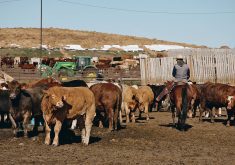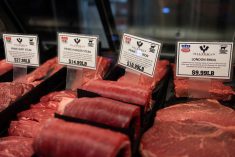


This should be another profitable year for cattle producers, an expensive year for beef lovers and a money-losing year for cattle processors.
The record high cattle and beef prices have been with us for a while now, and the reason is well known.
It is mostly a weather story, with dry pastures in much of North America a few years ago causing massive liquidation that has push herd numbers down to multi-decade lows.
Read Also
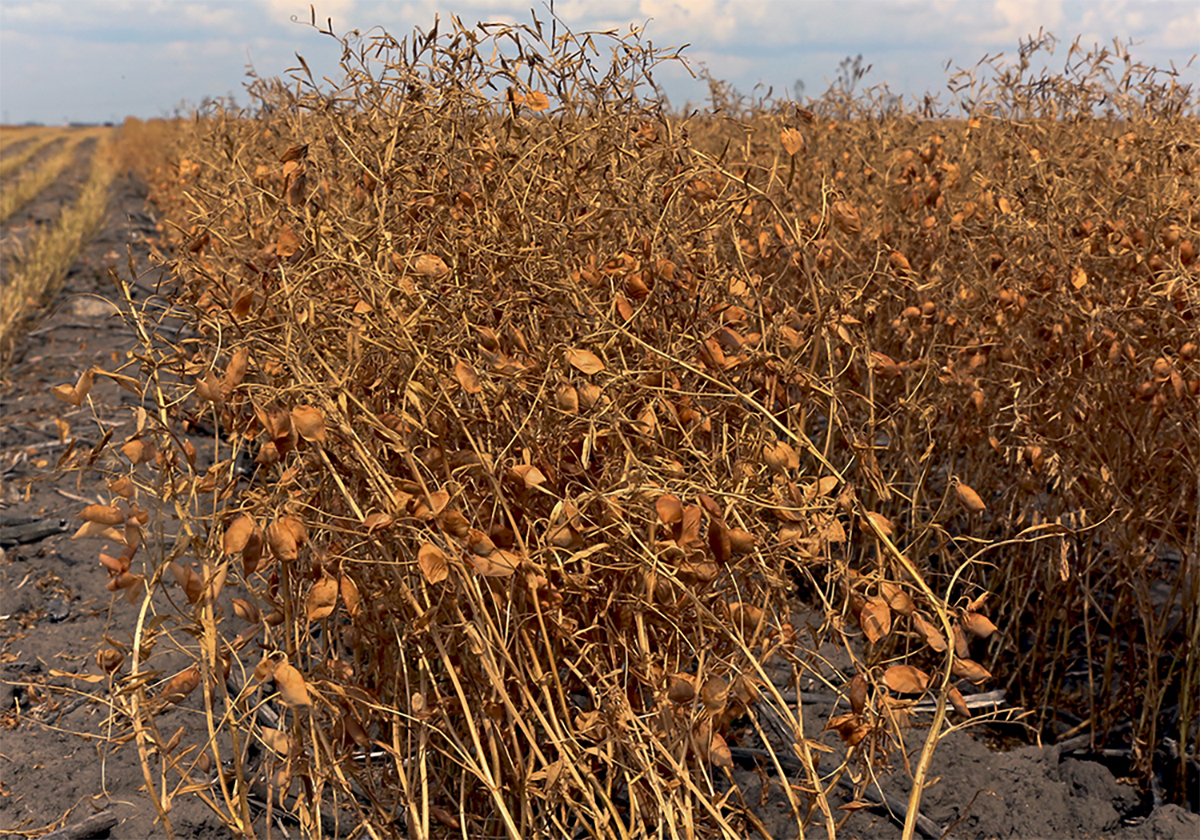
Red lentils priced higher than large greens
Red lentil prices have eclipsed large green lentil prices for the first time since 2014.
The question now is when will herd rebuilding start.
The Canadian and American markets are entwined, so it is useful to look at American data as well as Canadian.
In the United States, the contraction cycle began in 2015 and peaked in 2019. Last year, the contraction slowed and the total cattle inventory fell by less than one per cent.
Pastures have been recovering, but feeder cattle prices were so high that producers were still selling to repair their financial position.
However, that might be changing.
The number of U.S. heifers retained for beef cow replacement increased by one per cent last year, which might signal the start of herd expansion.
If more heifers are retained as expected, that will reduce the slaughter population, putting more upward pressure on fed cattle prices this summer
The U.S. Department of Agriculture expects cow slaughter will decline this year, resulting in more breeding females, which might lead to a larger calf crop.
However, it will likely take years for the herd to rebuild enough to start to lower beef prices.
While the cattle population data tells much of the story, that is not all.
Weight is also a factor in how much meat is produced, and weights were up last year.
The total number of cattle slaughtered in the U.S. last year was 29.79 million head, down six per cent from the previous year and the lowest since 2015, according to USDA data.
On average, the live weight of commercially slaughtered cattle in 2025 in the U.S. was up 33 pounds, or two percent, to 1,432 lb.
The result was that total beef production was 26 billion lb., down only four percent from the previous year.
It is a similar story in Canada.
Data from the Canadian Beef Grading Agency shows total cattle slaughter at federally inspected plants last year at 2.81 million, down almost six per cent.
I couldn’t find live weights for Canada, but I did find carcass weights. For the year they were 915.2 lb., up almost five lb.
Total Canadian beef production was about 2.46 billion lb., down five percent, according to Canfax.
It is interesting to note that Canadian feeders are keeping their cattle to even heavier weights so far this year.
Canfax says that in the first six weeks, carcass weights in Western Canada were 975 lb., 37 lb. heavier than in the same period last year.
Fed cattle prices in Alberta in mid-February climbed back up to the record they hit in September last year, indicating the number of market-ready cattle is extremely tight.
In the U.S., the Reuters news service reports packers are losing a lot of money on each animal processed, and there is speculation they might try to scale back slaughter to pressure cattle lower and beef higher to narrow their losses.
Since I was diving into a lot of statistics for this column I looked up ground beef prices in the U.S. and Canada. While steak might seem a special meal, hamburger is considered standard fare.
This is not a grocery store comparison. Rather, it is consumer price data from the U.S. Bureau of Labor and Statistics Canada.
I compared December 2025 to January 2021, which is when general food inflation really started to take off.
The Bureau of Labor says that on average, a pound of hamburger cost US$6.69, up 69 per cent from January 2021.
Statistics Canada said a kilogram of hamburger cost C$15.54, or $7.06 per lb., up 64 per cent over the same period.
So, the price increases have been similar on both sides of the border.
Even as consumers complain about such prices, it is also shocking that they are not forgoing beef.
The USDA says that beef per capita disappearance, a calculation of how much each American eats per year, was 59.2 lb. in 2025, up slightly from 50.1 lb. the previous year.
It forecasts that in 2026, it will rise again to 59.5 lb.
Pork is cheaper than beef, but its per capita disappearance fell in 2025 to 49.3 lb. from 49.9 lb. in 2024.
Turkey also dipped to 13.2 lb., down from 13.8 lb.
However, there was a chicken in every pot, continuing the long-term rise in that meat.
Chicken rose to 102.9 lb., up from 101.1 lb. in 2024.