
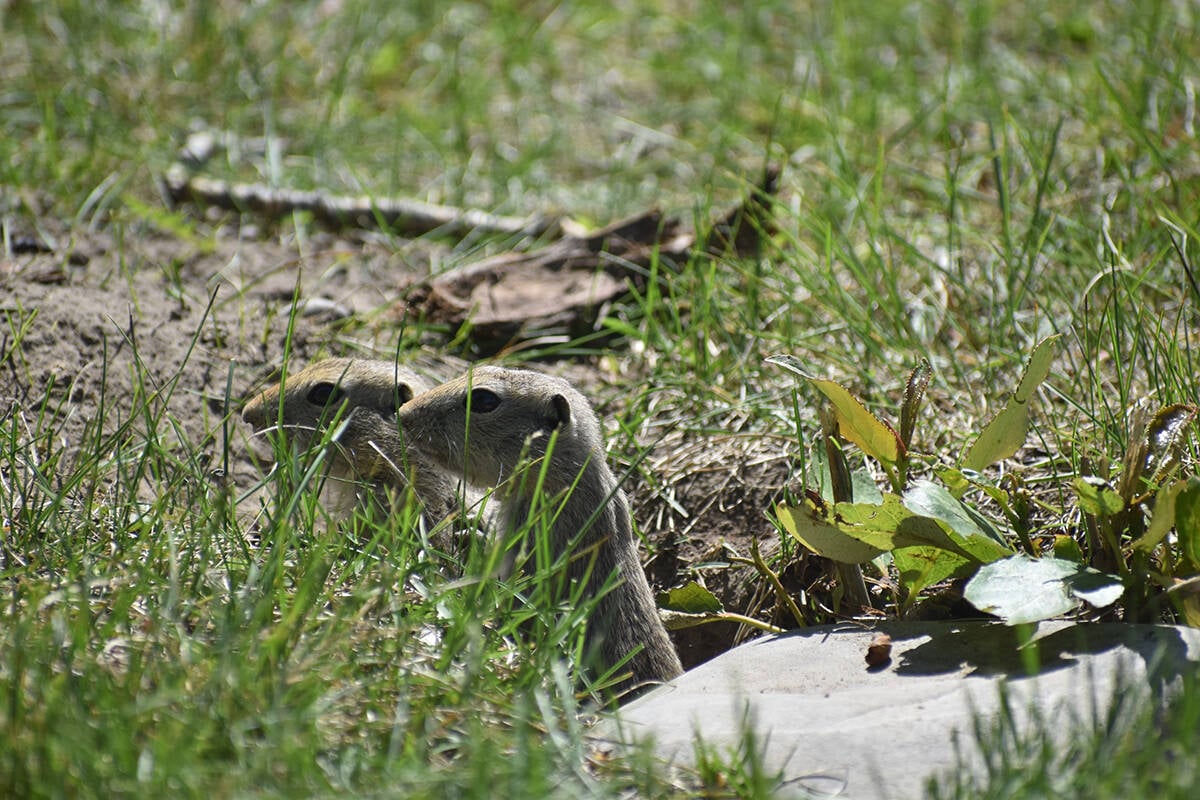
While the decision has been widely applauded, the emergency registration of strychnine for control of Richardson’s ground squirrels in specified areas of Alberta and Saskatchewan may actually hamper control of the rodents more commonly known as gophers.
At this point, no information is available on what the enhanced mandatory training will entail. Hopefully, it’s just information that a producer has to read, but it could be something more arduous.
There’s also a requirement for increased monitoring along with carcass collection and disposal.
Read Also
Federal research cuts pose risk to consumers
While programs should always be reviewed and improved, broad funding cuts that undermine the interconnected agricultural innovation systems are short-sighted.
This is no doubt an attempt to limit secondary poisoning of hawks and scavengers consuming gophers that die above ground. This was the main reason strychnine was banned in the first place.
Poisoning gophers by placing bait in each hole is arduous and time consuming. The number of holes per acre can be daunting.
Anything that adds to the task is likely to receive more lip service than action.
It appears the new requirements will move at the speed of government, meaning the prime period of time to control gophers will be gone before any strychnine is ever applied.
All the research and recommendations say the best time for using poison is early spring when gophers first start to emerge. When other food sources are readily available, gophers are more likely to ignore the bait.
If producers wait for strychnine to be available, they’ll have missed the prime time for control, when they could have been using other products. More about that later.
The federal authorization allows strychnine to be registered for use until November 2027, subject to all conditions stipulated by the Pest Management Regulatory Agency.
Perhaps for 2027, when everything is in place, strychnine will be applied at the appropriate time, but that won’t be the case this year.
In Alberta, the area approved for strychnine includes a large contiguous block in the southern half of the province.
In Saskatchewan, while much of the southern grain belt and an area of northwestern Saskatchewan has approval for strychnine, some rural municipalities are in and others are out.
My farm is at the corner of three RMs. Two are included in the emergency use registration area and one is not. Gophers apparently didn’t get the memo because I have gopher issues to address in the non-eligible RM.
The Saskatchewan and Alberta governments bowed to producer and farm group pressure and in turn pressured the federal government and the PMRA to reinstate strychnine.
This contradicted government-sponsored research work done in 2022 and 2023 comparing strychnine to other poisons that don’t have secondary poisoning issues.
In the studies, some products did not work as well as strychnine. Both Rozol RTU and Ramik Green required multiple applications and were more expensive.
However, “the zinc phosphide products, ZP Rodent Oat Bait and Burrow oat bait were as effective as strychnine and less expensive.”
The report goes on to say that zinc phosphide products present a reduced risk of secondary poisoning and are not environmentally persistent.
The full report has long been posted on the Saskatchewan Agriculture website, even as the province lobbied for strychnine, saying other products are not effective.
A lot of people seem to be stuck on the idea that strychnine is a silver bullet.
Maybe the research is wrong and strychnine is more effective. However, anyone wanting to get a jump on gopher infestations this year would be well-advised to use zinc phosphide products early, even if they want to use strychnine when it finally becomes available.