

Ron Krahn, who farms near Rivers, Man., normally doesn’t pay close attention to Canadian Wheat Board financial statements.
But when Krahn attended a CWB farmer forum in Reston, Man., last week, he was shocked by a couple of lines in the board’s financial report.
The Producer Payment Option program handled 1.8 million tonnes of grain in 2008-09 and had a $44 million surplus. In 2009-2010, the PPO program handled 950,000 tonnes of grain and ran a surplus of $17.4 million.
After doing the math, Krahn calculated that the 2008-09 surplus equalled $24 per tonne, while the 2009-10 surplus was the equivalent of $18 per tonne.
Read Also
Red lentils priced higher than large greens
Red lentil prices have eclipsed large green lentil prices for the first time since 2014.
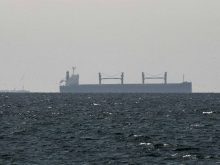
Considering the outcry over the board’s $65 million purchase of two ships, which works out to $1 per tonne of grain for four years, Krahn said farmers should be up in arms over the PPO surpluses.
“If at the end of, say the 2009-2010 year, people in the pool found out they were short $24 per tonne for whatever (reason), there would such a hue and cry across Western Canada,” he said.
“If they (the CWB) run a huge surplus … I think that money needs to come back to people that participated in the PPOs.”
The board’s PPO program includes a fixed price contract, a basis price contract and a FlexPro contract, which, as the CWB website notes, provides “farmers with a full toolkit of choices in pricing their grain.”
CWB chief financial officer Brita Chell said the board is concerned about the amount of money that has gone into the contingency funds from PPOs.
“Over the long term, we expect these programs to break even,” she said. “But … we’re trying to balance the risk that we’re taking on by offering these programs.”
Chell said in an interview after the meeting that the board is looking at other ways to handle the PPO surpluses.
“Could we look at other variations? That’s something we need to explore,” she said.
“We’ve looked at it on durum. The durum FPC has a plus component. The Cash Plus designated barley program also has a surplus distribution. So we are doing it in some commodities. We have to see if we can make it work for the others.”
The wheat board transfers PPO surpluses to its contingency fund, which is capped at $60 million.
Money above that amount is remitted to producers, including those participating in the pool programs.
“We totally acknowledge that doesn’t make total sense because the pool participants didn’t participate in those programs, so why would they get those funds,” Chell said.
The board has talked to the federal government about the cap and the contingency fund and plans to raise the issue again.
Krahn said the surplus figures are unsettling, but he supports the payment options. He has used them since they were launched and said his farm has benefited from opting out of the pool.
“Overall, I think it’s a great thing, but I have some big concerns about how it has been run the last two years.”
He said the board shouldn’t be required to pay out the entire surplus, but there should be a way to distribute some of it to PPO participants.
Chell said the current arrangement isn’t ideal, but the PPO programs don’t always run a surplus.
“I also need to remind people of 2007-2008, where there was a $90 million hit to the contingency fund. So it cuts both ways. It’s trying to find that balance.”
John Sandborn, the newly elected CWB director in District 9, promised Krahn during a break in the meeting to raise the issue at a directors’ meeting.