

SASKATOON — The fate of a regulation that could boost canola oil demand in the European Union will be determined before the end of 2025.
The European Council recently agreed to delay implementation of the EU Deforestation Regulation (EUDR) for another year.
The council will now start negotiations with the European Parliament to reach a final agreement on the regulation, which was due to come into force Dec. 30, 2025.
Read Also

Tips on getting your planter ready for spring planting
Eric Bossuyt with AgWest offers tips on what growers should check on their planter before heading into the field for planting season.
Why it Matters: The regulation has the potential to boost canola oil consumption in the EU because it penalizes palm oil.
The council said the aim of the one-year delay is to simplify implementation of the regulation and allow operators, traders and authorities to adequately prepare.
If its proposal is accepted by the EU Parliament, the provisions of the EUDR would apply on Dec. 30, 2026, for medium and large operators and June 30, 2026, for micro and small operators.
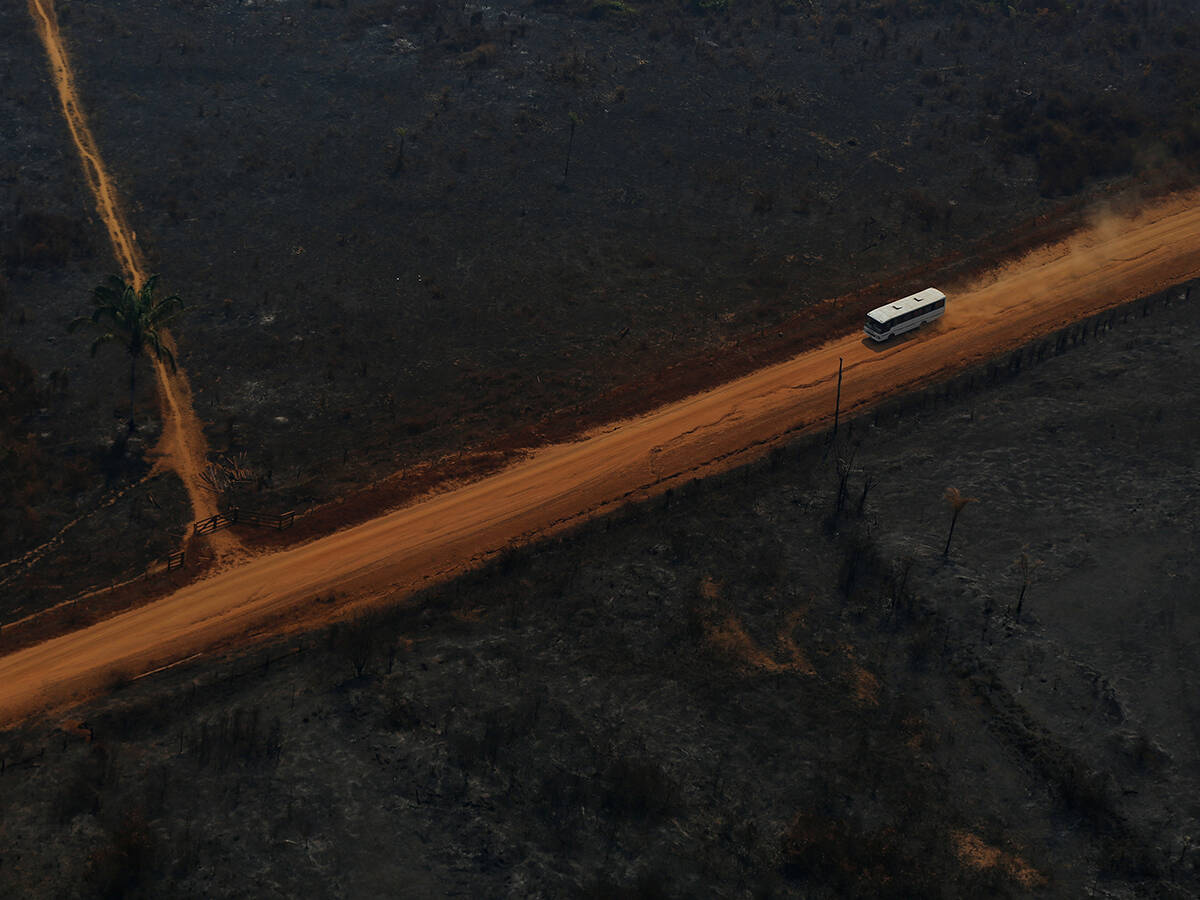
The goal of the regulation is to ensure commodities such as cattle, cocoa, coffee, palm oil, rubber, soybeans, wood and their derived products have not caused deforestation or forest degradation.
This would be the second time that the regulation has been delayed by one year, much to the chagrin of environmental groups.
“Claims by member states that ‘tackling deforestation remains a priority’ are a blatant distortion: they have just agreed to water down and delay the EUDR,” Anke Schulmeister-Oldenhove, manager for forests at the World Wildlife Fund’s European policy office, said in a press release.
“With this vote, the EUDR is very close to becoming a theoretical thinking exercise rather than a concrete step towards zero deforestation.”
The Malaysian Palm Oil Council (MPOC) welcomed the proposed delay but expressed lingering concerns about the regulation.
“MPOC reiterates that the Malaysian palm oil industry has worked tirelessly to transform itself in recent years, implementing robust sustainability frameworks and achieving measurable reductions in deforestation,” the group said in a press release.
“Despite these efforts, the current EUDR framework contains numerous operational deficiencies, which fail to reward responsible leadership in sustainable practices.”
The EU is the third biggest export market for Malaysian palm oil, behind India and China. It imported 2.66 million tonnes of the product in 2023.
Malaysia’s palm oil producers say the EUDR would “significantly impact” palm oil use in that market.
Marlene Boersch, managing partner of Mercantile Consulting Venture, said the regulation would provide canola with a much-needed shot in the arm.
“I have no doubt that it would support the use of canola oil to some degree,” she said.
The proposed delay could not have come at a worse time with Canada shut out of the Chinese market and record rapeseed/canola production in the Northern and Southern Hemispheres.
“We’re just thirsting for something positive,” said Boersch.
She speculates that vegetable oil users lobbied EU member states for the delay, and there appears to be more of a political appetite to entertain such suggestions these days.
“We have lost some of the momentum to really follow through with some of these environmental things for budgetary reasons,” said Boersch.
The good news is there is still plenty of long-term optimism for canola oil and other vegetable oils.
Deutsche Landwirtschafts-Gesellschaft’s Agrarticker reports that Oil World’s managing director David Mielke had some encouraging words during his recent presentation at the Rapool conference.
He noted that global consumption of vegetable oil exceeded production in 2023-24, leading to a reduction in global oil and fat stocks that is going to become even more pronounced in 2024-25, according to a translation of the Agrarticker article.
And that trend is likely to continue.
“We have to look ahead to the next five to 10 years,” said Mielke.
“During this time, the markets are heading towards a structural production deficit of oils and fats.”
Boersch said there has also been some positive news on Canada’s trade impasse with China following a couple of encouraging visits by federal and provincial government officials.
She hopes it is the beginning of a breakthrough on the tariff war between the two countries.
“That would be very, very positive,” she said.
However, she noted that Canada would likely need to make the first gesture by making a small reduction in its tariff on Chinese electric vehicles.
It doesn’t help Canada’s cause that China recently started buying U.S. soybeans again, despite having no real pressing need for the commodity. Those shipments could pick up once the United States and China finalize their trade agreement.
It also doesn’t help that Australia recently sent its first shipment of canola to China in five years, meaning that Canada may have competition in that market going forward.