

Agriculture minister Gerry Ritz and other Canadian politicians may be celebrating the wording of the final rule on U.S. country-of-origin labelling, but Canada’s livestock sector isn’t popping the champagne cork just yet.
“It’s going to be a bit of a wait and see game,” said Karl Kynoch, chair of the Manitoba Pork Council. “Yes, there were some positive changes in the final rule, but what remains to be seen is how are the (U.S.) packers going to deal with this?”
On Jan. 12, the U.S. Department of Agriculture released the final rule of the COOL regulations, almost four months after interim labelling rules were implemented Sept. 30.
Read Also
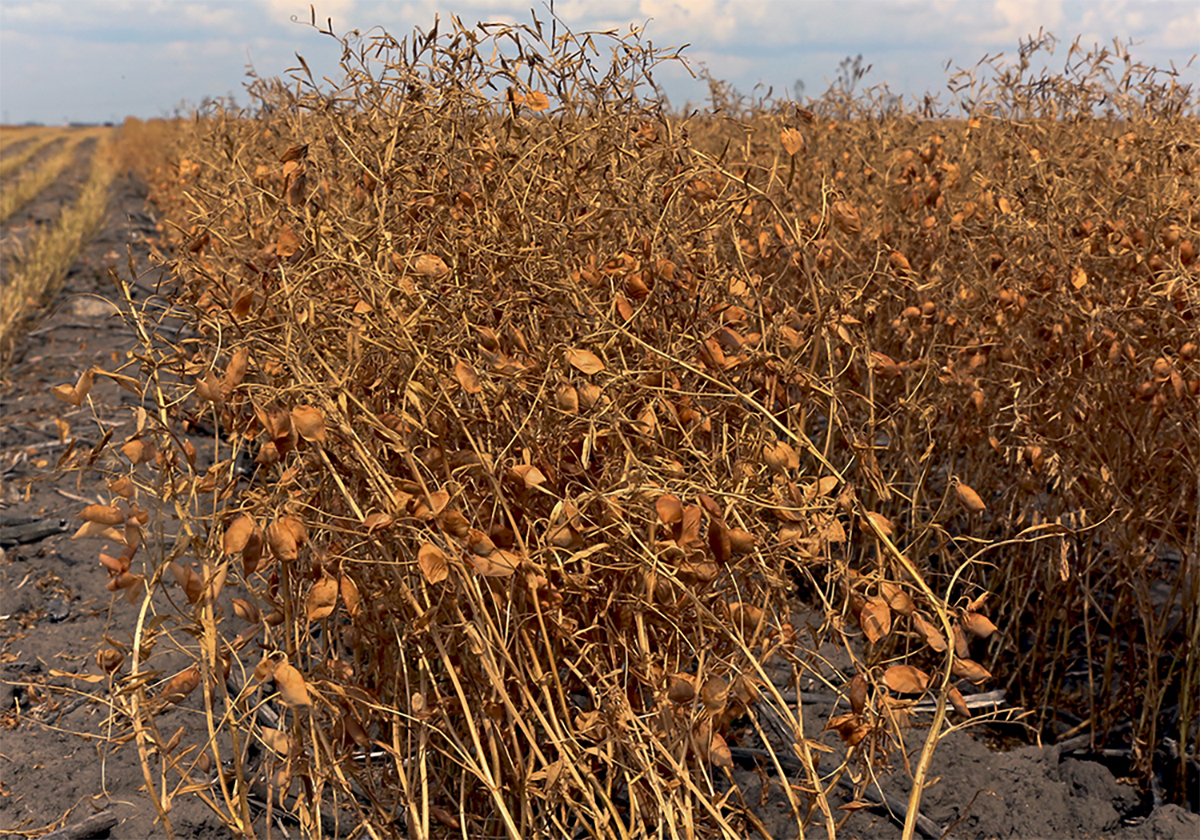
Red lentils priced higher than large greens
Red lentil prices have eclipsed large green lentil prices for the first time since 2014.
The interim regulations scared off many U.S. processors that used to buy Canadian livestock because the packers didn’t want the hassle of segregating animals or having multiple labels in their plant.
The changes in the final rule loosen strict guidelines on what packers can and can’t do, Ritz said, which puts Canadian producers firmly back on a level playing field.
“Our government strongly objected to the possibility that COOL could impose unfair costs on Canadian livestock producers by requiring complete segregation of Canadian animals,” he said. “The final rule provides more flexibility on labelling requirements in the U.S. for meat from animals of American and Canadian origin.”
Canada’s international trade minister, Stockwell Day, was also pleased with the language in COOL.
“The bottom line is that changes to the final rule will keep livestock trade moving throughout the integrated North American market and will benefit producers, consumers and processors,” said Day in a statement.
As a result, the Canadian government is putting aside a World Trade Organization challenge of COOL, launched in December.
“We will shelve our concerns at this point, but will continue to assess the impacts of COOL as it moves along,” Ritz said, noting the challenge hasn’t been withdrawn, but will be held in abeyance.
Since Sept. 30, COOL has forced U.S. packers to classify livestock into three groups. Category A is born and fed in the U.S. Category B is born in Canada (or another country) and fed in the U.S. Category C is for animals exported directly from Canada for slaughter.
The three categories meant strict animal segregation and three meat labels for a packing plant, Product of USA, Product of USA-Canada and Product of Canada-USA, which was too confusing for many processors.
“Most of them (the packers) were prepared to deal with two labels, an A and a B,” said John Masswohl, director of government and international relations for the Canadian Cattlemen’s Association (CCA).
The changes in the final rule, Masswohl said, will make it easier for packers to handle animals from different categories, but still maintain a Product of USA-Canada label.
“Now what they said, is if you have B and C cattle (or hogs) being commingled in a facility on a production day, on that production day you can label an animal B (USA-Canada)… That is important. What we hope the impact will be is that many of those U.S. facilities who said it’s not worth taking C cattle will start buying them again.”
Masswohl said the improved flexibility is good news. But that doesn’t mean the CCA is in favour of COOL.
Similarly, the Canadian Pork Council maintains a position that COOL is a barrier to trade, but is cautiously optimistic that the final rule will lead to stability.
“Publication of the final rule may alleviate some of the market uncertainty that currently disrupts our U.S. – Canada trade relationship,” said Jurgen Preugchas, president of the pork council.
Kynoch concurred that stability is welcome. But there’s no guarantee the U.S. packers will take advantage of changes in the final rule.
Furthermore, he said, there is still the question of how Americans will react to meat with Canada on the label.
“Are the retailers willing to carry this product and are the consumers going to buy?”