

This is Part 2 of a two part series examining the U.S. Department of Agriculture’s Conservation Reserve Program (CRP), by Western Producer reporter Robert Arnason. Last week, Arnason reported on a group of North Dakota producers that said wildlife groups have hijacked the mandate of the CRP, which was designed to take marginal land out of production.
This week, Arnason looks at the USDA’s decision against the agricultural lobby, which wanted producers to be able to break their CRP contracts without financial penalties.
Read Also
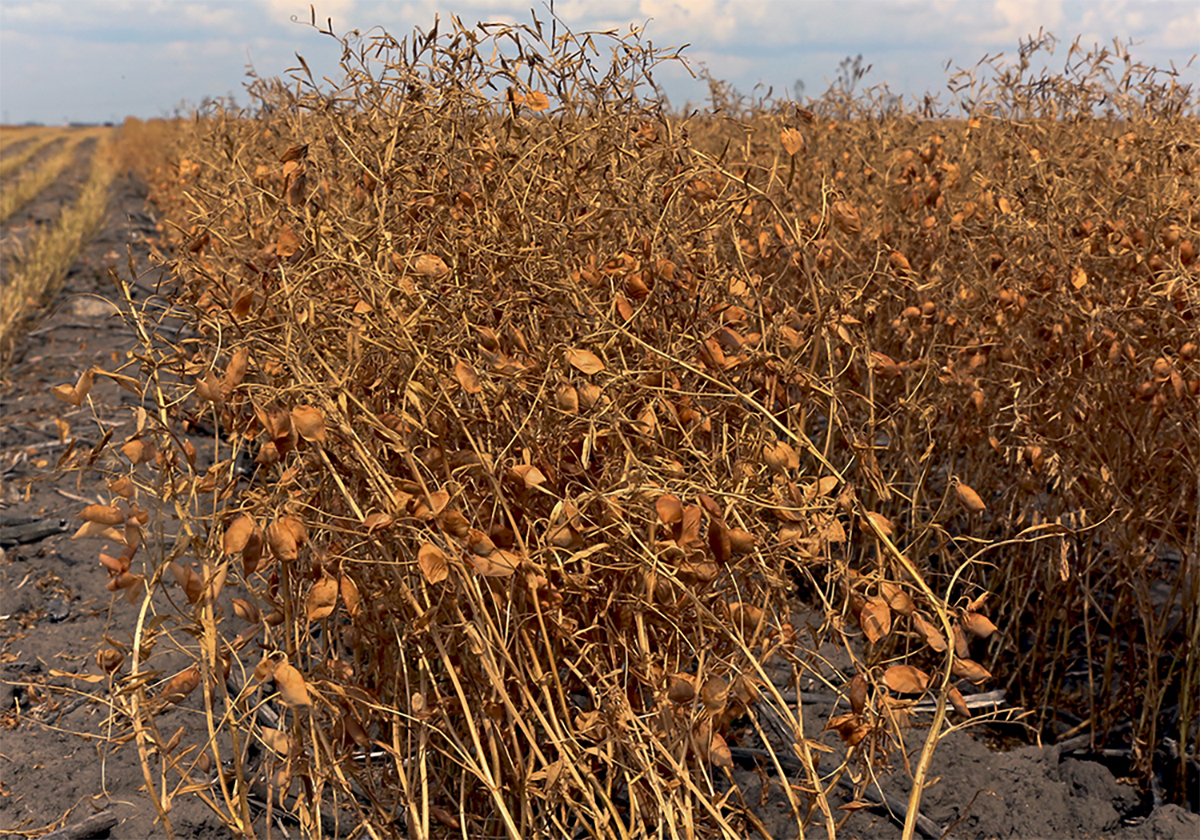
Red lentils priced higher than large greens
Red lentil prices have eclipsed large green lentil prices for the first time since 2014.
While it’s not taking direct credit, the National Wildlife Federation is pleased that its lawsuit may have influenced a U.S. Department of Agriculture decision to not allow early release of acres from the Conservation Reserve Program (CRP).
On July 29, U.S. agriculture secretary Ed Schafer ended months of speculation when he announced the USDA wouldn’t permit farmers to exit the CRP without a financial penalty. Across the U.S. there are 34.7 million acres enrolled in the $1.8 billion program, where producers typically sign a 10 year agreement and are paid $50 per acre, on average, for idling marginal land.
The decision comes only a few days after a July 24 court decision, when a U.S. district court judge in Seattle ruled for the National Wildlife Federation (NWF) in a lawsuit against the USDA. The judge concluded that the USDA had not assessed the environmental impact of the critical feed program.
The ruling effectively killed the program, which proposed to open 24 million acres of CRP land for haying and grazing.
“The secretary of agriculture did not mention our lawsuit … but the court decision from last week was pretty clear from the judge. Before you (the USDA) make major decisions… that you do need to do those environmental reviews,” said Duane Hovorka, the farm bill outreach co-ordinator for the NWF.
The court decision should have sent a clear message to the USDA, Hovroka said, that it shouldn’t implement sweeping policies without public input or environmental considerations.
“The Conservation Reserve Program has three primary purposes: soil conservation, water quality and wildlife,” he said. “I would hope that the USDA would recognize that those are the purposes of the program and continue to manage it that way in the future.”
Schafer’s announcement ends a long round of heated lobbying in Washington D.C., as wildlife groups and agriculture associations squared off over the CRP and the early out policy.
“This is the number one private lands conservation program, ever… This program is monumentally successful for ducks, pheasants, other wildlife, soil conservation and it keeps millions of tons of nitrates and phosphates from running down the river. It’s a big deal,” said Neil Shader, communications specialist with Ducks Unlimited in Washington, D.C.
On the other side of the issue, the National Grain and Feed Association (NGFA) and other agricultural groups have promoted the early out policy, without penalty, as an easy way to increase crop production in the U.S.
After the decision went against them, agricultural lobbyists lashed out at the USDA, saying the policy will only exacerbate the food inflation crisis.
“It is outrageous that the government is going to pay these folks not to grow, when they want to grow on these acres,” Robb MacKie, president and chief executive of the American Bakers Association, told the New York Times.
“There is exploding demand globally for food, feedstuffs and biofuels that the United States can no longer ignore,” said NGFA president Kendell W. Keith in a news release, which added the comment that “continuing to rely on perpetual good weather in the United States is not a prudent policy response.”
In an interview with the Western Producer just before the decision, Randy Gordon, a vice-president with the NGFA, explained that his organization wanted some, not all, of the CRP contracts eligible for early producer exit.
“What we’re asking the department to do is make available for penalty free early outs, the least environmentally sensitive land that’s currently enrolled in the CRP,” said Gordon. Based on USDA numbers, he estimated that would make seven to 12 million acres of cropland available for production.
In making their case, the NFGA said the USDA’s policy is hazardous to the environment.
“For instance, landowners who in 2006 extended for an additional two years their initial 10 year CRP contracts, representing acres with lower environmental benefit… are required to repay all 10 years of (the) original CRP contract rental payments, plus any rental payments received thus far on the extended contracts… plus interest,” said the NFGA in a news release.
In comparison, if a producer would like to withdraw a sensitive piece of land from the program, the NFGA said, they only have to repay the rental payments for the current contract.
“(It) encourages CRP contract holders to bring the most environmentally sensitive land back into production,” the NFGA added.
Not all farm groups, however, oppose Schafer’s decision.
“A lot of our growers feel a contract is a contract, and you ought to see that through,” said Mark Gaede, director of governmental affairs for the National Association of Wheat Growers.
Gaede doesn’t buy the theory that freeing up CRP will suddenly boost U.S. corn production.
“When the CRP was established in 1985, it was done at that time as a way to shore up very low wheat prices,” he said. “Consequently, a lot of the acreage in the CRP is in the wheat belt. You’re not going to be planting much corn in Montana.”
To justify his decision, Schafer cited recent declines in commodity prices and expectations of a large proportion of producers choosing to exit the program over the next few years, when their contracts end.
In 2009, 3.8 million acres are scheduled to expire and another 4.4 million acres in 2010.
“So, large blocks of land will be available for other uses, if landowners choose to pursue them,” Schafer said.