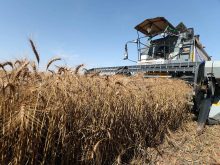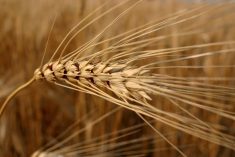


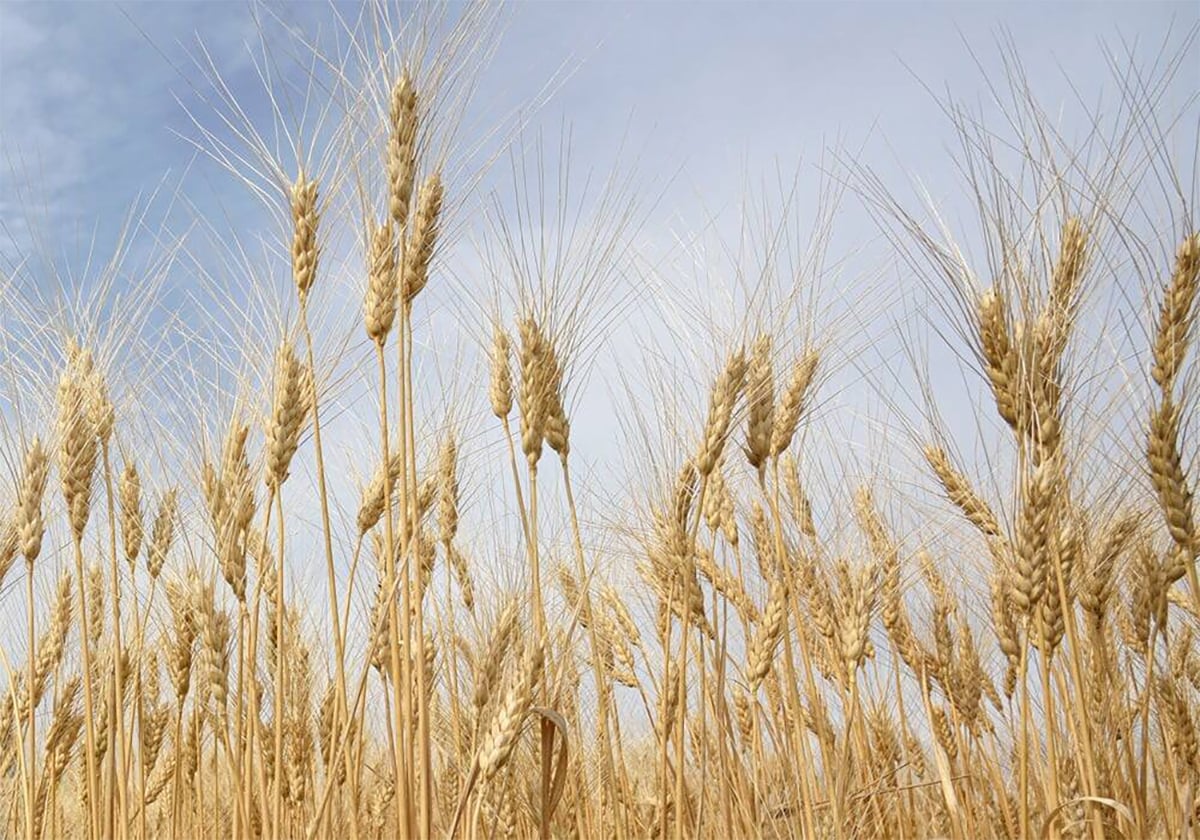
SASKATOON — Turkey’s 2026 durum crop looks promising.
“Crop conditions are favourable thanks to the arrival of much-needed rains after a dry start of the winter cereals campaign,” Carlotta De Pasquale, an analyst with Arete, The Agri-food Intelligence Company, said in an email.
“This is expected to drive yields higher compared to both last marketing year and the five-year-average, compensating for the lower seeded area.”
Read Also

Selecting IDC-tolerant soybeans does not reduce yield, Manitoba study confirms
University of Manitoba research shows soybean varieties selected for iron deficiency chlorosis (IDC) tolerance protect yield in affected areas without reducing performance elsewhere in the field.
Planting was down four per cent compared to last year, but production is expected to increase by six to eight per cent due to the improved yields, she said.
The increase in production combined with higher beginning stocks could allow Turkey to once again be a net exporter of the crop, said De Pasquale.
Why it Matters: Turkey shocked the durum market in 2023-24, when it suddenly emerged as a major exporter of the crop.
“As of right now, Turkish prices are not competitive for exports, as they are currently higher than Italian prices,” she said.
To become competitive, Turkish prices will have to fall, international prices will have to rise, the Turkish lira will need to be devalued, or some mixture of the above factors, said De Pasquale.
Arete’s comments mesh with a recent report on Turkey produced by the U.S. Department of Agriculture’s Foreign Agricultural Service (FAS).
It is forecasting 19.8 million tonnes of total wheat production, a 20 per cent increase over last year and the second biggest crop on record.
“Some industry insiders believe production could climb higher and even surpass the prior record of 21 million tonnes, if spring rains in March-May are favourable,” said the FAS.
Turkey’s winter wheat and durum are planted in October-November and harvested in May-June.
Precipitation during the October through February period was 24 per cent higher than the long-term average, according to the Turkish State Meteorological Service.
The FAS is forecasting 6.5 million tonnes of total wheat exports in 2026-27, up from 6.3 million tonnes in the current campaign.
The report did not break out how much of that would be durum, but it did say there was a slowdown in durum exports in 2025-26 due to a short crop.
De Pasquale said crop conditions are favourable in the entire Mediterranean region.
Yields are expected to be sharply higher than the past few years in North Africa, especially in Morocco.
Arete expects production to return to the pre-2022 average, limiting import requirements for the region.
LeftField Commodity Research recently estimated that North Africa’s durum production could reach 5.6 million tonnes in 2026, a 20 per cent increase over last year’s output.
Conditions are also favourable in the European Union, despite some heavy rain concerns in central and southern Italy and southern Spain.
However, seeded acreage is down, resulting in reduced production potential. COCERAL is forecasting 8.01 million tonnes of durum, down from 8.68 million tonnes the previous year.
Arete expects Russia’s 2026-27 production to be in line with the current marketing year, although lower import demand from North Africa could limit its export potential.