

The hallway poster at Buhler’s head office sets a clear goal for all employees – growth, growth and more growth.
The bar chart on the poster is headed upward, rapidly, with the tallest bar representing the company’s ambitious goal of manufacturing 2,000 tractors in 2010.
If it reaches that number, it would triple production from 2006, when Buhler assembled 660 four-wheel drive and Genesis tractors.
“We have already increased our production from 1½ tractors per day to three or four tractors per day over the (last) six or seven months,” said Dmitry Lyubimov, president of Buhler Industries from the company’s headquarters in south Winnipeg.
Read Also
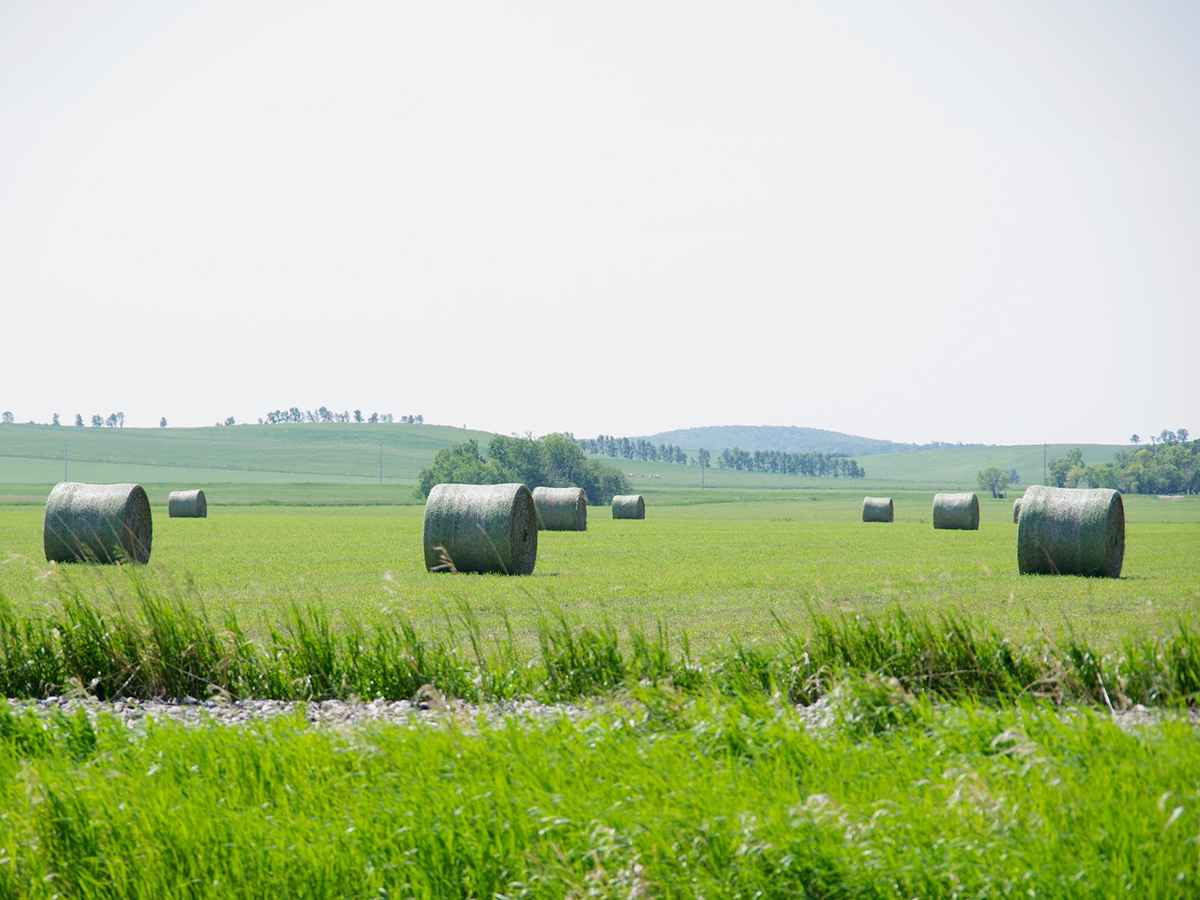
How Saskatchewan’s satellite forage insurance program is going to work
Saskatchewan Crop Insurance Corp.’s Satellite Forage Insurance Program is officially underway, having replaced the Forage Rainfall Insurance Program.
Lyubimov became president last fall when the largest agricultural company in Russia, Combine Factory Rostselmash, purchased 80 percent of Buhler’s common shares.
The timing of the purchase has matched the Russian company’s aggressive plan for growth. Demand for tractors has shot through the roof, thanks to the recent runup in grain prices.
This year Buhler plans to build 1,087 tractors, with half remaining in North America and half going to Rostselmash dealers in Russia.
“For us, it would probably be easy to sell all our tractors to Russia,” said Lyubimov. “But we don’t want to lose the North American market.”
Demand for higher horsepower tractors is strong in Russia, Lyubimov said, because farms are much larger than they were five years ago. More money has been invested in farming, he noted, leading to large agricultural holdings and a need for modern equipment.
“Farms in Russia are huge,” he said. “(Some) look like a small European country.”
Located in Rostov-on-Don, in southwestern Russia, Rostselmash dominates the combine market in Russia and Eastern Europe, producing 5,200 machines in 2007.
The three Russian owners of Rostselmash, all younger than 40, have had a mandate of growth since buying the company in 1999. Before their takeover of Buhler, Rostselmash built 850 combines per year.
However, to grow further, the owners realized they would have to expand beyond their single product.
“It became too difficult to support our dealers’ network,” said Lyubimov. “Each dealer wants not only combines, he wants the full range of agricultural equipment.”
That realization led to the purchase of Buhler, which has sold tractors in Russia since 2003.
“Buhler has very good name and reputation in Russia,” said Lyubimov, who added the tractors are known for their simple design, high horsepower and reliability.
In 2007, Buhler employed 700 people and Rostselmash has since added 100 workers – 40 at the Winnipeg tractor plant and 60 at plants in Morden, Man., and Fargo, North Dakota.
Buhler produces grain augers at its Morden plant and front-end loaders and bale carriers at its facility in Fargo.
“We ramped up production as demand started to spike,” said Adam Reid, Buhler’s advertising manager, during a tour of the assembly line in Winnipeg.
Reid said boosting production has been a challenge for the company and its suppliers. A shortage of steel and components such as hydraulic pumps has hindered production gains, but Buhler is catching up.
While the expansion plans are going well, Lyubimov is having trouble adjusting to one aspect of life in Winnipeg. Since moving to Canada last fall with his family, the climate has been a surprise.
“I would say it’s colder than Moscow. I don’t know about the summer. Many people promise that Winnipeg sometimes has a summer,” he said with a laugh.
On April 28, Buhler reported second quarter profit of $3.6 million, compared to $954,000 last year at the same time. Sales for the quarter ending March 31 were $50.56 million, down from $56.73 million last year.