
If the federal government’s objective is to increase farm incomes, one option is to raise prices. The easiest way to accomplish that is to constrain the food supply and increase food insecurity.
Few politicians would agree that is a good strategy, but that may well be the outcome of the federal government’s approach to the agri-food sector.
Read Also

Strychnine should not be seen as a silver bullet for gophers
The emergency registration of strychnine for control of gophers in specified areas of Alberta and Saskatchewan may actually hamper control of the rodents.
If adopted globally, Canada’s playbook would result in wealthier farmers, but it would come at the expense of consumers. This is what it looks like from my farm.
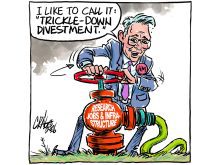
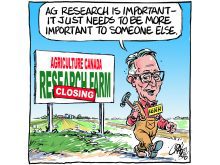
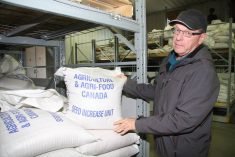
Undermine public agricultural research
Reducing support for Agriculture Canada, particularly its crop research programs, would quickly erode Canada’s global competitiveness.
For example, Canada’s wheat breeding program is consistently ranked among the top three worldwide, yet it continues to lose funding.
If public plant breeding is weakened or discontinued, as announced recently, farmers will face higher seed costs, reduced margins, and declining incentives to grow wheat, potentially increasing reliance on government business risk management programs.
With a proven return on investment of approximately 30:1, cutting this research is a false economy. It has been proven time and again that private multinationals cannot supply the same value as Agriculture Canada. Less output inevitably leads to higher prices.
Continue underfunding transformational innovation
Agriculture Canada has developed a globally unique technology that enables non-legume crops to fix their own nitrogen. This innovation has the potential to dramatically improve farm profitability, reduce greenhouse gas emissions by up to 85 per cent on grain farms and reshape global agriculture.
In Western Canada alone, it could increase farm profits by $3 billion annually, generate $1.5 billion per year in domestic royalties and an additional $8 billion from the U.S. market.
Despite this potential, the program remains underfunded, poorly resourced and lacks a strategic commercialization plan.
The gap risks reinforcing Canada’s reputation for inventing but failing to capture the economic benefits of global adoption. Reduced innovation leads directly to higher prices.
Allow further foreign control of the value chain
Permitting increased foreign ownership of upstream and downstream agricultural sectors will extract profits from Canada and concentrate market power.
While this may raise prices, it will likely reduce farm incomes as input costs are controlled by monopolies and production incentives decline. Over time, this may also suppress output, again resulting in higher prices, but the profits will go elsewhere.
Neglect climate and sustainability goals
Failing to pursue net zero or net positive goals by 2050 represents a significant missed opportunity.
There is a clear pathway to increasing farm profitability while improving environmental outcomes.
No-regret beneficial management practices — outlined in my forthcoming book, Evolution of Farm Stewardship: Leaving a Legacy, can reduce costs, improve soil health, open premium export markets and lower financial risk.
Agriculture Canada plays a critical role in enabling these outcomes. Ignoring this opportunity will increase exposure to extreme weather and long-term costs, further driving up prices.
Rethinking agriculture’s economic role
In 1939, author and educator Peter F. Drucker argued that agriculture was no longer a primary driver of economic growth in modern economies. While influential, this view underestimates agriculture’s ongoing capacity for innovation and wealth creation.
Farmers convert sunlight into food, feed, fibre and biochemicals — creating foundational economic value — and do so more efficiently each year through technology and knowledge.
While primary farming accounted for $31.7 billion in gross domestic product and 233,000 jobs in 2024, the broader agri-food system, including inputs, production, processing and distribution, represents approximately seven per cent of Canada’s GDP ($149 billion) and 2.3 million (or one in nine) Canadian jobs.
Agriculture Canada is a critical driver of agricultural innovation. While programs should always be reviewed and improved, broad funding cuts that undermine the interconnected agricultural innovation systems are short-sighted.
David Rourke is a grain farmer from Minto, Man.