


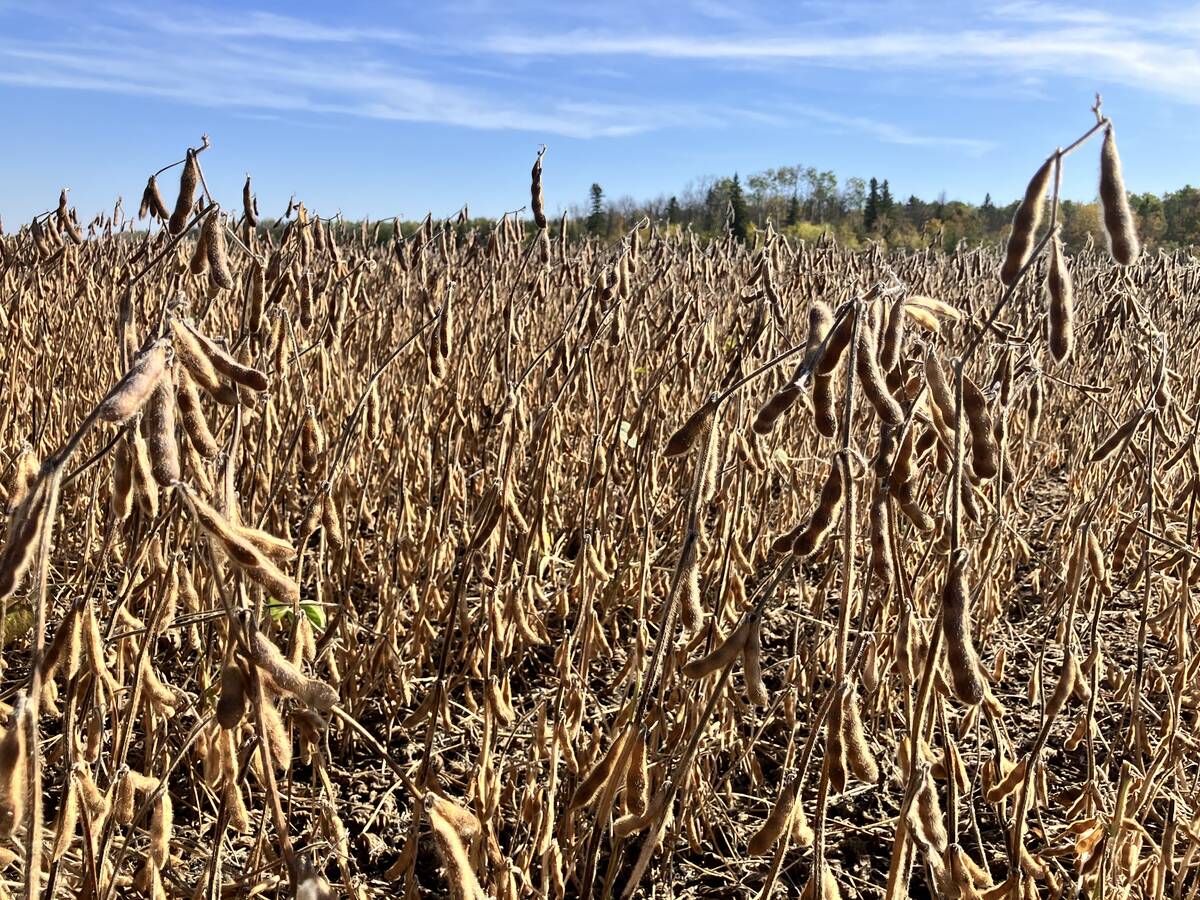
SASKATOON — American soybean growers want their government to penalize imported biofuel feedstocks such as Canadian canola oil.
A new economic analysis shows that the U.S. Environmental Protection Agency’s proposal to assign 50 per cent of the Renewable Identification Number (RIN) credits to imported biofuel and biofuel made with imported feedstock would greatly benefit U.S. farmers.
“This study confirms that when policy values domestic feedstocks, rural communities benefit,” American Soybean Association president Caleb Ragland said in a press release.
Read Also

New financing possibilities open for tractor firm
A tractor company aimed at hobby farmers and rural property owners is getting a boost through a new finance agreement with a North American financing and asset solutions firm.
“The half-RIN proposal still gives biofuel producers flexibility, but it keeps American soybeans competitive and keeps more value here at home.”
Why it Matters: The U.S. biofuel sector could consume a lot of Canadian canola oil, depending on how the policy shakes out.
The half-RIN proposal reduces policy incentives to substitute foreign oil for U.S. soybean oil, according to the study funded by the United Soybean Board and conducted by World Agricultural Economic and Environmental Services.
The half-RIN idea was originally floated by the EPA in June 2025 as part of its Proposed Renewable Fuel Standards for 2026 and 2027.
The EPA recently stated that it expects to issue its final rule during the first quarter of 2026.
Commodity groups were pleased with the proposed rule, which set the biomass-based diesel mandate at 5.61 billion gallons for 2026 and 5.86 billion gallons for 2027.
That is a massive increase from the 3.35 billion gallon mandate for 2025.
However, the Canadian Oilseed Processors Association (COPA) was not happy with the half-RIN idea for imported biofuel and biofuel feedstock.
“That’s unfortunate,” then COPA executive director Chris Vervaet said at the time.
“They’re proposing a 50 per cent haircut, if you will.”
Vervaet said the half-RIN proposal could seriously restrict the flow of Canadian canola oil to the U.S.
“With that type of a haircut on credit values, we’re going to be challenged to compete with other feedstocks. There’s no doubt about it,” he said.
The ASA is lobbying hard for the EPA to keep the half-RIN proposal in place in the final rule.
Its study shows that if the proposal is eliminated, soy cash receipts would fall US$2.1 billion for the 2026-27 crop and another $2 billion for 2027-28.
The value of soybean oil and meal would decline $4.8 billion in 2026-27 and $6 billion in 2027-28.
Soybean oil used in biofuel would drop 2.4 billion pounds in 2026 and 3.3 billion lb. in 2027, while foreign imports of tallow and used cooking oil would increase by 2.3 billion lb. in 2026 and 2.4 billion lb. in 2027.
Derek Squair, president of Exceed Grain Marketing, said the EPA’s RIN haircut proposal aligns with U.S. President Donald Trump’s America First agenda.
He thinks the canola market has already factored in some sort of penalty for imported biofuel feedstock in the U.S. market, but he doesn’t know if it is for the full 50 per cent proposed by the EPA or something less than that.
However, he noted that canola-based biofuel is superior to soybean-based biofuel.
“There is still going to be some canola that leaks into the country,” said Squair.
“We have quite an advantage on just the quality of biofuel that we make.”
He said the lingering policy uncertainty in the U.S. biofuel market is one of the main contributing factors to the ongoing volatility in the canola markets.
“You see that in those big up days and big down days,” he said.
However, if the EPA decides in its final rule to treat imported canola biofuel and U.S. biofuel made with imported canola oil the same as U.S. soybean-based biofuel, that could “absolutely” boost canola prices.
“It would help significantly,” he said.
For instance, if Canadian crushers processed another one million tonnes of oil for the U.S. market, that would shave 1.8 million tonnes of seed off ending stocks in 2026-27.
“That would be huge for the price,” said Squair.
Growers, crushers and exporters are also eagerly awaiting details on the 45Z clean fuel production credit.
The U.S. Department of Treasury and Internal Revenue Service delivered its proposed rule on the credit to the White House Office of Management and Budget (OMB) on Dec. 17, 2025, according to an article published by Ethanol Producer Magazine.
The OMB review is the final stage before the proposed rule is released for public comment.
The 45Z credit entered into force in 2025, but biofuel producers are still waiting for full guidance on the credit. The delay has resulted in curtailed biobased diesel production in that market.