


REGINA —There are still more questions than answers about the impending loss of federal agricultural research scientists and centres announced along with other government cuts in January.
However, University of Saskatchewan agricultural economist Richard Gray said the decision to find savings at the very basis of farm production will have far-reaching effects and represents significant losses to the sector.
Agriculture Canada has not yet said when the cuts will occur. Unions representing the workers said they haven’t been told.
Read Also
Selecting IDC-tolerant soybeans does not reduce yield, Manitoba study confirms
University of Manitoba research shows soybean varieties selected for iron deficiency chlorosis (IDC) tolerance protect yield in affected areas without reducing performance elsewhere in the field.
However, sources said it could take a year for research to be wound down, which raises questions about the upcoming growing season and what the closures mean for associated producer-led research organizations.
Why it Matters: The agriculture department announced 665 job cuts and the closure of seven research farms as part of its effort to cut 15 per cent from its budget. Some of the centres have been conducting research for 140 years, developing and improving crop varieties that allow Canadian farmers to produce top quality.
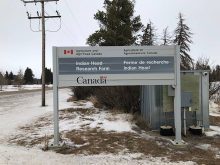
In Saskatchewan, satellite research farms at Indian Head, established as one of the five original experimental farms in 1886, and Scott, opened in 1910, are closing, as is Lacombe, Alta., established in 1907, and Portage la Prairie, Man., a satellite of the Brandon centre that opened in 1944.
Others affected are in Guelph, Quebec City and Nappan, N.S.
At Swift Current, Sask., the organic research program has been discontinued.
Are rising business risk management costs to blame?
Gray suggested the cuts may have come as a result of burgeoning business risk management costs.
The compensation rate for AgriStability moved from 80 to 90 per cent, and crop insurance premiums have gone up a lot. He hypothesized the department decided it wouldn’t be popular to cut BRM programs so looked to research instead.
“We end up keeping things like AgriInvest, which has a benefit cost ratio certainly less than one,” he said.
“We’ve got a lot of BRMs that were created at a time when the sector was in real trouble and wasn’t wealthy.
“I don’t think there’s a rationale for maintaining those at the same rates when you’re cutting research. It’s just foolhardy.”
He has done extensive research on the value of public research. For wheat alone, the benefit-cost ratio is 35:1.
Research has proven very valuable
As well, he said Indian Head was the birthplace of zero-till technology with late Agriculture Canada scientist Guy Lafond and farmer Jim Halford collaborating to establish the practice.
“That innovation was worth $27 billion to the western grain economy,” he said.
“It may be true that the next discovery is not going to happen.”
The benefit-cost ratio of public agricultural research is so high because it’s underfunded, Gray added.
Earlier this year, the federal wheat breeder in Swift Current announced his resignation. Although that came before the cuts, Gray said “a reasonable person” would assume they are related.
He estimated that program was worth about $500 million per year, and even if a replacement is found, it will create a four-year delay or a loss of about $2 billion to the Canadian economy.
“I get really frustrated,” he said.
“To say (research) is just gone, it’s not planning and it’s counterproductive.”
It’s early, but this is not good news
Canadian Seed Growers Association executive director Doug Miller said Agriculture Canada was signalling for some time that it wanted to move away from variety finishing.
“Although it’s really too early to know what the impacts of these station closures will be on doing variety finishing and their role in public plant breeding, it’s not good news for Canadian producers,” he said.
Miller said the stations said to be closing play critical roles in the seed sector. Indian Head, for example, is home to the Breeder Seed Increase Unit, which Miller said can’t be picked up and moved overnight.
“We certify about 1.2 million acres — we’re one of the world’s largest seed certification systems in the world — and 20 to 25 per cent of that production has gone at one time through Indian Head,” he said.
“That’s not a small amount.”
He and Gray both listed top varieties of several crops that have come through the federal research process.
Miller said the research centres represent critical capacity for Canadian farmers. Researchers have plots or trials at various locations to test performance in different soil zones and conditions.
“What we didn’t want to see happen was decisions around the future of public plant breeding were made through a budget bill or made through workforce adjustments and that’s exactly what has happened,” he said.
Instead, the CSGA wanted a conversation that included farmers who have invested millions of dollars through check-off funds and royalties.
The organization will continue to advocate for those talks about what comes next.
The current system has served farmers well, but won’t drive Canadian farmers forward, Miller said. If Agriculture Canada is not going to be involved in variety finishing, farmers need a sustainable solution that propels them ahead and supports both public and private plant breeding.
Growers to seek increased support from Ag Canada
A CSGA resolution to the Canadian Federation of Agriculture annual meeting next month will ask for more support for public plant breeding and for Agriculture Canada to start that conversation with farmers.
He added the impact of research closures won’t be immediate, but in five or 10 years people will wake up and wonder where productivity went.
Meanwhile, Milton Dyck, national president of the Agriculture Union, said nearly 500 of the 2,500 employees it represents at Agriculture Canada were affected, including administration, trades, librarians and lab and field technicians. Other employees, such as scientists, are members of the Professional Institute of the Public Service.
He said while the federal public service grew by 30 per cent in the last several years, staffing at Agriculture Canada dropped by 14 per cent between 2012 and 2025.
“These cuts will sabotage important gains we’ve made in agricultural research and set research on Canadian food products back by decades,” he said.