

Farmers needing a spring weather forecast may be disappointed in the lack of certainty in the outlook.
“If I was to talk about (the Prairies), I would say it is an equal chance” of a warm, cold or average spring, said Richard Moffet, Environment Canada applied research meteorologist. Most forecasters agree with Moffett that this spring is a roll of the dice in Canada, including meteorologist Chris Scott of The Weather Network.
“There’s no strong signal saying it’s going to very dry or very wet,” said Scott.
Read Also
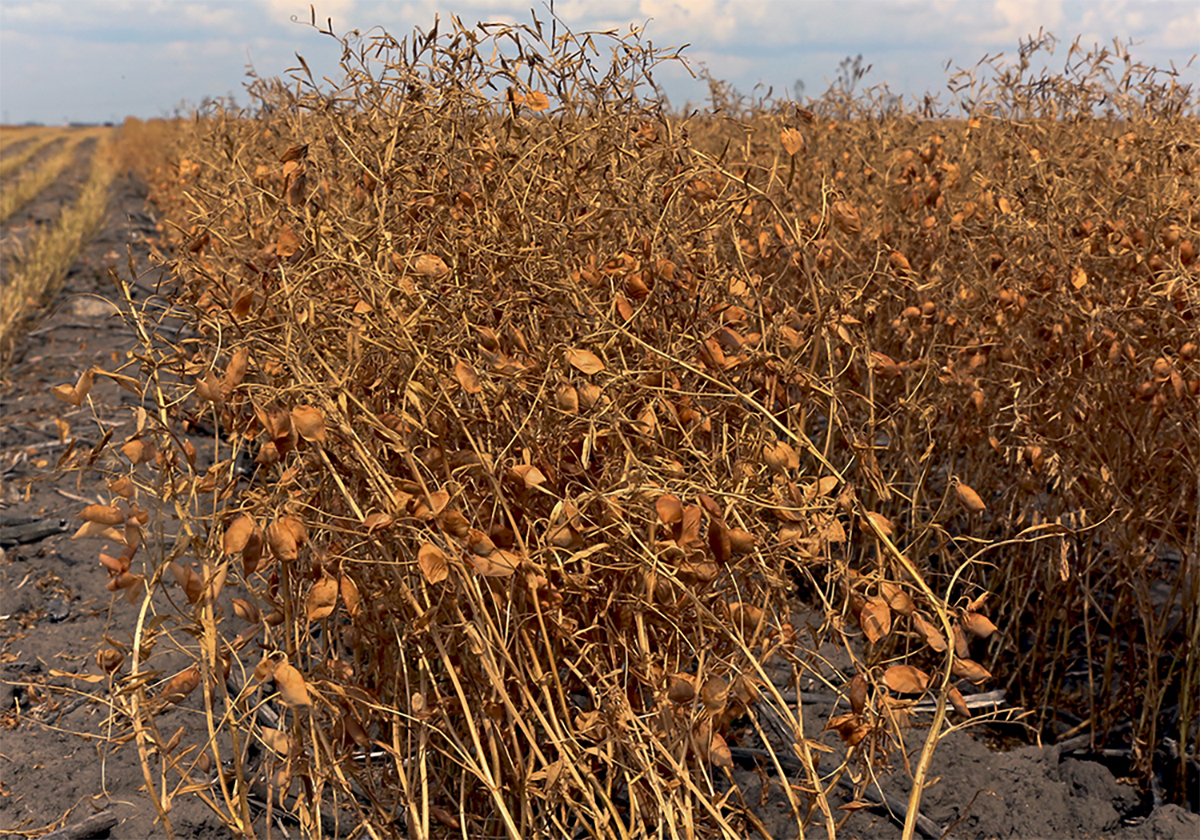
Red lentils priced higher than large greens
Red lentil prices have eclipsed large green lentil prices for the first time since 2014.
“If there is a slight signal, it would be for southeastern Saskatchewan and into southern Manitoba …. A little above normal precipitation …. But overall, it looks like a normal spring.”
Environment Canada’s March to May temperature forecast has a blue swath over western Manitoba, the southern half of Saskatchewan and a diagonal slice of Alberta from Medicine Hat to Grande Prairie., indicating a cooler than usual spring.
However, Moffet said that forecast should be taken with a grain of salt because this spring Environment Canada’s forecasters have strong faith only in their temperature predictions for Canada’s east and west coasts.
“But for the rest of Canada, the confidence is very low this year,” he said.
Moffet said computer models predict an almost equal chance of warmer, colder and average spring temperatures for most of Canada.
“One-third say it’s going to be above normal, one-third say it’s going to be below and one-third it’s going to be normal,” he said, pointing to a weakening La Nina as one reason for the uncertainty.
A La Nina is when cooler than usual temperatures dominate the eastern Pacific Ocean. The phenomenon affects climate and this year’s version was blamed for the drought in Argentina. However, it is dissipating and is not expected to be a factor as prairie farmers seed their fields.
“We have neutral conditions for sea surface temperatures, as far as the Pacific is concerned,” he said, which suggests neutral weather conditions for Western Canada.
Mike Halpert, a forecaster with the U.S. National Weather Service’s Climate Prediction Center, said the lack of a dominant global weather element such as La Nina or El Nino makes it difficult to make a three-month forecast for the northern plains.
“It (then) falls into the terminology which we call natural climate variability. You can call it randomness.”
While snow cover is deeper in parts of the northern plains, such as North Dakota, Halpert said snow on the ground is not a dominant weather factor in the spring.
“Snow cover plays a larger role usually early in the winter.”