

Record snowfall in North Dakota and saturated soil north of the border will likely cause significant flooding of farmland in southern Manitoba this spring, according to the province’s first flood forecast of 2009, released Feb. 19.
An average weather scenario, from now to spring melt, is expected to produce conditions similar to 2006 in the Red River Valley south of Winnipeg, which was the fourth largest flood in Manitoba’s history.
That year the river crested in the middle of April, flooding 100,000 acres of farmland in Manitoba and the U.S., according to satellite images from NASA. The floodwaters peaked at 15 kilometres wide between the Manitoba towns of Morris and Letellier.
Read Also
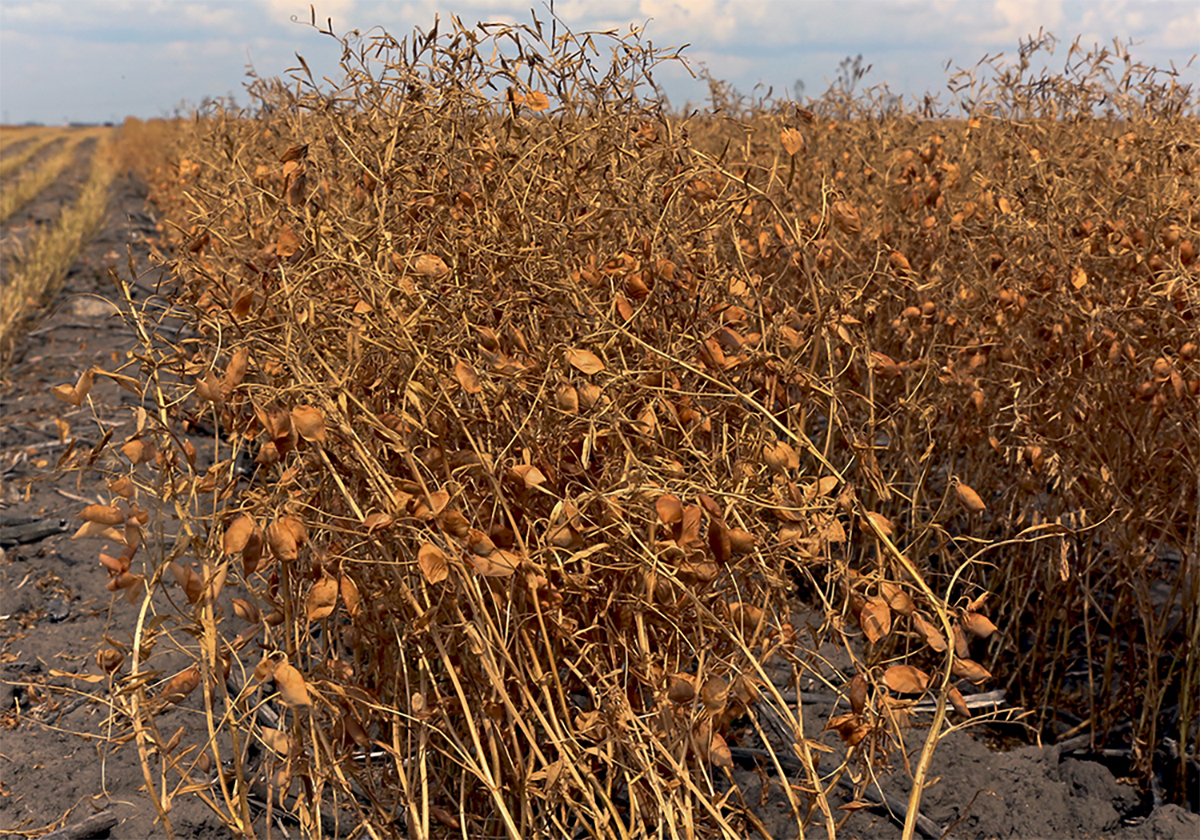
Red lentils priced higher than large greens
Red lentil prices have eclipsed large green lentil prices for the first time since 2014.
“The 2006 (scenario) is about 50 percent (likely),” said Alf Warkentin, Manitoba’s chief flood forecaster, who noted that soil moisture in the province is at an all time high.
“According to my soil moisture index calculations, it’s the highest we’ve ever had,” said Warkentin, based on records going back to 1948.
“We had a very big rainstorm in the first week of November over the Red River basin … and that really saturated everything.”
On top of that, Manitoba Agriculture said soil across the province is frozen more than half a metre deep, nearly double the usual, which means much less infiltration of melt water this spring.
Snow cover and snow water content are average or above average across most of Manitoba, the flood forecast noted. But North Dakota has much more snow than usual, thanks to a record-breaking December, when many locations in the state recorded 75 centimetres of snow or more for the month.
The massive amount of snow will likely cause flooding of the Souris River in southwestern Manitoba, and based on the flood forecast, will produce “significant flooding of agricultural lands near the river.”
The word significant, Warkentin said, could equate to flooding 1.6 km wide, depending on the topography along the Souris River valley. Overall, flooding of the Souris is expected to mirror conditions from 1999.
For producer Wayne White, who farms 2,000 acres near Melita, the flooding could cause him to lose 300 acres adjacent to the river. He noted when the Souris does flood in his area it takes a long time for the water to recede.
“Sometimes on May 1 it still hasn’t flooded and then all the water comes down from Saskatchewan and the States,” he said. “Once it floods it doesn’t get away for six weeks, so it pretty well kills your seeding.”
That loss may not happen, White said, if the spring melt comes in early April.
“The timing is the main thing.”