
“We need to engage young farmers” is something we hear often in agriculture, but too often it’s treated like a check box.
Young farmers get added to mailing lists, invited to generic events or placed on committees where nothing really changes.
Sometimes they’re labelled as “represented,” when the reality is they’re just being sold to or used to fill a seat. That’s not engagement. That’s optics.
Read Also

Strychnine should not be seen as a silver bullet for gophers
The emergency registration of strychnine for control of gophers in specified areas of Alberta and Saskatchewan may actually hamper control of the rodents.
At the same time, young farmers are running businesses, managing risk, adapting to new markets and technology and making long-term decisions that will shape Canadian agriculture for decades. If we want their time and attention, we need to offer something meaningful in return.
Real engagement is not complicated, but it does require intention.
It means listening more than talking, creating learning opportunities instead of selling ideas, offering the chance to influence rather than just extending invitations and providing opportunities where people can genuinely contribute.
In practice, that can be as simple as bringing young farmers into real decision-making conversations early, asking for their perspective and showing clearly how their input shapes outcomes.
Young farmers know the difference, and they are making decisions based on it. The organizations that invest in real engagement will earn their time and trust. The ones that don’t will simply be left out.
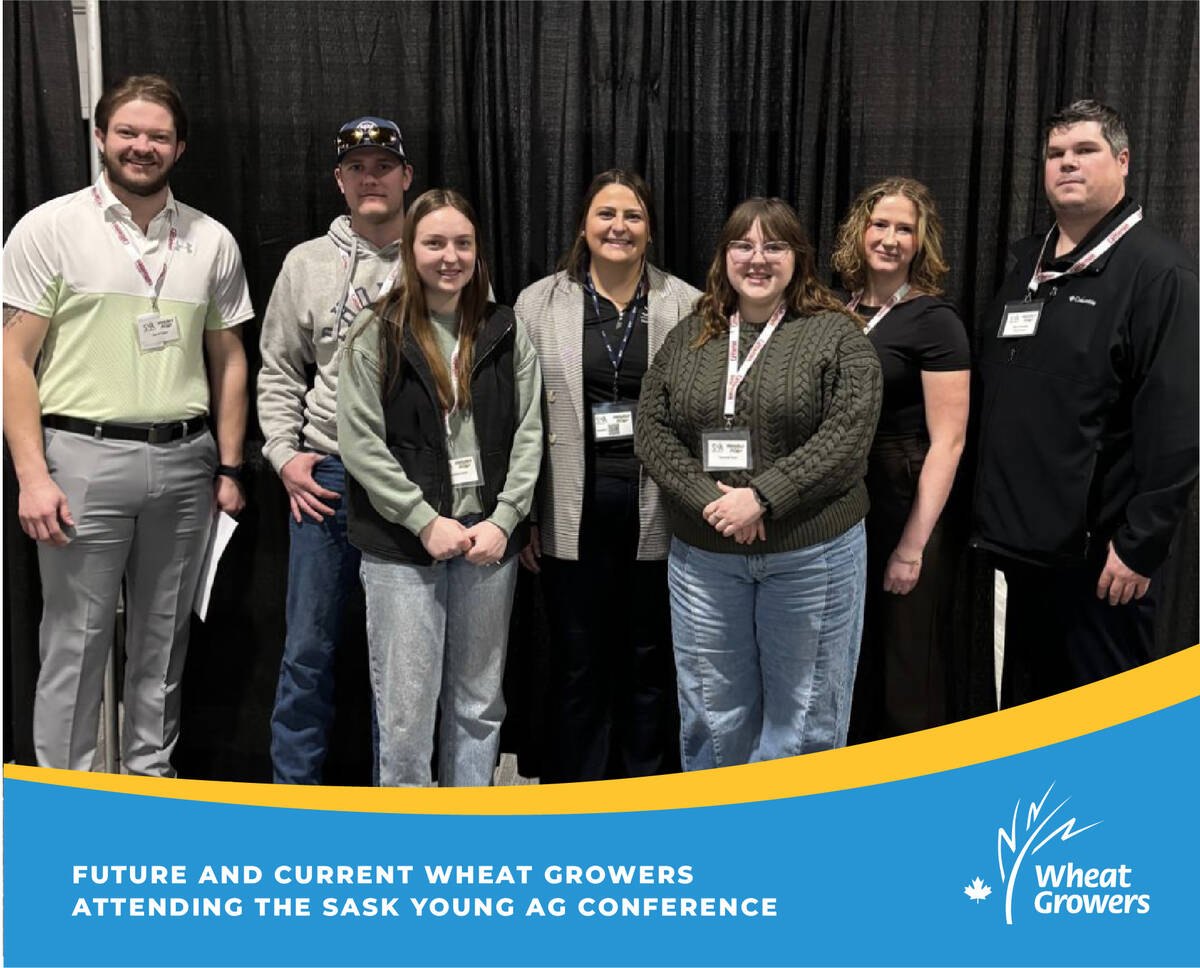
I saw this firsthand while planning the Saskatchewan Young Ag conference. We welcomed about 80 young producers, not with swag or sales pitches but with real information, honest discussion and space to connect. No selling, just conversation and connection.
That’s what keeps people engaged, and more importantly, it often becomes the starting point for something more.
From there, many look for ways to stay involved, to keep learning and to contribute at a higher level.
I experienced that personally.
I was just 21 when the Wheat Growers Association asked me to serve as a director, not for optics, but because it believed young voices belonged at the decision-making table.
That opportunity changed the course of my involvement in agriculture advocacy.
Today, the Wheat Growers Young Farmer Mentorship Program builds on that same principle, investing in leadership, learning and connection.
It creates a pathway for young farmers to move from participation to contribution and ultimately into leadership roles within the industry.
With applications now open, it is an opportunity for the next group of young farmers to step into that experience and help shape the future of our sector.
Across agriculture, programs such as Outstanding Young Farmers continue that progression by recognizing and elevating those who are pushing the industry forward in their own operations and communities.
Taken together, these experiences show what real engagement can look like when it is done well.
It is not a single event or initiative but a continuum that supports growth, builds confidence and creates space for young farmers to lead.
If we truly want young farmers engaged, and not just listed, we need to keep building along that path. It means moving beyond emails, logos and token representation and investing instead in learning, influence and community.
That’s because young farmers aren’t check boxes. They are business owners, decision-makers and the next generation of leadership in this industry.
When we engage them in a way that reflects that reality, they do not just show up, they step forward.
Kaitlyn Kitzan is treasurer of the Wheat Growers Association.