

SASKATOON — The U.S. Department of Agriculture’s January WASDE report is often seen as a market mover, and the latest one did not disappoint.
“It was a very surprising report, and unfortunately, not surprising in the direction we would have liked,” said DTN lead analyst Rhett Montgomery.
About an hour after the report was released, nearby corn futures were down US$0.23 per bushel, soybean values fell $0.15 and wheat was down a nickel.
Read Also

United Nations warns of food crisis; others not convinced
SASKATOON — A leading U.S. grain market analyst does not put much stock in reports of a looming food crisis…
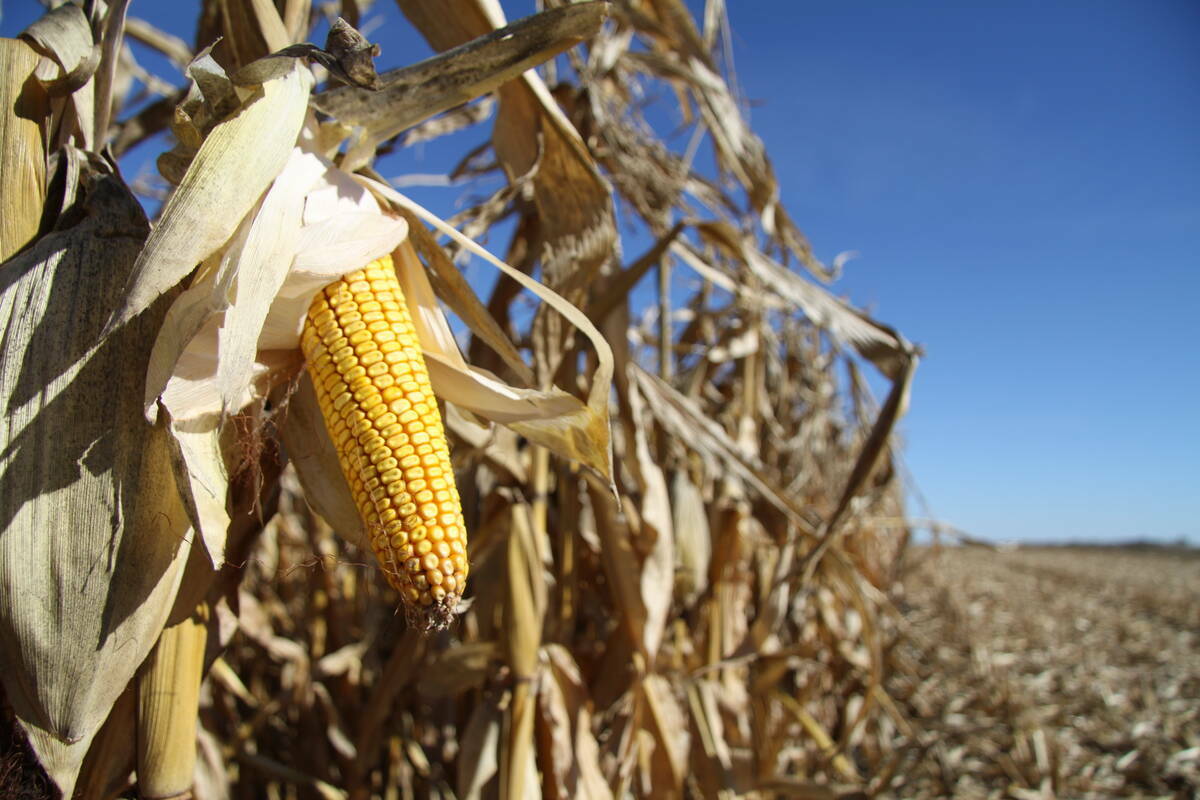
Corn was the real shocker, with the USDA pegging harvested area at 91.3 million acres, a 1.3 million acre increase from the December report and about three million acres higher than its June forecast.
“I don’t believe there has ever been a bigger miss by the USDA,” Montgomery said during a DTN webinar.
“That’s the real backbreaker when you look to the bottom line.”
Why it Matters: U.S. corn, soybean and wheat prices have a big impact on Canadian crops.
U.S. corn production is now forecast at a record 17 billion bushels.
There was a 90 million bu. increase in total demand for the crop, but it was not enough to offset the rise in production.
Ending stocks are now forecast at 2.23 billion bu., up from 2.03 billion in December. That would be the highest in seven years.
World ending stocks are pegged at 291 million tonnes, up from 279 million tonnes a month ago, largely due to the massive U.S. harvest.
The good news is that U.S. corn exports are on pace for another record. Export commitments totaled two billion bu. as of Jan. 1, 2026, which is 30 per cent above the previous year.
The USDA is forecasting 3.2 billion bu. for the entire year, which would be a 12 per cent increase.
Soybean acres and yields were basically left unchanged.
The big shift was the 60 million bu. drop in 2025-26 exports to 1.575 billion bu., which would be the lowest level in 13 years.
That will be partially offset by a 15 million bu. increase in crush.
The soybean ending stocks estimate for 2025-26 blossomed to 350 million bu., the highest in six years, from the December forecast of 290 million bu., which would have been the lowest in three years.
World ending stocks are forecast to rise to 124.41 million tonnes from the December forecast of 122.37 million tonnes.
Brazil’s crop is forecast at a record 178 million tonnes, which is at the low end of the private sector estimates. A lot will depend on February weather when crops in central Brazil are in the pod-filling stage of development.
U.S. soybean exports are off to a slow start with total commitments 29 per cent below last year as of Jan. 1, 2026.
The big lingering question remains — will China buy more U.S. soybeans than usual during the March through May period, when it usually turns its full attention to importing Brazilian beans?
Brazilian beans are currently about $0.90 per bu. cheaper than U.S. beans, but China recently signed a deal with the U.S., pledging to increase its purchases from the North American superpower.
Montgomery also believes that the U.S. crush number could end up closer to 2.6 billion bu., up from the USDA’s forecast of 2.57 billion.
Speculators have a bullish bet on soybeans, with noncommercial futures traders net long over 100,000 contracts as of Jan. 6. That is a lot of ammunition for downward price pressure if they suddenly turn bearish.
U.S. wheat acres and yields were left unchanged, as was production at 1.985 billion bu.
Total usage fell 21 million bu. to 2.033 billion bu., due primarily to a 20 million bu. drop in the feed and residual category.
That pushed ending stocks up 25 million bu. to 926 million, the highest in six years.
World wheat ending stocks in 2025-26 are forecast at 278.25 million tonnes, up from the December forecast of 274.87 million tonnes due to larger crops from Argentina and Russia.
U.S. wheat export commitments as of Jan. 1, 2026, were running 18 per cent above last year’s levels, while shipments are 22 per cent higher.
The USDA is forecasting 900 million bu. of exports for the entire year, which would be nine per cent above 2024-25.
Montgomery thinks the USDA is being cautious because it expects increased competition from Argentina during the last half of the marketing campaign.
He thinks the soybean sector needs to do more incentivizing if it intends to increase acres next year to supply China if that country returns to normal purchasing levels.
Montgomery now believes that U.S. corn acres will drop to 94 to 95 million acres in 2026, down from 98 million acres last year.
The USDA pegged U.S. winter wheat planting at 32.99 million acres, which is one of the smallest crops in the last 100 years.