


Alberta cattle feeders can blame a hike in diesel fuel costs for their difficulty getting Saskatchewan grain.
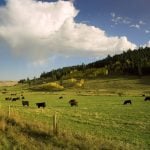
Drought conditions in southern Alberta restricted the supply of feed barley. There is lots of grain available in Saskatchewan, but truckers aren’t willing to move it into Alberta.
“There’s not a shortage of grain so much as a shortage of truckers willing to haul it at the old prices,” said Jeff Warrack, president of the Alberta Cattle Feeders Association.
“To get it, someone is going to have to give. We’re either going to have to pay more or the farmer in Saskat-chewan is going to have to take less.”
Read Also
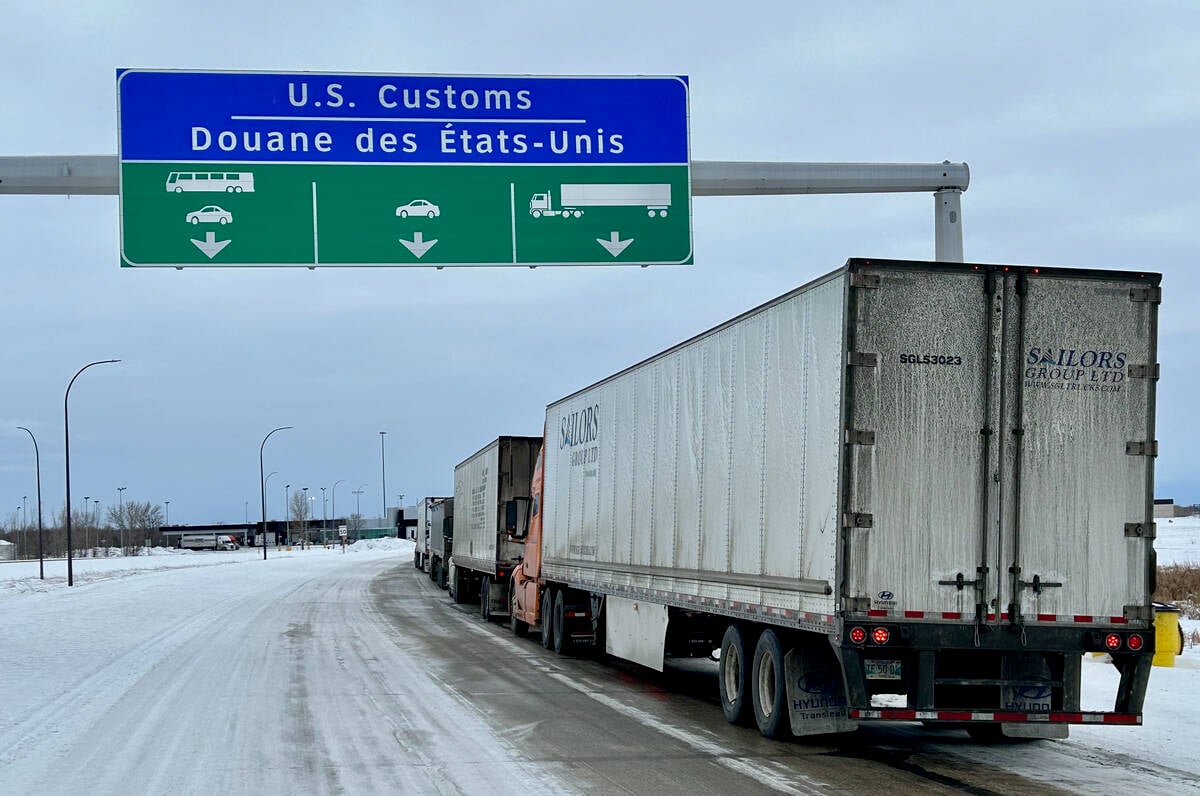
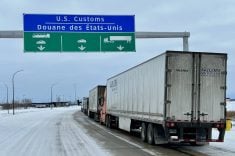
U.S. bill could keep out Canadian truckers
The Protecting America’s Roads Act, which was tabled in the U.S. House of Representatives at the beginning of October, would “rid the country of illegal immigrant commercial truck drivers and ineligible foreign nationals.”
Farm input statistics compiled by Alberta Agriculture show diesel fuel costs have risen 40 percent from last November to this November. It now costs $44.95 for 100 litres of diesel fuel after the provincial rebate.
Wayne Nicholls is president of
Biggar Transport Ltd., a major Saskat-chewan grain hauler. He said skyrocketing fuel costs have had a staggering effect on his business.
“It has been dramatic. Our bottom line has just been eaten up completely. We’ve had increases in the past, but nothing like we’ve seen (this year.) So it has been really devastating.”
Nicholls said his company has been able to recover some of the costs through surcharges, but it’s hard to keep pace with the diesel fuel especially where they are locked into contracts at the lower rates.
“In the transportation industry most of us are figuring that this is the way it’s going to be. We don’t really see the price of fuel going back that much, to be honest with you.”
He said there are a number of trucking companies that are underfunded or overcapitalized and probably won’t survive these tough times.
The only way custom grain haulers can make long-distance trips pay is through two-way hauls, where they pick up some kind of cargo at the delivery point for the trip back home.
“The day of a one-way haul is pretty near finished,” said Nicholls.
“The Alberta feed market is one that’s really starting to suffer because of that. They can’t find carriers willing to run those kinds of distances and there isn’t enough two-way haul.”
The situation is especially bad during the winter months when diesel fuel is made thinner so it can flow in the cold weather. That reduces the fuel economy by about 15 percent.
Truckers also burn more fuel in the winter because they leave their trucks running rather than turn them off. Nicholls said drivers pulling super-Bs are paying about $1.05 per kilometre for all their costs during the winter months.
Freight rates are going to have to rise if the Alberta feedlot sector wants to see any Saskatchewan grain, said Nicholls.
“The cattle producers who have done fairly well the last little while may have to dig a little deeper in order to get the product because the grain farmer over here sure can’t subsidize it.”