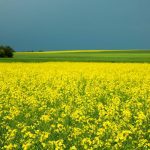


To get a better handle on how much carbon is stored in soil and how soil carbon is changing over time, researchers from the University of Saskatchewan, the University of Guelph and other institutions are conducting a case study at a 32,000-acre farm near Moosomin, Sask.
Tag Archives carbon sequestration

Crop yields can be increased sustainably: Nutrien
The chief executive officer of the world’s largest ag retailer says sustainability and higher yields are not mutually exclusive
OTTAWA — The head of the world’s largest agricultural retailer said farmers can meet the challenge of providing enough food for the world’s growing population and do it sustainably. But they can’t do it alone. Ken Seitz, chief executive officer of Nutrien, said sustainability and increasing yields are not mutually exclusive. “We need to dispel […] Read more
Minimum tillage continues to pay long-term dividends
Senate ag committee’s soil study told that carbon levels in the soil have continued to increase 30 years after zero till was adopted
Prairie soils store carbon each year, even after widespread adoption of conservation tillage, a Saskatchewan farmer told the senate agriculture committee last week. Jocelyn Velestuk farms near Broadview and has a master’s degree in soil science. “Long-term studies, such as the Prairie Soil Carbon Balance Project, have found that there is still incremental positive carbon […] Read more
Carbon price exemptions preferred over rebates
Amendments to federal legislation that would exempt fuel used to dry grain and heat barns return to ag committee
Carbon price exemptions, rather than rebates, would help farmers invest in more energy-efficient and sustainable practices, witnesses told the standing committee on agriculture. The committee has resumed its study of Bill C-234, which would amend federal legislation to exempt propane and natural gas from carbon pricing if used to dry grain or heat barns and […] Read more
Living lab initiative to focus on carbon sequestration
Sites in three soil zones will help contribute information on carbon sequestration as research initiative tightens its environmental focus
Research into climate change mitigation techniques and their effects will take place on about 25 Saskatchewan farms and ranches for at least the next five years. The South of the Divide Conservation Action Program Inc. and more than a dozen partners were recently awarded $8 million in federal funding to focus on four areas: avoiding […] Read more
Rebates not equal to costs
The average rebate farmers can expect on the carbon tax they paid to dry grain is $820 per farm, according to a federal finance official. Bill C-8, the federal government’s answer to calls for natural gas and propane used to dry grain to be exempt from carbon pricing, passed earlier this month. Miodrag Jovanovic, assistant […] Read more

Universities launch soil carbon measurement project
Understanding the processes that producers use to manage pastures and then measuring the carbon storage critical
Scientists are digging deeper into how much carbon is stored in prairie soils. The University of Saskatchewan is co-leading a $3.2 million research project with the University of Alberta that is focused on carbon sequestration for climate change mitigation. The five-year project will study the amount of soil carbon in perennial forage systems across Saskatchewan […] Read more
Rethinking how to approach sustainability, climate change
Climate change — are you still reading? Sustainability — am I now in the recycling bin? How about the word carbon — what does that elicit? These words have frenzied the agriculture industry. Correction: these words are currently frenzying the agriculture industry. They are important. They are divisive. And they are words that long ago […] Read more

Project intended to demonstrate wetlands’ greenhouse gas impact
Two ‘flux towers’ installed in Manitoba carry sensors that can capture data revealing emissions of methane and carbon dioxide
Farmers should get credit for the good work their wetlands do for carbon emission reductions. But before they can get that, they might need to prove it. That’s the thinking behind a project that has placed high-tech towers in two Manitoba farm wetlands. “We need to pound on the ecological goods and services that wetlands, […] Read more
Producers want climate recognition
Canada’s grain farmers want to be acknowledged for their contributions to climate solutions, rather than vilified for emissions, the standing committee on agriculture heard during recent testimony. Susie Miller, executive director of the Canadian Roundtable for Sustainable Crops, said more than 600 farmers with whom the organization consulted said they want recognition for action they […] Read more