

Stakeholder engagement for the Next Policy Framework is now underway, and many aspects of the agriculture industry want their say.
Research, business, government and transport, alongside producers themselves, spoke during last month’s Agricultural Producers Association of Saskatchewan Policy Summit.
A common theme was a need for modernized policy and a rebalancing of priorities to better meet producer needs.
Read Also
Cattle producer uses drones to seed pastures
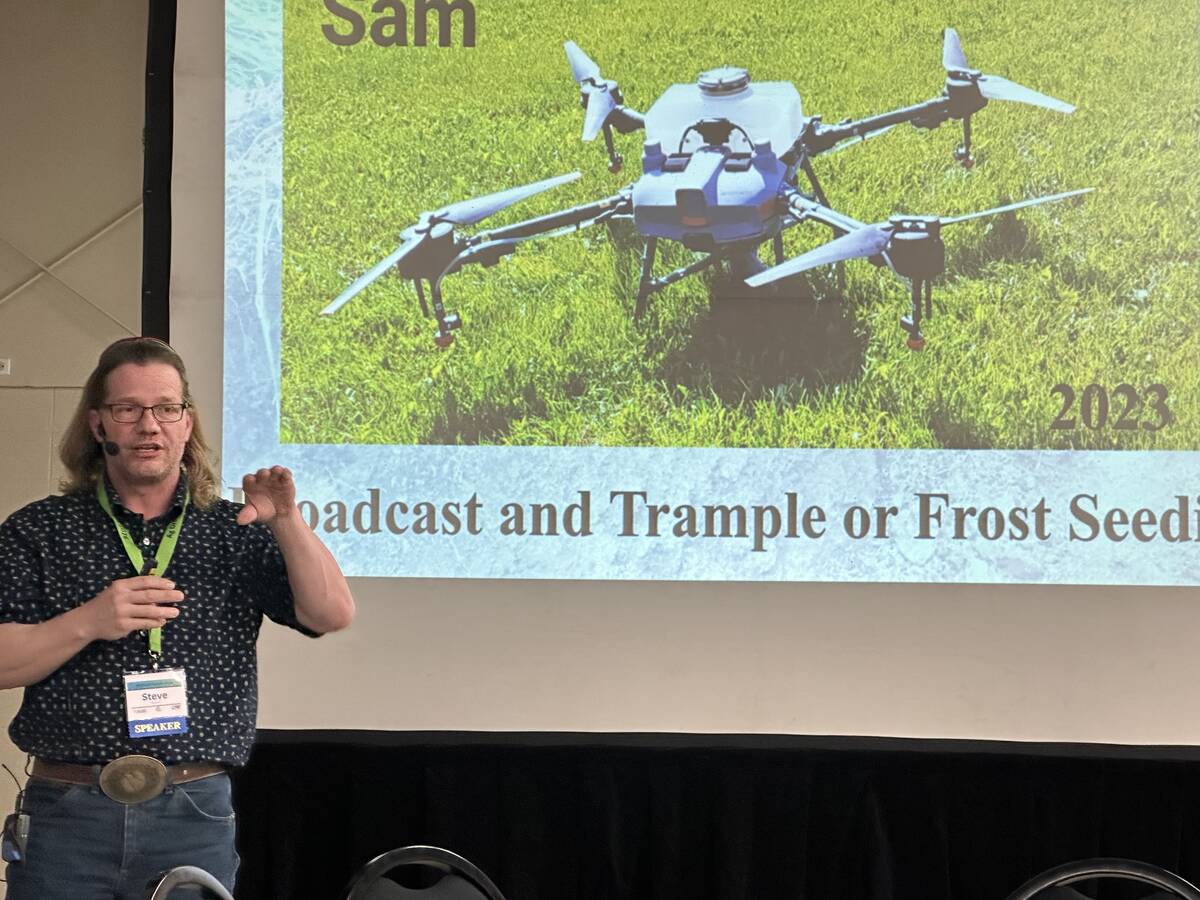
Cattle producer uses drones for a variety of functions, such as making videos for social media and checking and seeding pastures.
Govenment has already been engaging with producers, and has been hearing similar concerns.
“Producers want better support for competitiveness and market access and stability and responsive programs that reflect realities and risks that you face, as well as strong support for the next generation farmers,” Steven Jurgutis, Agriculture Canada’s director general of the policy, planning and integration directorate said via Zoom during the meeting.
The current Sustainable Canadian Agricultural Partnership (SCAP) runs from 2023-28, and through federal-provincial-territorial agreements has provided $3.5 billion in programs and initiatives to support the five priority areas of the framework:
- Building sector capacity, growth and competitiveness.
- Climate change and environment.
- Science, research and innovation.
- Market development and trade.
- Resiliency and public trust.
These were laid out in the Guelph Statement of 2021.
In July, the country’s agriculture ministers are set to meet in Halifax to create the policy statement for the new framework, which will be in place from 2028-33.
Producer perspective
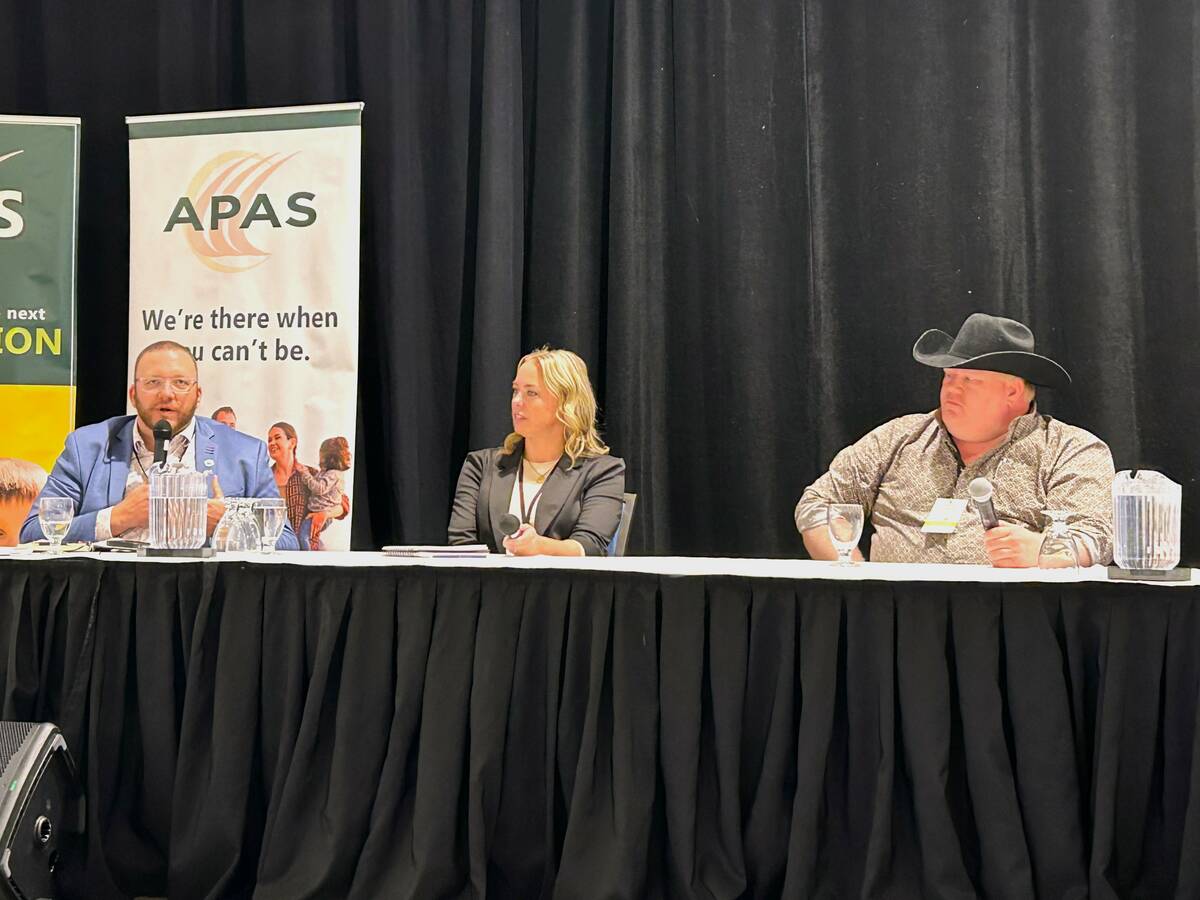
Chris Procyk, a grain farmer near Filmore, Sask., says the biggest risk to agriculture is the lack of people, noting a shortage of labour and farm support such as on farms and grain elevators, and availability of the next generation.
“Agriculture is still a people business, and we need lots of support and tech and whatnot … and transitioning some of the knowledge from one generation to the next, whether it’s on the farm or whether it’s through all the relationships we have,” he said during the producer panel.
His fellow panellists agreed and shared their own concerns about insufficient livestock knowledge within the labour force, ineffective risk management programs and a lack of support to the livestock sector.
Adrienne Ivey, a grain and commercial beef producer near Ituna, Sask., said her operation is an example of the inadequate livestock support. They’ve always had beef and grain but have significantly downsized their beef herd while increasing the grain side.
“Very unfortunately, I believe that business risk management, and more specifically, the lack of business risk management on the livestock side of things, has been a huge determiner of why we have made that switch,” she said.
The lack of insurance options for livestock producter and income stabilization threaten beef operations in a way grain operations aren’t because of the diversity of support available.
Trevor Green, a cattle producer near Fleming, Sask., echoed the sentiment, saying he sees the lack of a “backstop” within BRM programs, such as production insurance, as one of the biggest risks.
“Some of the changes to AgriStability are definitely going to help,” he added.
“A few more that have been proposed would definitely help a lot more.”
Among the panellists, there was a shared worry about the promise from the various levels of government to continue programs and build off of them when there’s little to support the livestock sector as a whole, especially when compared to crops.
The additional challenge with the programs is their complexity and, oftentimes, inconsistencies.
“Some of these programs are so complex and convoluted that they’re a nightmare to understand,” Procyk said.
“And I think at any given time, many of us, whether you’re grain or livestock, want to understand where you’re sitting on any given day, given the conditions.”
There are aspects that are “counterintuitive”, such as being told to keep cattle seperate from grain within the operation,even though it’s benefical to keep everything together. In the new framework, Procyk wants to see simplifed language, consistent advice and standardized terms.
When it comes to the NPF as a whole, the producers said policy makers need to consider the potential issues that agriculture will face down the line to 2033 and not just to 2028.
While BRM programs dominated the discussion, it was clear that counting on government isn’t the goal. Producers said the ultimate goal of the NPF shouldn’t be more BRM programs, but ways to ensure industry profitability and decrease vulnerability of risk.
Success of business is number one, but farmers don’t want to be left high and dry.
“I think that the best use of government funding … is to make sure that we have a healthy industry … so that the suite of business risk management tools that we have don’t need to be used,” Ivey said.
She said trade uncertainty is a significant weight on farmer’s minds and is why BRMs and other measures are needed.
“We still need backstops,” she added.
“Farming is a very capital heavy business, and we need to be able to invest that money with a little bit of stability behind it.”
Other considerations of the framework should include technology and research investments, farmland ownership and business transitions, such as improved timelines to provide farmers with new technology and research quicker.
However, even bigger is the recognition of agriculture’s economic value.
“We’re not just an industry. We’re an economic driver, provincially and federally,” said Procyk.
“We all know the stats of how many jobs are born out of ag or ag business…. Instead of looking at how much of this piece of the pie are we going to carve up, let’s make the pie bigger.”
He said if money is put into farmers’ hands, they will spend it on new equipment, animals and genetics and new methods that will circulate to agribusiness, research and product development and other industries.
Green said this can extend to Canadian food sovereignty, saying that in Saskatchewan alone, there are many opportunities.
“There are so many things we can expand in this province to add value to our products that we grow, like meat. We don’t have enough kill plants to buy beef locally. We don’t have enough pork plants to buy pork locally,” he said.
“We’re importing lettuce and tomatoes from Arizona when we have one of the largest greenhouses in Saskatchewan growing trees, which blows my mind.”
Panellists also asked government to take more feedback from producers themselves, rather than supplemental industry who may be louder than producers and their organizations.