
SASKATOON – After 25 years of providing nutrition information and analysis to farmers, the Sask-atchewan Feed Testing Laboratory will be closed, said the head of the University of Saskatchewan’s department of animal and poultry science.
“The lab was losing money, substantial amounts of money,” said Bernard Laarveld.
Major investments were needed to update equipment if the lab was going to continue, he said. It will close at the end of March.
When the laboratory at the University of Saskatchewan in Saskatoon was started in 1969, it was the only feed testing service available to farmers. Since then several commercial laboratories have been established.
Read Also
Industry shares its thoughts on agriculture policy
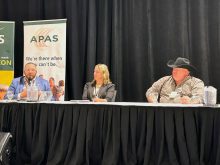
At last month’s Agricultural Producers Association of Saskatchewan Policy Summit, various industry heads brought forward ideas that they wanted producers to consider for the agriculture sector’s Next Policy Framework .
“We feel we’ve done our bit,” said Laarveld.
Alternatives provided
The lab has sent letters to clients with addresses of three commercial labs in Western Canada who can provide feed analysis for the same cost.
Laarveld said the only concern is whether these private labs will offer farmers the same quality of nutrition advice.
He’s worried the work of helping farmers formulate rations will fall back to the university or on rural extension staff.
Although it’s not finalized, he thinks the five staff in the office will find work elsewhere at the university.
With the closing of the feed lab the university is hoping to open a feed resource centre by summer. It will be more of a “think tank” which will focus on research and development of new feed stuff.
“It will help more nutrition information get from the lab to the farmer,” Laarveld said.
They are also hoping to focus on research of new kinds of feed from canola, peas, flax and other non-traditional grains and oilseed feed.
“We can have a much greater area in this new line,” he said.