
This cattle market information is selected from the weekly report from Canfax, a division of the Canadian Cattlemen’s Association. More market information, analysis and statistics are available by becoming a Canfax subscriber by calling 403-275-5110 or at www.canfax.ca.
Alberta 550 pound steer calf prices have rallied.
For the week ending Jan. 24, this category averaged slightly less than $228 per hundredweight, the 13th highest week over the past two years. Since the low of $209. 50 per cwt. in September 2019, prices have improved by 8.7 percent. Prices could overtake last year’s high of $237 per cwt., but they are not likely to average up to $260 per cwt.
Read Also

Volatile temperatures expected for this winter
DTN is forecasting a lot of temperature variability in the Canadian Prairies this winter. Precipitation should be close to average.
This time of year more Canadian feeders tend to head south to the United States. Last week, Alberta calf prices moved to a slight discount against the U.S. market, which is the first time since August, while feeder cattle prices have been trading at a $3-$4 per cwt. premium. This scenario does not encourage more calves and feeders to go south, and it may slow feeder imports from the U.S.
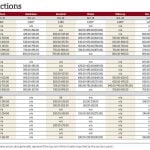
Across the West, steer calves in the 500-600 lb. range averaged $219.67 per cwt. in British Columbia, $227.88 in Alberta, $224.67 in Saskatchewan and $230.20 in Manitoba. Ontario steers averaged $228.36 per cwt.
Fed trade steady
Active Alberta trade in fed cattle showed prices mostly steady from last week. The bulk of sales were reported dressed at $275 per cwt. delivered. With first half February kill schedules filling up, rail bids for end of February delivery were pressured $2-$3 per cwt. lower.
Deteriorating packer margins saw limited cash trade this week.
Alberta steer carcass weights went up eight pounds from the previous week but are 35 lb. light for the same week last year.
Western Canadian fed slaughter for the week ending Jan.18 was nine percent larger than the previous week at 38,639 head, and so far this year it is eight percent larger at 101,569.
Canadian fed cattle/slaughter cow exports to the U.S. for the week ending Jan. 11 have resumed following the holidays to a seasonal 9,467 head and were seven percent larger than the same week last year.
Ontario active dressed trade was fully steady at $250-$255 per cwt. delivered. The Ontario fed market tone is poised to strengthen through February on tighter market-ready supplies. In contrast, Alberta feedlots could lose leverage moving forward as captive packer supplies of formula and contract cattle increase.
Historically, fed prices lose momentum January through February on seasonally soft demand and beef value. Show list offerings moving forward will remain manageable, but cash bids next week are anticipated lower and weekly trade volumes may be limited.
Cow prices up over U.S.
Alberta D2 cow prices have stayed flat since the start of the year, averaging $88 per cwt., while Ontario cows were $61.87 per cwt. On a cash-to-cash basis, western Canadian cow prices are at a $14 per cwt. premium against the U.S. market. Considering January is traditionally a big cow slaughter month, non-fed volumes through commercial auction facilities have been light. Cow slaughter is down nine percent over last year at this time. Smaller carcass weights are also noted at 18 lb. lighter than last year.
Cows that went on feed in late October to early November are starting to come on the market. Demand for feeder cows should remain strong, and cows that are being bought right now could be targeting the early spring market.
Western D3 cows averaged $78.50 per cwt., and Ontario was $51.08 per cwt.
US cattle on feed
The U.S. Department of Agriculture’s Jan. 1 cattle-on-feed report showed higher inventory at 11.9 million, but it is not expected to have much impact on markets. This is the largest report since January 2008.
Steer inventory was up one percent, but heifers on feed were up four percent. The number of heifers has been increasing since 2016.
Cut-out values
U.S. cut-out values were steady to higher this week with moderate demand reported on a light to moderate offering.
The Choice cutout was $2.42 per cwt. higher than last week, and Select eased 27 cents per cwt. lower. Most of the Choice cut-out strength was from middles with rib up $7.75 per cwt., and the loin primal rallied $9.85 per cwt. higher. The Choice cutout closed Thursday at the highest level since Dec. 16, 2019. Round primal gained modestly this week, while chuck eased lower.