
The Western Producer has compiled a number of the TEAM Resources’ more popular recipes that were published over the years. Enjoy.
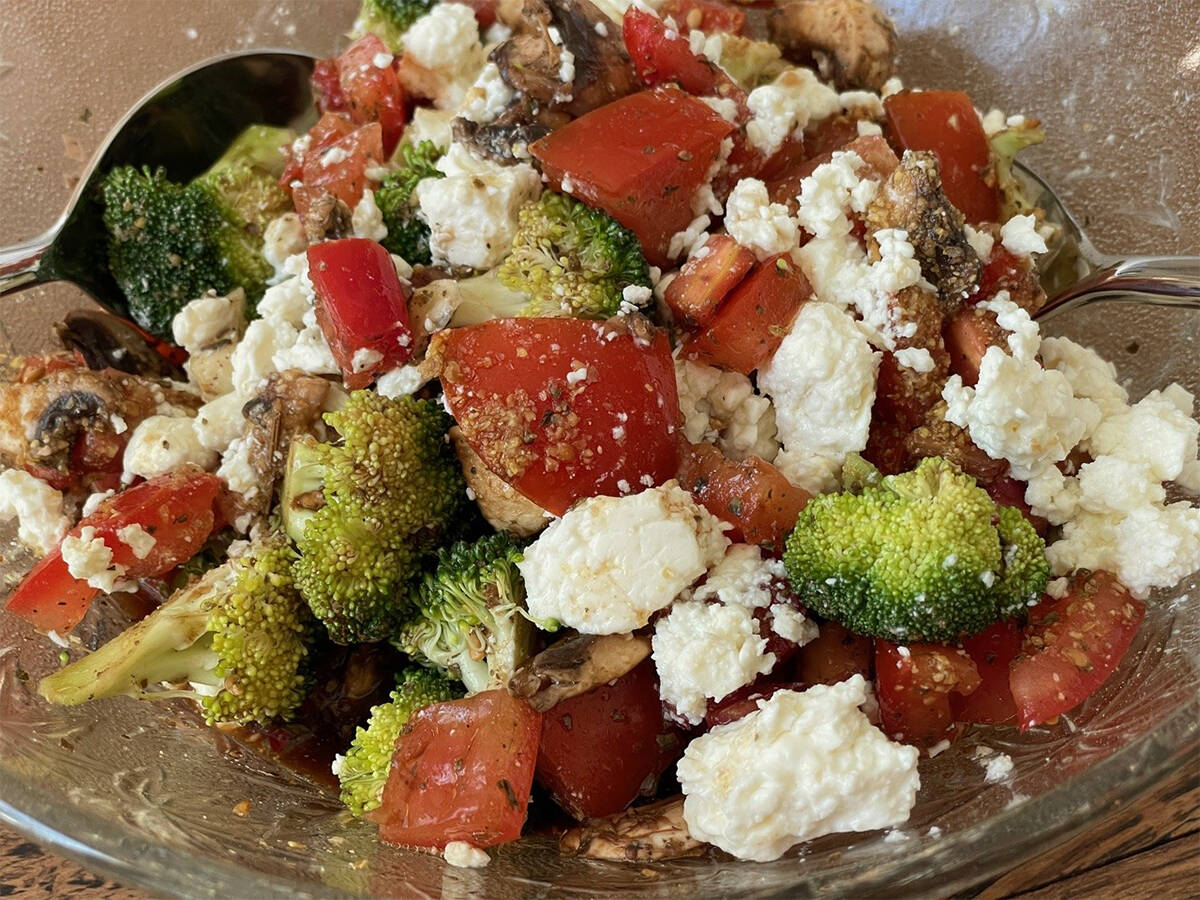
Tomato and feta cheese salad
This recipe comes from a column written by Betty Ann Deobald in the April 28, 2005, issue.
Read Also

Shoulder pain: A common issue for farmers
Shoulder pain is one of the most common joint complaints we hear about at the clinic. This makes sense as the shoulder has a lot going on.
I have made this salad several times and it can be used as a meal or side salad.
- 4-6 roma tomatoes, diced
- 1/2 tsp. salt 2 mL
- 1/8 tsp. pepper, ground 0.5 mL
- 1 cup fresh mushrooms, sliced 250 mL
- 1 cup broccoli flowers and peeled stems, chopped 250 mL
- 3/4 cup feta cheese, crumbled 175 mL
- 2 tbsp. fresh basil 30 mL OR
- 2 tsp. dried basil or Greek spices 10 mL
- 1/3 cup olive oil 75 mL
- 2 tbsp. balsamic vinegar 30 mL
- 1 tsp. toasted flax or sesame seed (optional) 5 mL
Place vegetables in a salad bowl and season. Mix oil and vinegar and pour over. Lightly mix and top with cheese and seeds.
Remaking soft jelly or jam
These recipes appeared in the Aug. 23, 2001, column.
Last year when I was making crabapple jelly, one of the batches did not set. Bernardin’s Jams and Jellies booklet provided me with guidelines for remaking my soft jelly.
Unique circumstances such as growing conditions, the fruit variety or the fruit itself may require more than 24 hours for a gel to form. Wait two weeks to see if the product will gel.
During this time, do not disturb or shake it. If after two weeks the product still has not jelled, it may be recooked.
Only remake products that have maintained a good seal.
First, make one trial batch using one cup (250 mL) of unset product to ensure success. Do not recook more than eight cups (two L) at one time.
All remade jams and jellies must be processed in a boiling-water canner to assure good vacuum seals and to destroy micro-organisms that can cause food spoilage.
Remade jam with powdered fruit pectin
Measure unset jam/jelly to be remade. For each cup (250 mL) of product, measure:
- 2 tbsp. granulated sugar 30 mL
- 1 tbsp. water 15 mL
- 1 1/2 tsp. fruit pectin 7 mL
In a large, deep stainless steel saucepan, whisk fruit pectin into water, stirring constantly to prevent scorching. Bring to a boil. Stir in the measured jam and sugar.
Stirring constantly over high heat, bring to a full rolling boil; boil hard for 30 seconds. Remove from heat. Skim foam, if necessary.
Ladle into hot sterilized jars, leaving quarter inch (0.5 cm) headspace. Remove air bubbles. Wipe jar rim removing any stickiness. Centre new snap lids on jars; apply screw bands securely until fingertip tight. Heat process for five minutes in boiling water canner.
Remade jam, liquid pectin
Measure unset product and place in a large, deep stainless steel saucepan. For each cup (250 mL) of unset product, measure and set aside:
- 3 tbsp. granulated sugar 45 mL
- 1 1/2 tsp. lemon juice 7 mL
- 1 1/2 tsp. liquid pectin 7 mL
Stirring constantly over high heat, bring product to a boil. Add sugar, lemon juice and liquid pectin.
Stirring constantly, return mixture to a full rolling boil. Boil hard one minute. Remove from heat. Skim foam, if necessary. Ladle into hot sterilized jars, and follow instructions as in previous recipe.
Babka
This recipe was published in an April 10, 2008, column by Barbara Sanderson.
Dear TEAM: Would you please send me a recipe for Ukrainian Easter bread? My mother made one with saffron, lemon rind and lemon juice. The ones I’ve found on the internet use too much butter and eggs. Perhaps you have one that is more like the one my mother used to make in Saskatchewan? – L.H., Norquay, Sask.
Dear L.H: I hope this adapted Easter bread recipe is like the one your mother used to bake. The Ukrainian country babka is not as rich as some. Some babkas may have as many as 30 eggs; this has only six. Still, it does have a cup of butter.
Ukrainian country babka
- 2 tsp. white sugar 10 mL
- 1/2 cup lukewarm water 125 mL
- 2 envelopes active dry yeast
- 1 cup milk, scalded and cooled 250 mL
- 1 cup all-purpose flour 250 mL
- 6 eggs
- 1 tsp. salt 5 mL
- 1 cup white sugar 250 mL
- 1 cup butter, melted 250 mL
- 2 tbsp. lemon zest 30 mL
- 1/2 tsp. lemon juice 2 mL
- trace saffron
- 5 1/2 cups flour 1.3 L
- 1 cup raisins 250 mL
In a small bowl, combine two teaspoons (10 mL) sugar, water, yeast, milk and one cup (250 mL) flour. Mix until well blended, cover and allow to rise in a warm place until light and bubbly, about 30 minutes.
In a large bowl, beat the eggs, salt and white sugar until light and fluffy. Stir in the melted butter, lemon zest and juice and saffron. Add the yeast mixture. Stir and then gradually mix in the flour. Knead in the bowl for about 10 minutes and then knead in the raisins. Cover and let rise in a warm place until doubled in volume.
Punch down the dough and knead for two turns. Then let it rise again. Grease four smaller coffee cans with soft butter or use a bundt pan. Fill the prepared pans about a third full and let rise until the dough is even with the rim. Preheat the oven to 400 F (200 C).
Bake for 15 minutes in the preheated oven and then turn down the temperature to 350 F (180 C). Continue baking the bread for another 40 minutes. Avoid letting the top get too brown. If it begins to brown too quickly, cover the top with aluminum foil. Remove baked loaves from the pans and cool on a wire rack.
Source: Adapted from the recipe at www.allrecipescom.
Bubble and squeak
This recipe appeared in the May 25, 2006, column by Alma Copeland.
This is an old recipe from Britain. Cabbage adds to its appearance and texture.
- 4 cups mashed potatoes 1 L
- 4 cups cooked cabbage, chopped 1 L
- 1 tsp. salt 5 mL
- 1/4 tsp. pepper 1 mL
- 2 tbsp. hard margarine or butter 30 mL
Mix first four ingredients in large bowl. Shape into patties. Melt margarine in non-stick frying pan. Brown patties on both sides. Makes eight large or 16 medium patties.
Variation: This may be browned in one big patty and then flipped to brown other side. It may also be scramble-fried instead of made into patties.
Fruitcake
The following appeared in an Alma Copeland column in the Nov. 17, 2005, issue.
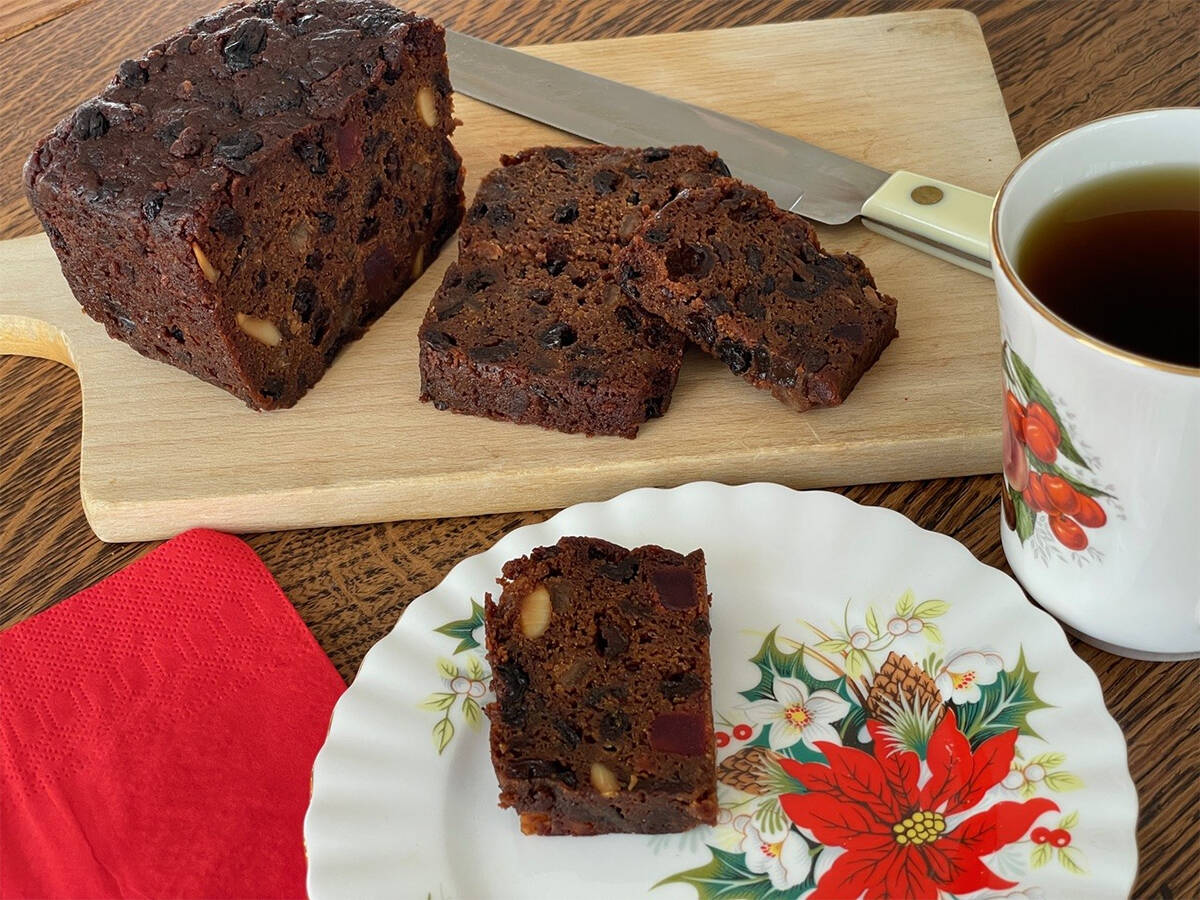
Dark fruitcake
Dear TEAM: I am looking for a dark Christmas cake recipe with no molasses or coffee in it. – M. I., Calgary, Alta.
Dear M.I.: If you have a favourite fruitcake recipe but don’t want to use coffee or molasses in it, you can substitute other ingredients.
For molasses, one cup (250 mL) molasses equals one cup (250 mL) corn syrup or 1 1/4 cup (310 mL) sugar plus 1/4 cup (60 mL) liquid.
Substitutes for the coffee could be another liquid such as juice from maraschino cherries, water, brandy or dark rum. Changing these two ingredients will not change the flavour that much.
Over the years I have tried a few different dark fruitcake recipes. The following recipe from Jehane Benoit has proven to be our favourite.
Rich dark fruitcake
Place 7 1/2 pounds (3.4 kg) fruit in a large bowl. The size of the pieces in which the fruit is cut is a matter of personal preference. In general, currants and raisins are left whole, cherries are cut in half, dates in quarters and candied pineapple cut into chunks.
Use the fruit you like. My preference for reaching the 7 1/2 pounds (3.4 kg) is:
- 1/2 lb. dates 250 g
- 1/2 lb. candied pineapple 250 g
- 1 lb. currants 500 g
- 1 lb. mixed peel 500 g
- 1 1/2 lb. candied cherries 750 g
- 3 pounds raisins 1.5 kg
- *1/2 lb. (250 g) of chopped nuts may be included in the mix, taking 1/2 lb. (250 g) away from one of the other ingredients.
Cake ingredients
- 3 1/2 cups all-purpose flour 875 mL
- 1 tbsp. baking powder 15 mL
- 1 tsp. ground coriander 5 mL
- 2 tsp. cinnamon 10 mL
- 1/2 tsp. ground cloves 2 mL
- 1/2 tsp. baking soda 2 mL
- 1/2 tsp. salt 2 mL
- grated rind of three lemons
- 1 lb. soft butter or margarine 500 g
- 2 cups white sugar 500 mL
- 12 eggs
- 1/2 cup molasses or corn syrup 125 mL
- 1/2 cup grape juice or red or port wine 125 mL
- 1/2 cup strong black coffee or other beverage 125 mL
Sift flour with baking powder, spices, baking soda and salt. Add lemon rind. Pour one cup (250 mL) over fruit and mix well.
In another bowl, cream butter and sugar until well blended. Beat eggs until fluffy, add molasses and beat again. Add eggs to butter mixture. Beat again for three minutes and then add half the flour mixture and mix.
Add remaining dry ingredients and floured fruits alternately with the combined liquids. Mix thoroughly and divide into wax or paper lined pans. Pans can be filled almost to the top. Bake in a 275 F (140 C) oven for 3 1/2 to four hours, or until cake is firm and no longer sizzles when pressed lightly with the finger. Cool before unmolding.
I like to baste the loaves with brandy before wrapping in plastic wrap and putting away for a few weeks to age.
Source: Adapted from The Blue Book of Canadian Cuisine, compiled by Eunice Taylor.
Flapper pie
This recipe appeared in the April 12, 2007, column by Betty Ann Deobald.
A flapper pie has a graham wafer crumb crust and a cream filling using milk, egg yolks, cornstarch and sugar. This is topped off with a meringue. I discovered the flapper pie name is unique to the Canadian Prairies. Those from Eastern Canada and British Columbia aren’t familiar with the term.
In A Century of Canadian Home Cooking, by Carol Ferguson and Margaret Fraser, they explain that in the 1920s, flapper pie, butterscotch cream, banana cream and coconut cream pies were always on the menu in the Prairie cafés that were usually run by Chinese cooks.
Why it was called a flapper pie, I don’t know, other than it was the era of the “flapper,” or the 1920s when young women grew bolder, wore short skirts and bobbed hair and smoked in public.
I remember when Clint and I were engaged, I decided to make a flapper pie to impress him.
Well, it was a runny failure. I think the proportion of cornstarch to milk was not great enough to sufficiently thicken the cream filling. My mom and I made repeated pies to get a recipe that worked.
A question often asked is what is the difference between a flapper pie, a banana cream and a Boston cream pie.
The flapper pie and banana cream pies start with a graham wafer crust. Add a cream filling of bananas, chocolate, brown sugar or coconut to create a different flavour.
Usually the pies are topped with a meringue that is baked to a golden brown.
Generally, a Boston cream pie starts with a cake and then a cream filling is added between two layers of cake and then topped with whipped cream or powdered sugar.
Because these pies are made with milk and eggs, it is important that they be refrigerated as soon as they are cool and then used within a day or two.
They are not a good choice to take to a picnic or potluck because of the amount of time they would be left at room temperature or warmer.
When our children were younger and I made these cream pies two at a time, I would often allow them to have a piece for breakfast as a special treat because of the high milk and egg content. I felt the sugar content was no worse than a bowl full of sugar-coated cereal, which they got less often.
Here is my recipe for flapper pie.
Graham wafer crumb crust
- 1 1/4 cups graham wafer crumbs 310 mL
- 1/4 cup granulated sugar 60 mL
- 1/2 tsp. cinnamon 2 mL
- 1/4 cup melted butter 60 mL
Combine crumbs, sugar and cinnamon. Blend in the butter. Set 1/4 cup (60 mL) of the mixture aside.
Press remainder onto the bottom and sides of a nine inch (22 cm) pie plate. Use an ovenproof glass or stoneware pie plate rather than metal because the tin will discolour the crust after a day.
Bake in a 375 F (190 C) oven for eight minutes. Cool.
You can also buy a premade graham wafer crust.
Filling
- 3 egg yolks
- 1/4 cup cornstarch 60 mL
- 1/3 cup sugar 75 mL
- 1/8 teaspoon salt 0.5 mL
- 2 cups milk 500 mL
- 1 tsp. vanilla 5 mL
- 1 tbsp. butter 15 mL
Separate the eggs. Place the yolks in one bowl and beat slightly. Put the egg whites in a second clean bowl to be used for the meringue.
Mix the cornstarch, sugar and salt in a heavy bottomed saucepan or double boiler. Add the cold milk. Cook over medium heat and stir continuously with a wire whisk until the mixture thickens and boils for two minutes. Remove from the heat.
Mix several spoonfuls of the hot mixture with the beaten egg yolks. Add the yolks to the rest of the hot mixture, stirring to blend.
Return to a low heat on the stove, stirring constantly. Boil for one minute. Remove from heat and add the vanilla and butter. Mix and cool 10 minutes, then pour into the baked graham cracker crumb crust.
Note: some recipes use three tablespoons (45 mL) flour and two tablespoons (30 mL) cornstarch instead of all cornstarch to thicken the cream filling.
Meringue
- 3 egg whites
- 1/4 tsp. cream of tarter 1 mL
- 1/4 cup granulated sugar 60 mL
Beat egg whites with cream of tartar until stiff but not dry. Gradually beat in sugar until stiff peaks form.
Spoon the meringue onto the cooled pie filling and then swirl it to touch the crust all around. Sprinkle on the reserved crumbs.
Bake in a 350 F (180 C) oven for 15 to 20 minutes or until lightly browned. Cool to room temperature and then refrigerate.
Variations
Butterscotch cream pie: Substitute brown sugar for white sugar and add caramel or maple flavouring for the vanilla.
Chocolate cream pie: Add 1/3 cup (75 mL) cocoa and increase the sugar to 1/2 cup (125 mL). Mix the cocoa and sugar together first and then add the other ingredients.
Coconut cream: To the warm cream filling add 1/2 to 1 cup (125-250 mL) moist, shredded coconut. Reserve a little to sprinkle on the top of the meringue.
Banana cream: Slice two to three bananas into the pie shell and then top with the cream filling.
Coffee cream pie: Add 1 1/2 tablespoons (22 mL) of instant coffee granules to the milk mixture while it is being heated. If desired, sprinkle meringue with slivered blanched almonds before baking.
Fruit cream pie: Fold into the cooled filling 2/3 cup (150 mL) thoroughly drained, crushed pineapple or 1/2 cup (125 mL) fresh, sliced strawberries or fresh raspberries. Another option is to spread the berries on top of the filling and then top with the meringue.
Sources: www.recipesource.com/ethnic/americas/canadian and The Twenties chapter, A Century of Canadian Home Cooking by Carol Ferguson and Margaret Fraser.
GORP is a winner
This comes from Betty Ann Deobald’s May 26, 2005, column.
Good old raisins and peanuts (GORP) is one of my favourite trail mix recipes. When we go camping as a family, I will often pack bags of raisins, dried apricots, peanuts, sunflower seeds, chocolate chips and a package of small plastic bags. My kids have their own preferences and each adds a couple of tablespoons of their favourite ingredients.
Breakfast, snack or dessert?
This comes from Barbara Sanderson’s Nov. 6, 2003, column.
My sister-in-law, Sandra, gave me this granola bar recipe that I really like because I can vary the ingredients according to what’s on hand or our family’s taste.
Granola bars
- 1 cup melted butter or margarine 250 mL
- 2/3 cup corn syrup 150 mL
- 2 cups brown sugar 500 mL
- 2 cups flour 500 mL
- 4 cups oatmeal (rolled oats) 1 L
- 1 tsp. baking soda 5 mL
- 3 cups of a mixture of raisins, coconut, almonds, chocolate chips, sunflower seeds, or nuts of your choice 750 mL
Bake at 400 F (200 C) for 10 minutes. Do not overbake.
Cooking with maple syrup
This comes from Barbara Sanderson’s Aug. 12, 2004, column.
Friends from Ottawa were visiting last week. Both of Don’s parents and all my grandparents originated in Ontario and Quebec, so maple syrup was a treat as we were growing up.
We were delighted that they brought us maple syrup. On the cans of syrup were several recipes.
We were thankful Jenny and Chuck were bilingual, since most of the recipes were in French.
While we celebrated the long weekend at the cabin, we tried syrup several ways:
- On oatmeal or cereal, vanilla ice cream or plain yogurt with fresh fruit.
- In coffee. Since I don’t drink coffee, I’ll have to take the words of Don, Jaime and Troy.
- On pancakes, waffles and French toast as tradition goes.
Don also puts maple syrup on his bacon.
Here are some other uses.
Pork ribs in maple syrup
- 3 lb. pork ribs cut in two inch (5 cm) lengths1.5 kg
- 1 cup water 250 mL
- 1 cup maple syrup 250 mL
- 2 cloves garlic, chopped
- 1/4 cup lemon juice or cider vinegar 60 mL
- 1/4 cup soy sauce 60 mL
Cook in oven at low heat 275 F (140 C) for three hours.
Salad dressing
This salad dressing tasted wonderful on fresh cabbage from my mother’s garden.
- 3/4 cup soy oil or canola oil 175 mL
- 1/2 cup cider vinegar 125 mL
- 2 tbsp. lemon juice 30 mL
- 3 tbsp. maple syrup 45 mL
- 1 tsp. paprika 5 mL
- 2 tsp. mustard 10 mL
- 1 tsp. dill seed 5 mL
- 2 cloves garlic
- 2 tbsp. potato flour (I used cornstarch) 30 mL
Mix these ingredients together to your own taste to give the flavour that is most appealing to you. I added more fresh dill to the recipe because it is a favourite herb of mine.
Suckers
Summer fun with the kids or grandkids can be making suckers from maple syrup.
The following recipe yields 12 suckers.
- 2 cups maple syrup 500 mL
- 1/4 tsp. cream of tartar 1 mL
- pinch of salt
- 2 tbsp. butter 30 mL
Boil all ingredients to 280 F (140 C) according to a candy thermometer. Pour onto a greased cookie sheet or waxed paper in sucker shapes, or twirl a stick in the solution to form a sucker.
Complete oven meals
This recipe comes from Jodie Mirosovsky’s April 3, 2008, column.
Many readers will remember the Penny Powers character that was created in 1956 by the Saskatchewan Power Corp. to help families adapt to their new electrical appliances.
The first Penny Powers, Lillian McConnell, took her knowledge to fairs, schools and community halls across rural Saskatchewan.
A few years ago, I was at a garage sale and picked up a copy of Penny Powers’ Oven Meals. I love the idea behind the book to produce a complete meal out of the oven, economical and efficient.
Recipes from the 1950s are becoming trendy as we try to move away from convenience foods and get back to the basics in our kitchens. I have adapted some of my own recipes and used some from Penny to put together the following menu.
Sweet and sour meatballs
- 1 cup uncooked rice 250 mL
- 11/2 lb. ground beef 750 g
- salt, pepper and onion salt according to personal taste
- 1 cup warm water 250 mL
- 1/2 cup brown sugar 125 mL
- 1 cup ketchup 250 mL
- 1/4 cup vinegar 60 mL
Preheat oven to 350 F (180 C). Mix rice with beef, salt, pepper and onion salt and form into 11/2 inch (3.5 cm) balls. Mix the water, brown sugar, ketchup and vinegar. Put meatballs into a 31/2 quart (3.5 litre) casserole. Pour sauce over the top and cook for 50 to 60 minutes.
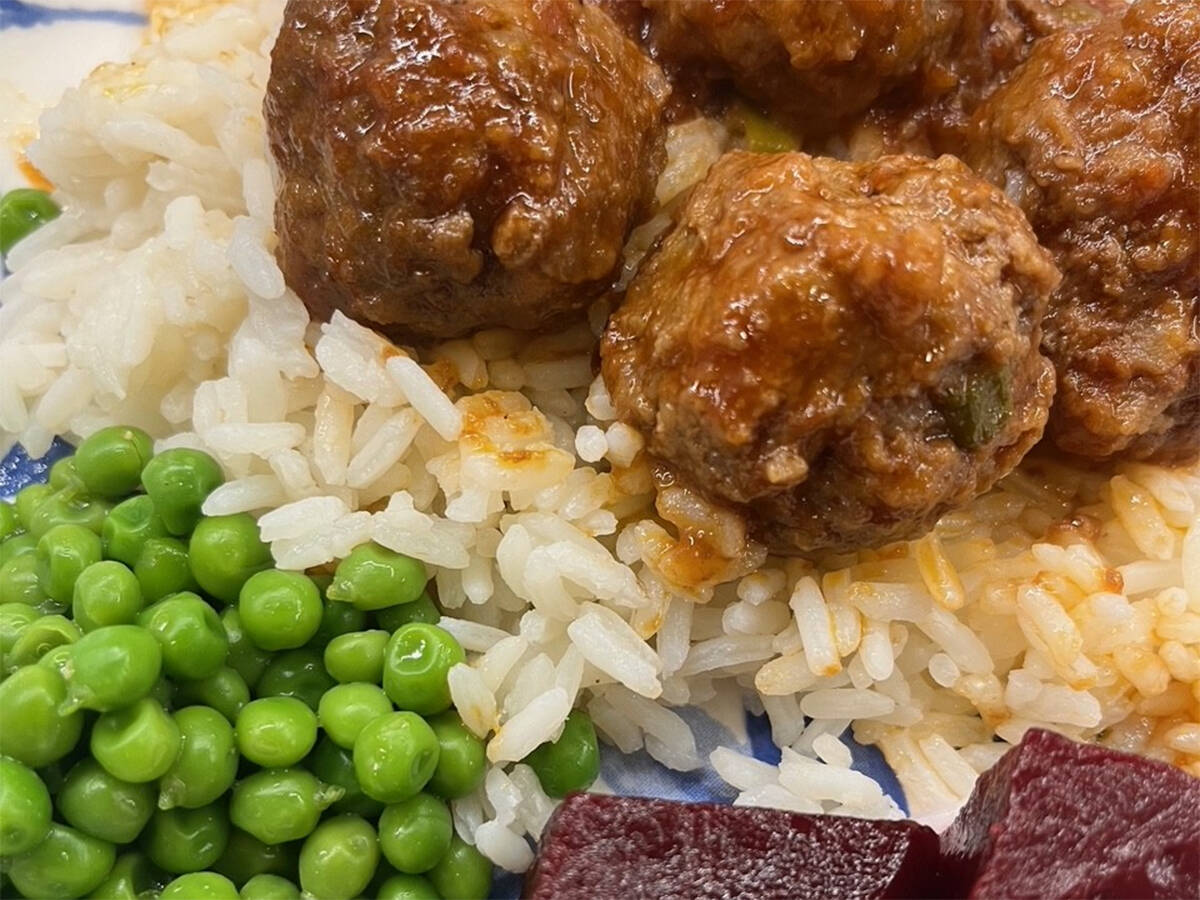
Serves four.
Oven cooked rice
- 1 cup converted rice 250 mL
- 1 3/4 cups boiling water 425 mL
- 2 tbsp. butter 25 mL
- 1 tsp. salt 5 mL
Combine ingredients in a greased 1 1/2 quart (1.5 L) casserole. Stir well and bake covered at 350 F (180 C) for 50 minutes.
Oblong meatballs
This recipe was from Barbara Sanderson’s May 20, 2004, column.
I liked the following recipe because I remember having these when we were kids.
Baby porcupines
- 1 lb. ground round steak 500 g
- 1 cup bread crumbs 250 mL
- 1 egg
- 4 tbsp. chopped onion 60 mL
- salt and pepper
- 1/4 cup raw rice 60 mL
- 1 can (10 oz.) tomato soup 284 mL
- 2 cups boiling water 500 mL
Mix the meat, bread crumbs, egg, chopped onion, salt and pepper.
Shape into round oblong cakes and roll in the uncooked rice.
Heat the tomato soup and water in a Dutch oven. Place the cakes in this mixture and cover. Bring to a simmer and cook about one hour, and serve.
Source: The Farmer’s Wife Cookbook from Martha Engstrom
Cottage cheese stuffed baked potatoes
This recipe comes from Barbara Sanderson’s May 4, 2006, column.
I was looking through some of my daughter Jaime’s cookbooks and was pleased to discover recipes calling for cottage cheese. This was one of them.
- 2 baking potatoes, baked
- 1 cup low-fat cottage cheese 250 mL
- 1 tbsp. chives 15 mL
- 1 tsp. onion powder 5 mL
Bake potatoes in 425 F (220 C) oven for one hour. Cut potatoes in half lengthwise and scoop out insides. Return shell to oven and bake until crisp. Whip potato insides with remaining ingredients and put mixture into potato skins. Return to oven and bake until thoroughly heated. Makes four servings.
Source: The Four Ingredient Cookbooks … As easy as 1,2,3,4 by Linda Coffee and Emily Cale