


Collaborators behind a newly launched agriculture database project hope to make research more accessible, accurate and less isolated.
Results Driven Agriculture Research, which is investing $213,000 into the project, is partnering with Genome Alberta and Genome British Columbia for the development and hopeful June 2026 launch of the Agriculture Metadata Commons web portal.
An RDAR news release explained the current challenges of research data accessibility in Canada and how the Commons stands to address them.
Read Also
Saskatchewan to examine farmland ownership law
The Saskatchewan government has launched a full review of its farmland ownership laws.
“With advances in machine learning and artificial intelligence, we are beginning to unlock a whole other level of insight from large data sets,” it read.
“However, a challenge we face is research data often remains siloed, limiting visibility, collaboration and efficiency across the sector.”
Rather than catalogue the research data itself, the Commons will index metadata, which RDAR describes as “data about data” that in this case pertains to soil, crop and livestock research. In other words, it will act as a directory of the people and institutions to contact when looking for research on a given subject.
The non-profit says this approach will increase awareness of existing research projects and data sets, improve collaboration among researchers and funders, reduce duplication of effort and enable more strategic, outcome-driven investments in new research areas.
The Commons will be based on the Health Metadata Commons system developed by Genome B.C. Although the project is starting with data from Alberta and B.C., Zsuzsanna Hollander, director of data science at Genome B.C., believes the sky’s the limit. Genome Alberta and Genome B.C. are both part of the Genome Canada network.
‘We’re trying to have many different researchers from around the world come and add their projects into the Metadata Commons so that we can realize the value … that it’s an international resource that everybody could look into.
“For us, the idea was that this wouldn’t be just B.C.-based or Alberta-based, even Canada-based. We would really like this to be international as well, because then it would have further value than if we just sort of focus on our own provinces alone.”
RDAR chief executive officer Marc Redmond says scientific research has traditionally been secretive, with researchers preferring to protect their institutions and fields of study rather than collaborate. However, he thinks that model is outdated, “given how the world has expanded.”
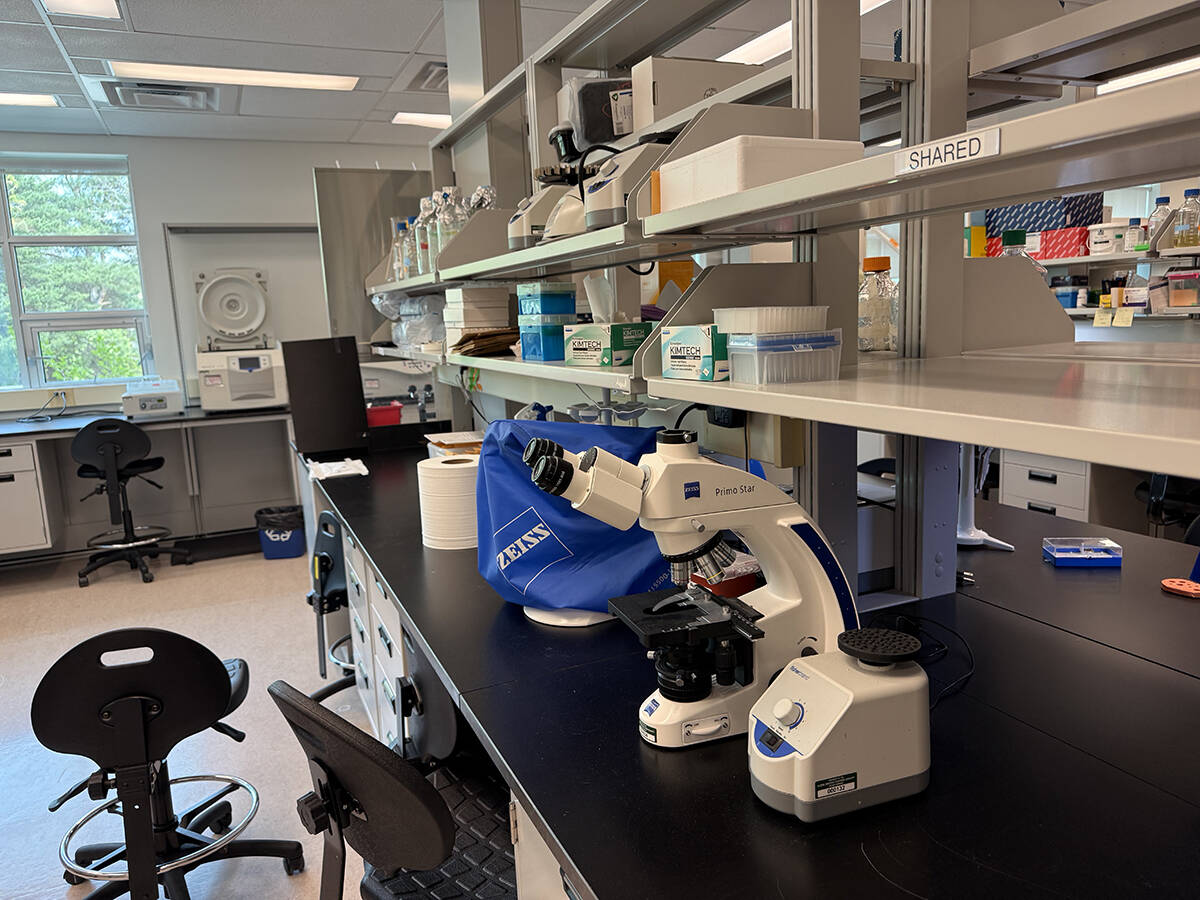
Another goal is to reduce redundancy in the research world, he said.
“It’s led to lost opportunities by the fact that, if I’m a researcher in a specific area and I need somebody who is skilled in, for example, advanced crop breeding, how do I find that person? How do I see the types of work that they’re doing so that I can actually find a match to my own needs and my own interests?”
Tom Finn, innovation manager for Genome Alberta’s agriculture and agri-food sector, would also like to see the Commons become a resource for institutions that fund ag research, a move he says will minimize duplication of funding.
“What we want to be very clear on is that we’re not funding the same efforts over and over again. And so if we have one resource we can all reach into to see if similar projects have been funded previously, then we are not duplicating efforts.”
The database is intended to be almost like a Yellow Pages of existing and in-progress studies related to agriculture, Redmond said.
It will contain data such as names of researchers, their fields of study, their citations as well as links to published academic papers — basically anything that’s already in the public domain, he said.
It will not include proprietary information, but it could be used to connect users with the scientists behind gated research.
”If your laboratory has sequenced a crop or a new virus — the actual data sequence which can be used for developing other crop varieties or developing other vaccines — our data commons won’t contain that information (because) that’s proprietary.
“But the Commons will say that Researcher X at the University of Alberta is working in the field (and) provide the connection to contact the people who actually own the data.”
Some producers may prefer to search for crop and production data with direct takeaways to help them, for example, set up a new cropping practice. The Commons will at some point integrate with the product of another RDAR collaboration, this time with Farm Credit Canada.
Root AI is an artificial intelligence-driven platform unveiled earlier this year. In a Glacier FarmMedia story from this summer, the portal was described as a generative AI tool that will deliver “timely advice (that) producers can use immediately.”
In the story, FCC said the platform will help farmers adopt best practices right from their phones, almost like a virtual extension specialist.
“Root is more than a technology solution, it’s part of a broader effort to bring back something Canadian agriculture has lost: accessible, trusted and timely insight,” Justine Hendricks, FCC president and chief executive officer, wrote in a release.
“With the decline of local advisory networks (extension services), too many farmers and ranchers have had to rely on fragmented information or go at it alone.”
There will be an “intersection” between Root AI and the Commons, said Redmond, who offered an example of what Root AI can do.
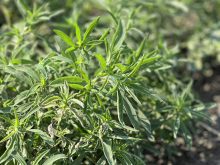
“(If) you put a picture on (the website) that you’ve taken of a weed in your field, Root will tell you, ‘well, that’s kochia.’ (Say) ‘tell me more about kochia’ and he’ll tell you how to control it and who’s working on it.
“That’s where the Metadata Commons is going to come in in terms of, here’s who’s working on it and here’s who can help you.”
We live in an age of misinformation. Artificial intelligence platforms such as ChatGPT “scrape” the internet for answers to user queries, with false information sometimes creeping into the results.
Even in the online academic world, fraudulent papers describing research projects that never existed have the potential to trip up fact-seekers.
So how do tools like the Metadata Commons and Root AI avoid those pitfalls? By relying on peer-reviewed data shared between trusted scientists and institutions, said Redmond.
“What’s in our databases has been assessed. It’s been checked for accuracy so it’s very much fact-based, and if it doesn’t know something, it will return no information available to you, or no information available at this time to you.”
That’s not to say fraudulent data is incapable of slipping into the Metadata Commons and Root AI, but Redmond said the chances are highly unlikely, perhaps only 0.01 per cent likely.
“The projects and genomes we’re loading into the system have been part of a longer-term scientific or agricultural endeavour. We’ve got a long-term relationship with the people performing the work, so we know that they’re for real, whether they’re in Alberta Grains or if they’re at the University of Alberta, we know who they are.
“It’s curated. We’re not just accepting blanket submissions from the world through the data entry portal. We actually validate it and assess the validity of what’s being published.”
Modeled after health commons
Openly shared data carries economic, social and environmental benefits, said Hollander, and that desire to share data more openly drove Genome B.C.’s inaugural repository: the Health Metadata Commons.
“That’s mainly because a lot of the funds that we provide for researchers is in the health space,” said Hollander, who has more than 15 years in the field of health research.
“The success of that then led to us wanting to expand, and that’s when we started to collaborate with Genome Alberta, who came to us and they were interested in building something similar in the agriculture space.
“So we joined forces, and we’ve been working on it for several months now, so that the benefits could be also transferred into agriculture and we could help researchers in that sector as well.”
Connecting groups has been a driving goal behind RDAR since its inception, and this Commons project is no exception, said Redmond.
“Competition, really, in the past, I think, has hindered people wanting to collaborate. And from our perspective, you have to collaborate because that’s the way we’re going to deliver timely results.”
Genome B.C.’s Health Metadata Commons can be found at metadatacommons.ca, while Root AI is at www.fcc-fac.ca/en/resources/root-ai.