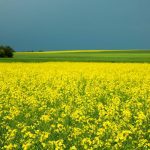

New research has found that prairie farmers can increase yields by moving soil from the bottom of a slope to the top of a knoll. “Farmers have been doing this for hundreds of years because they know this is what you have to do if you have a lot of severe erosion,” said David Lobb, […] Read more

Robert Arnason


Stories by Robert Arnason
Feds offer subsidy to ethanol makers
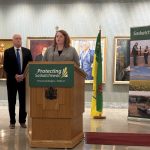
Minnedosa, Man. – The federal government promises to spend $1.5 billion over the next nine years to increase the supply of biofuel in Canada, announced Vic Toews, president of the Treasury Board. The $1.5 billion will cover the cost of a 10 cent per litre subsidy for ethanol producers, like Husky Energy, and a 20 […] Read more
Hay prices on Prairies near record
Hay prices usually increase slightly during summer because buyers are anxious to get their hands on what may be a limited resource. Alberta Agriculture beef specialist Ken Ziegler said the price bump tends to settle back down in autumn when it’s evident that overall hay supplies are sufficient. However, 2009 is not a typical year. […] Read more
Feed price may force herd selloff
Given the extensive drought in Alberta this summer and hay selling for five to six cents per pound, a casual observer would likely compare this summer to 2002. The weather was extremely dry that year and feed prices soared. However, there is one significant difference in 2009, said Ken Ziegler, a beef specialist with Alberta […] Read more
Disease resistance breeding slow process
Instant gratification is not part of the job description for plant breeders. For example, breeders at Agriculture Canada initiated a project in 2003 to develop cultivars with resistance to anthracnose and common bacterial blight (CBB), two major seed borne diseases in dry beans. Six years later the project is closer to completion but breeders must […] Read more
CWB downgrades crop prospects
The Canadian Wheat Board has further lowered its projections for this year’s wheat crop, due to cool temperatures and drought across a large chunk of the Prairies. During its end of the crop year review July 30 in Winnipeg, Ian White, the CWB’s chief executive officer, forecast that western Canadian farmers would produce 20.2 million […] Read more
There’s a spider in the pumpkin patch
Marquette, Man. – It’s difficult to drive past Mike Ganczar’s pumpkin farm without slowing for a second or third look. That’s because Ganczar cultivates seven acres of pumpkins with an Allis Chalmers Model G, an orange tractor that resembles a large, mechanical spider. The Model G prompts a double take because it has a rear-mounted […] Read more
Anthracnose spore tests surprise agronomist
Dry bean producers have long been told to stay out of fields when plants are wet because anthracnose spores are more likely to spread in damp conditions. But research conducted last summer has an Ontario scientist questioning that advice. Chris Gillard, a professor at the University of Guelph’s Ridgetown, Ont., campus, is looking at best […] Read more
How a weather pattern stole summer
For most of Manitoba and Saskatchewan, 2009 is becoming known as the year without a summer. Cool temperatures have prevailed on the eastern Prairies, resulting in the coolest June and July since 1993, said David Phillips, senior climatologist for Environment Canada. Using temperatures at Yorkton as an example, Phillips said the average daily high for […] Read more
There’s a spider in the pumpkin patch
Marquette, Man. – It’s difficult to drive past Mike Ganczar’s pumpkin farm without slowing for a second or third look. That’s because Ganczar cultivates seven acres of pumpkins with an Allis Chalmers Model G, an orange tractor that resembles a large, mechanical spider. The Model G prompts a double take because it has a rear-mounted […] Read more