


Glacier FarmMedia – Modern planters are a sophisticated piece of technology, but they all have common mechanical wear points growers should examine before hitting the field.
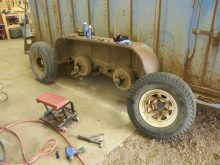
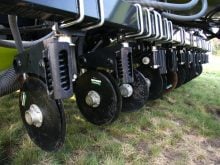
“I’m hoping that you would have had your planter in the shop over winter … and you would have done your inspections on gauge wheel arms, gauge wheels, things like that,” said Eric Bossuyt, account manager with AgWest in Russell, Man.
Ideally, storing a planter in a shop makes inspections easier and keeps it out of the weather, but that’s not always possible.
Read Also
Take time this spring for a tractor checkup
Tractor downtime is not only expensive but a roadblock to producers seeking an optimum crop, says Derek Reusser, product manager with Massey Ferguson.
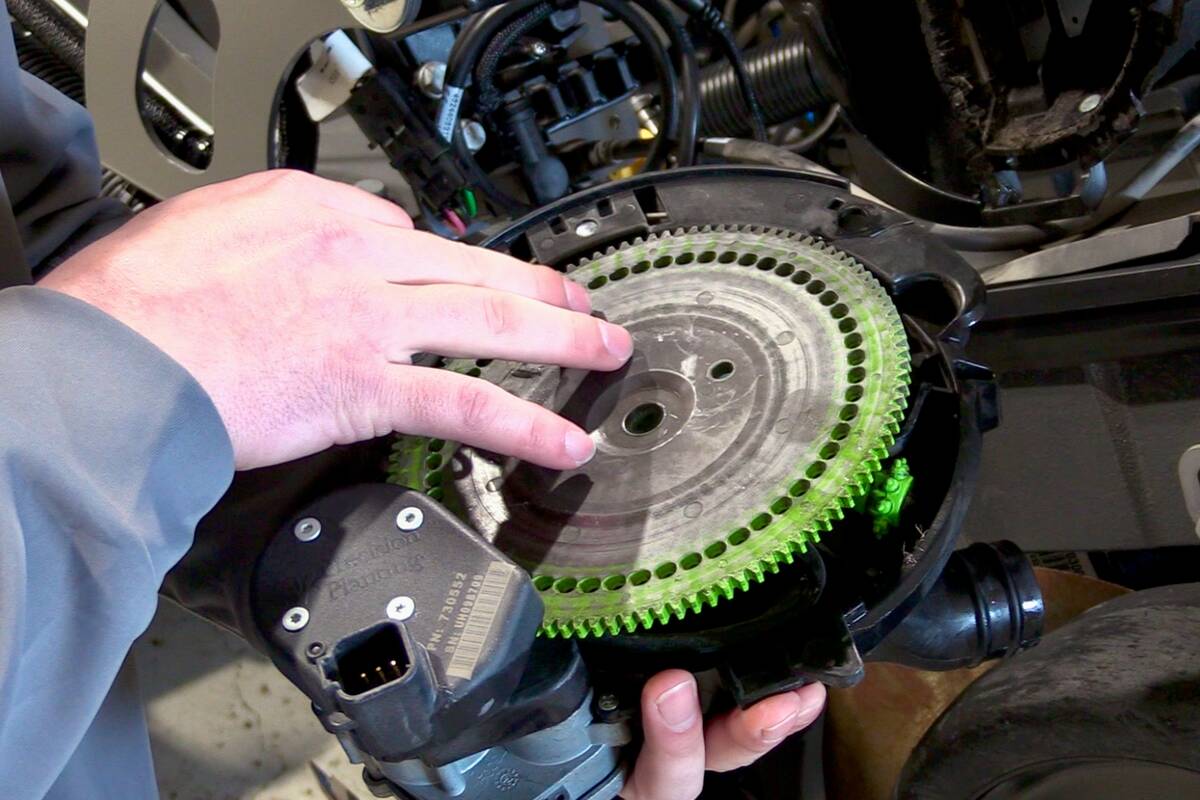
Bossuyt added that operators should also inspect meter units to make sure seals are intact. Adding some graphite lube to the seed disc while they’re in there also helps to keep them spinning smoothly.
Hose connections should be given a close look to make sure they are secure and that no splits have occurred while in storage, especially if the planter was stored outside.
Bossuyt said ultraviolet light weakens plastic hoses over time when exposed to the sun and can lead to holes, resulting in vacuum loss within the system.
Preparing for downtime
No matter how well prepared you may be when planting season begins, malfunctions or breakdowns can happen in the blink of an eye.
Bossuyt said that a common trouble spot for growers at planting season is poor singulation.
This is often caused by a hole in a hose causing vacuum loss or worn internal parts on the meters themselves, whether your doubles eliminator is worn or the seed disc is having some issues if it’s too tight.”
“Maybe you’re getting surging with the V-drive. Stuff like that can cause missed singulation.”
It may end up being as simple as a misplaced wire or poor contact point, but it’s better to protect your seeding time in the field and check components later.
“That’s going to cause you downtime to try and diagnose what’s going on in the field,” added Bossuyt.
To prepare for these situations, he recommended having at least one spare row for the row unit to swap out individual parts if they malfunction.
“Every module, you should have one spare. That way, you’re not running to the dealership for one little finicky module,” said Bossuyt.
It’s easier to do a quick swap to keep running and the producer can always check on it later if the part is dead or if a contact point wasn’t connecting properly.
Bossuyt also said operators should check their on and off times every season to avoid misses in the field.
These can be caused by technology changes, such as a guidance system, which can lead to poor communication between equipment.
“The hertz might change and you might have frequency issues” said Bossuyt.
Getting started, setups
Before hitting the field, a test run closer to home is always a good idea in case a repair or a part swap-out is needed.
“Pull out the planter and simulate planting,” said Bossuyt.
“Run a few seeds out in the yard, fill it up, do whatever. You just want to make sure all your sensors are working, all your meters are running.”
Bossuyt said this is also a good time to check singulation and GPS timing and to ensure the on and offs are operating as intended.
Any fine tuning can be done in the field once you’ve confirmed everything is in good working order.
Ensuring good seed-to-soil contact should also be done once you’re in the field.
Bossuyt said the biggest thing equipment operators can do in this instance is to get out of the tractor cab.
“Not everybody wants to hear that, but we’ve got to get out,” said Bossuyt,
“We’ve got to be checking if the sun’s beating down and soil is drying up. We might need to adjust our depth or adjust our closing pressure, things like that.”