
CAMROSE — Steve Kenyon bought his first drone to record aerial video for his Greener Pastures Ranching YouTube and Facebook account.
“I wanted to get drones for social media for promotions and marketing. It was pretty useful. It made for some cool videos,” Kenyon told the recent Canadian Agricultural Drone Association conference.
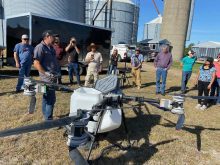
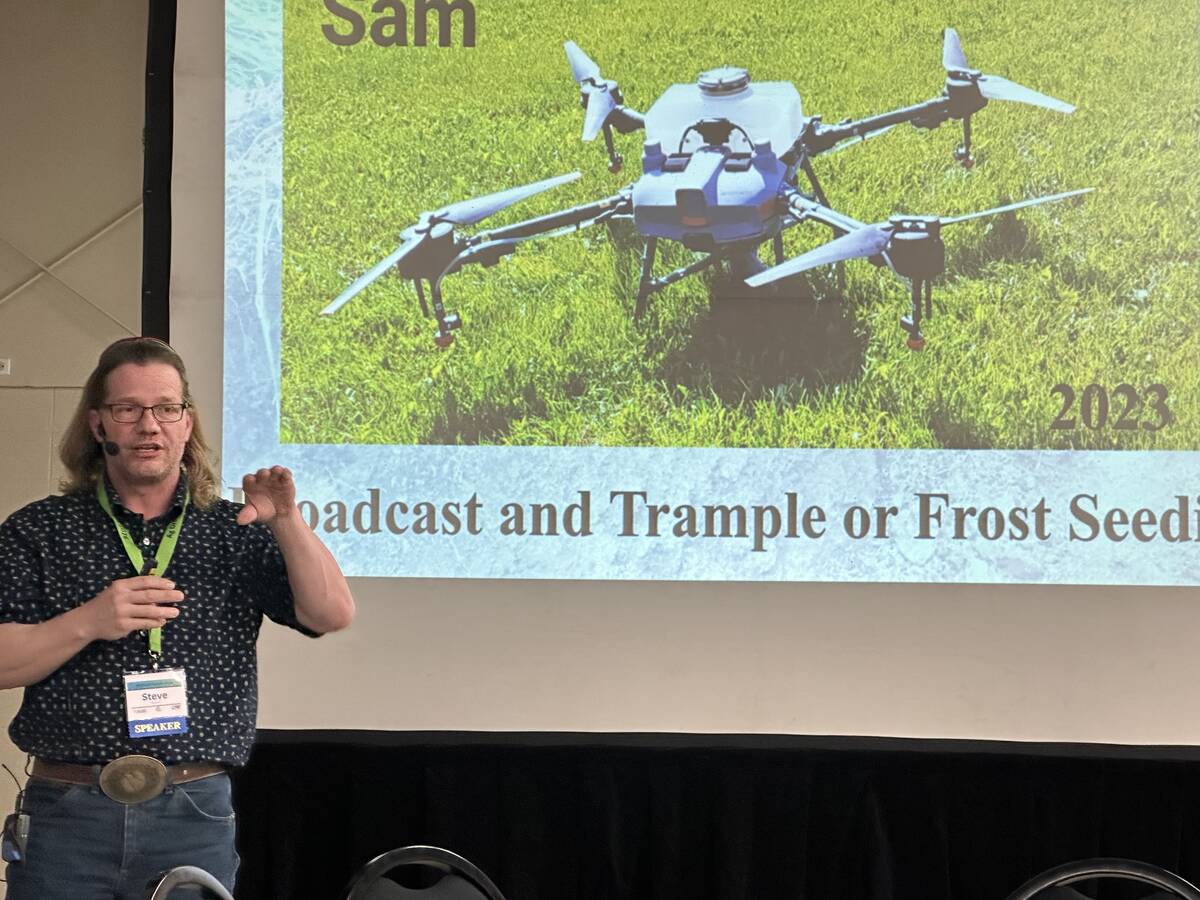
He found the DJI Mini Pro 3, a lightweight, foldable camera drone, so useful he bought a second, larger drone to seed pastures to help pasture rejuvenation.
Read Also
What producers want to see in agriculture’s Next Policy Framework
Stakeholder engagement for the Next Policy Framework is now underway, and many aspects of the agriculture industry want their say.
“I don’t like new equipment, yet I still have two drones,” he told the group from across Canada gathered to learn more about drones and their uses.
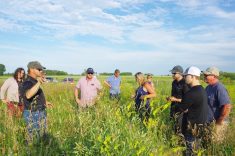
While the initial drone was purchased to fly over his pastures and livestock to take pictures and video to show how he manages his grazing systems, he found it helpful to check livestock, fences, waterers and gates.
“I have very rough pastures. Driving out there in vehicles is pretty bumpy. The drones are really handy to check pastures and water systems. I can even tell when a herd needs to move. We rotate every couple days. I can tell the difference in colour where the fence lines are.”
Kenyon uses a heavy electric bungy cord as gates and can even tell from the air if the gates are closed.
“I am pretty happy with my 3. It does most of the things I need.”
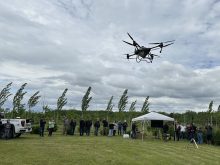
In 2023, Kenyon bought a DJI Agras T-10 drone for seeding pastures from the air and has since spread seed on thousands of acres with the small drone for himself and customers.
“I am not very good with technology. I am the guy who asks his kids how to use my phone.”
Adding seed from the air is efficient and can add new seed varieties in the hard-to-reach parts of a pasture, but it is only one part of the grazing system, he told the group.
“I am a terrible salesman. I tell them, ‘If you are not going to change your grazing, don’t bother seeding because you are wasting your money.’ ”
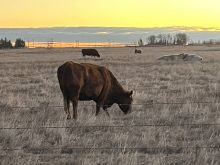
Kenyon uses the footprints of cattle to punch the seed into the pasture to help establish the new seeds while rotating the cattle through the paddocks.
“I practice regenerative agriculture. My way of thinking is growing soil from the plants. The plants are a tool to grow soil; then we get the biology and get a perpetual fertility system,” he said.
“It all works together. You can’t just add seed. You can’t just have cows out there. We need the combination of everything working together. I am trying to build ecosystems. The cow is a keystone species in a grazing environment.”