

When new policy is on the table, everyone wants their voices heard.
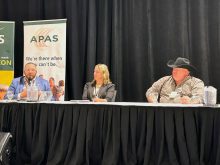
At last month’s Agricultural Producers Association of Saskatchewan Policy Summit, various industry heads brought forward ideas that they wanted producers to consider for the agriculture sector’s Next Policy Framework.
University of Saskatchewan agricultural economist Richard Gray says now is the time for producers to speak up and have a voice for the NPF.
Read Also
Croptimistic’s SWAT Cam maps one million acres in Western Canada
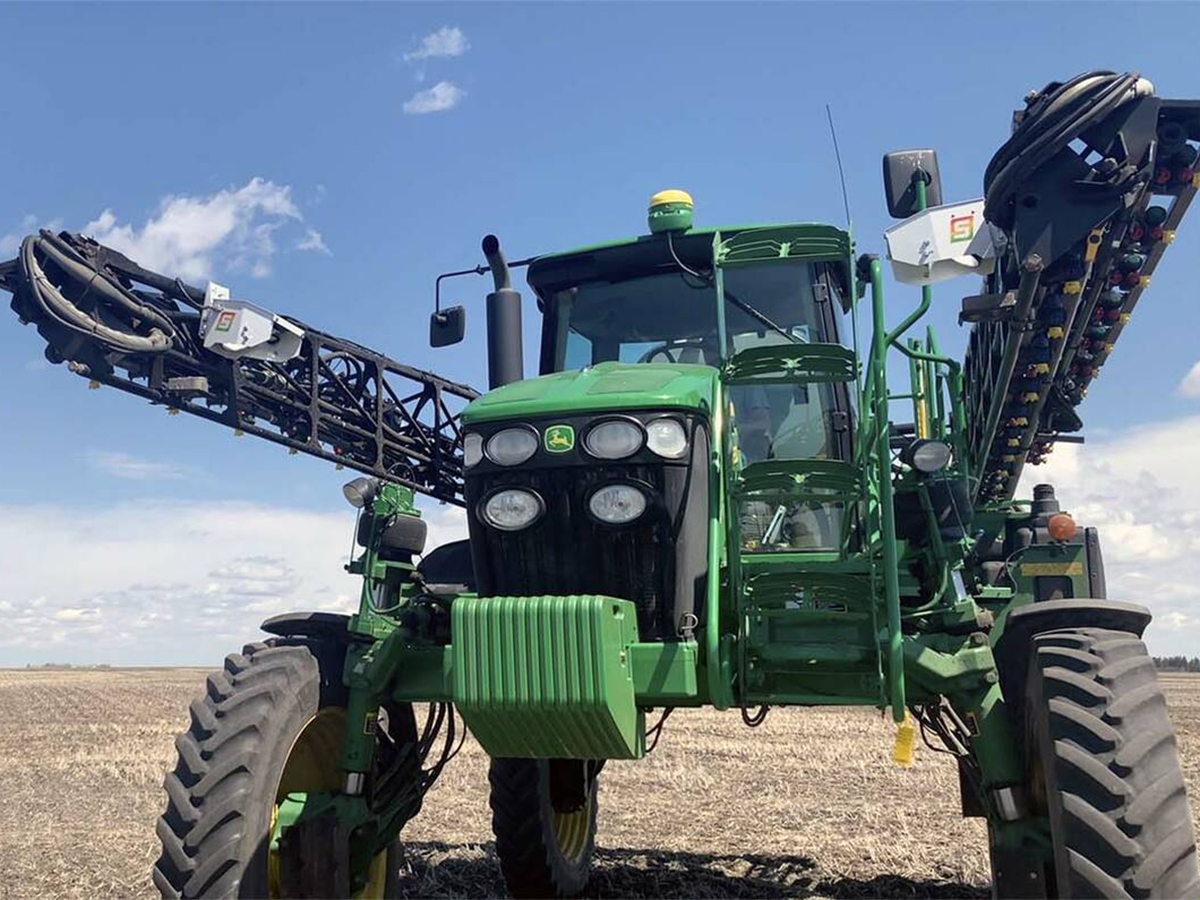
Croptimistic’s SWAT Cam has mapped more than one million acres, using sprayer-mounted cameras to generate crop and weed maps that support in-season analysis and future management decisions.
“Both as an economist and a producer, I think it’s important to think about agricultural research,” he said.
“And my conclusion is that it’s in the producers’ interest and in the national interest to do some reallocation within the agricultural policy framework.”
Gray said there needs to be a rebalancing of business risk management tools such as AgriStability and AgriRecovery because they were set up in a very different economic environment than present day. As a result, BRMs aren’t enhancing productivity in the way governments would like.
It’s not that BRMs need to disappear, he said. They have a purpose, but they need to be reassessed.
“They’re investing their money in BRMs, and I think that’s partly because of the structure of the NPF,” Gray said.
“You get together, what do you discuss? Well, what we funded last time, and you continue to fund what you did last time, rather than really look at rebalancing it seriously.”
He suggests reducing government support in crop insurance and other BRMs and investing the “saved” dollars into crop research. Another option would be to take the money from AgriInvest and match it to producer levies rather than producer savings accounts.
The latter suggestion is based off a model used in Australia, where industry provides a large amount of money that’s then matched by the federal government. It provides an advantage to producers by giving them a larger voice in research.
“And that would attract in producer money, more private money, into research that then they can use to support all sorts of other research activities in a way that benefits producers,” he said.
Gray also encouraged the growth of research and re-establishing breeding programs to their previous size because increased data can increase productivity when the information is put into farmers’ hands.
Trade and food security
Productivity growth is also on the mind of Pierre Petelle, president and chief executive officer at CropLife Canada, who wants to see more focus on agricultural economic influences and food security.
He said Canadian governments need to realize the power that agriculture has and how that could grow with the establishment of a food security strategy.
“We (CropLife) are trying to remind them that food security, whether it’s Canadian food security or global food security, as a major food exporter … has to include fair rules for trade,” Petelle said.
“(It) has to include a regulatory structure that invites innovation here in Canada and investment here.”
He believes that in the NPF, there should be an effort to increase value-add processing and reform of regulatory structures that hamper the development of the processing industry.
“Part of that would be better access, more access to innovations (from) small and large companies, and make sure that our export channels are predictable and fair, and that the Canadian government plays that role,” he added.
Additional considerations have to be made for trade and decisions on crop technology, genetics and agronomic products with potential changes on the international level, such as the Canada-United States-Mexico Agreement and the European Union’s mirror clauses.
Transportation industry
Eric Harvey, president and chief executive officer of the Railway Association of Canada, said that when it comes to trade, food security and productivity, a consideration has to be made for transportation.
Harvey, who is in his first year in this role, said he has started the Moving Economies Coalition, which includes the Canadian Federation of Agriculture, which aims to “level the playing field” with the United States.
The goal is to unlock private sector investment with investment tax credits because of the increase in shipping agricultural products by rail. RAC data shows that the agriculture industry’s value as a rail customer has significantly increased.
“Railways have been moving essentially 50 per cent more grain than what the order was in 2014, all of this without any regulatory intervention,” Harvey said.
“And the reason for that is, first, generally speaking, the ag community has been performing better than the Canadian economy.”
He said agriculture has helped the railway sector increase and update its capacities and equipment for better performance and higher grain movement.
Harvey sees the betterment of agriculture as a win for rail, and said the two industries have common interests in regulatory areas such as trade, labour stability, supply chain investment and policy changes.
He urged producers to consider their needs from a supply chain persepctive for the NPF, particularly when it comes to improving efficiency and sovereignty. For example, in order to turn away from U.S. shipping routes, east-bound railway capacity in Canada would need to increase because western Canadian ports are limited.
“On the east side, I’m comfortable saying that you’ve got lots of capacity. (There’s) many ports and the rail networks east of Montreal essentially have available capacity,” he said.
There’s also a need to diversify markets and transportation traffic to enable greater capacity.
Harvey also encouraged producers to ask for an improved relationship with railways and grain contractors, saying there is a lack of connection that results in misunderstandings.
More transparent information is important in order to improve policy and supply chains, such as costs and margins. Railway data is available, including weekly traffic, grain movement and and prices, but with grain contractors, it’s a bit more unclear.
“That’s my view of the matter because for now, what we know is that Canadian railways have complied with the MRE (maximum revenue entitlement) since 2000,” Harvey said.
“And then others that we’re contracting with give whatever offer they give you. And this is not for me to comment on that, but this is the hard reality.”