

A University of Saskatchewan research team says a potential new vaccine to fight bovine tuberculosis – a contagious bacterial disease of cattle and some wild animals — is effective enough to move on to the next step: testing its efficacy in cows.
The vaccine, dubbed MSX-1, was engineered by the university’s Vaccine and Infectious Disease Organization (VIDO) with proteins found in bovine TB-producing bacteria.
The organization’s most recent round of MSX-1 studies in mice proved successful, with the vaccine reducing disease bacteria in their lungs and spleens. It also minimized weight loss and overall lethality caused by bovine TB.
Read Also
Canada regains Colombia as malt barley buyer
Colombia bought a substantial amount of Canadian malting barley in 2025 for the first time in about a decade.
Why it Matters: Bovine tuberculosis is a reportable disease of cattle that often prompts herd depopulation when found on dairy and beef operations.
Part of the project involved assessing a highly virulent laboratory strain of bovine TB used in a previous study where mice were also used as subjects.
Although MX-1 wasn’t 100 per cent effective against the strain, which was much more virulent than the strains found on cattle operations — it proved successful enough to warrant testing in live cattle.
That conclusion was based on the low likelihood of the vaccine encountering comparatively strong bTB strains in a farm environment.
Because MX-1 sported an 80 per cent success rate against the lab strain, the investigators decided it should have no problems tackling the milder forms of bovine TB found in the cattle barn.
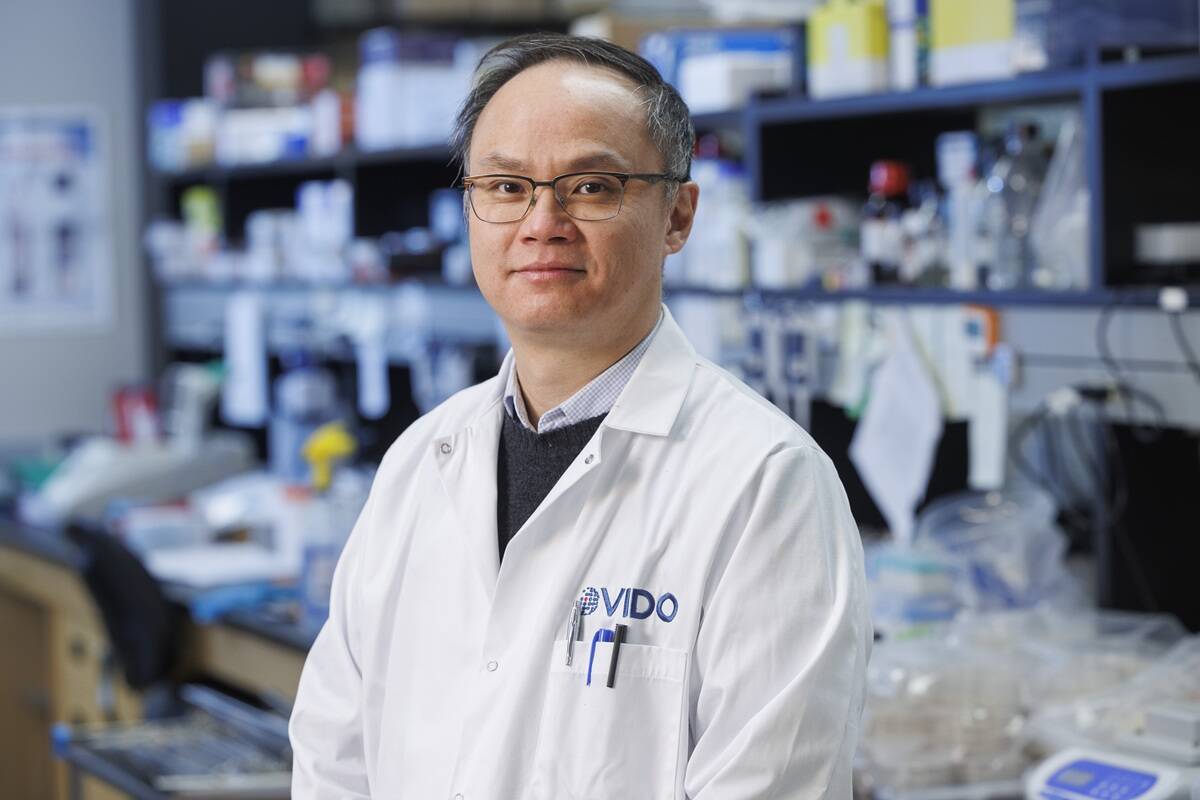
The next step, says principal investigator Jeffrey Chen, is to isolate the common strains of bovine TB and test the vaccine against them in cattle.
“If we are successful, I’m proud to say that this will be a homegrown first in Canada: a Canadian-made bovine TB vaccine,” he says.
“There is no licensed bovine TB vaccine, per se, that is already available. So if we are successful at gaining regulatory approval and finding a commercial partner to license to develop into a commercial vaccine, we will be the first in the world to actually get something like that to the market.
“It will be an incredibly proud day for Saskatchewan (and) for Canada, of course, and it will be the highlight of my research career.”
There has a been slow but steady series of detections of bovine TB in herds across the Prairies since 2023, with incidents in Alberta, Saskatchewan and Manotoba.
Because herd depopulation is Canadian Food Inspection Agency protocol in the event of a bovineTB discovery, producer compensation has become a hot button issue. In response, the federal government recently extended a tax deferral period for livestock producers affected by bovine tuberculosis in 2024 and 2025.
Promising results
The initial, proof-of-concept trial saw the VIDO team testing two vaccines: MX1 and Bacillus Calmette Guérin (BCG), a long-used treatment for managing tuberculosis in humans.
Both vaccines helped mitigate the bacterial infection in lab mice but their respective strengths were different.
Although 100 per cent of the mice exposed to BCG survived, the vaccine continued to exhibit the same trait that’s kept it from becoming a feasible bovine TB treatment for livestock. BCG interferes with the tuberculin skin test that allows the disease to be detected, in the process creating several false positives.
Meanwhile, MX-1 protected only 80 per cent of the mice from the highly virulent bovine TB sample but did not compromise the accuracy of the tuberculin test.
“The BCG vaccine is not compatible with the diagnostic tests for bovine TB in livestock, in the sense that if you vaccinate cattle with BCG down the road, if they do get infected, you will not be able to distinguish between whether they were vaccinated or they’ve actually gotten infected with the disease-causing bacteria,” said Chen shortly after the study’s publication.
Safety a primary concern
Now that the VIDO team knows MX-1 works, the next step is figuring out why it works for the sake of efficacy and regulatory approval down the road. This will necessitate a parallel study concurrent with the cattle trials, says Chen.
The latter study will involve the laborious task of working from the immune system out to untangle the mechanism or route by which MX-1 protects the host animal.
“We have to define its safety because in the vaccine business, there are two very important things that one needs to meet: efficacy, showing that it will work. And two, that it’s absolutely safe. This is paramount, considering that we’re going to be vaccinating animals that will enter the food chain,” he said.
On the production side, the researchers need to prove it can’t affect animal growth.
“If it’s beef cattle, (they have) to put on the weight that our normal, healthy animal would. It would not have any adverse effects.”
So how long will producers have to wait before a vaccine is available if the cattle trial is successful?
Chen’s most optimistic, although admittedly unlikely, timeline is three years. A more realistic scenario would be five to 10 years depending largely on how long it takes to receive regulatory approval from the CFIA.
People sometimes get the wrong impression about how long it takes for a vaccine to come to market based on the quick turnover involved in the development of COVID-19 vaccines, says Chen.
However, that involved the co-operation of scientists from all over the world working night and day for several months. The search for a bovine TB solution lacks that same urgency.
“This is slightly different in that this is bovine TB, a disease that’s been there for a while now. There are already programs in place to control it but not necessarily eliminate it.”
However, there is a possibility of doing just that, he says.
“I would argue that a vaccine for bovine TB has the potential to actually lead to its elimination.”
With around $500,000 in funding from Saskatchewan Agriculture, the cattle research component is covered financially, notes Chen. However, the added expense of performing the mechanism testing will require extra.
The VIDO team is already reaching out to a range of agriculture interests to promote the value of investing in the program. Chen is optimistic on this point, acknowledging the support they received from the Beef Cattle Research Council for the project’s proof-of-concept component.
“We are grateful for that initial kick-start, so to speak. They took a big chance. They took a big risk. They had the confidence in our concept and actually allowed us to generate that proof of principle data that now allows us to leverage that and get more funding to actually test cattle.”