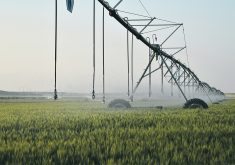

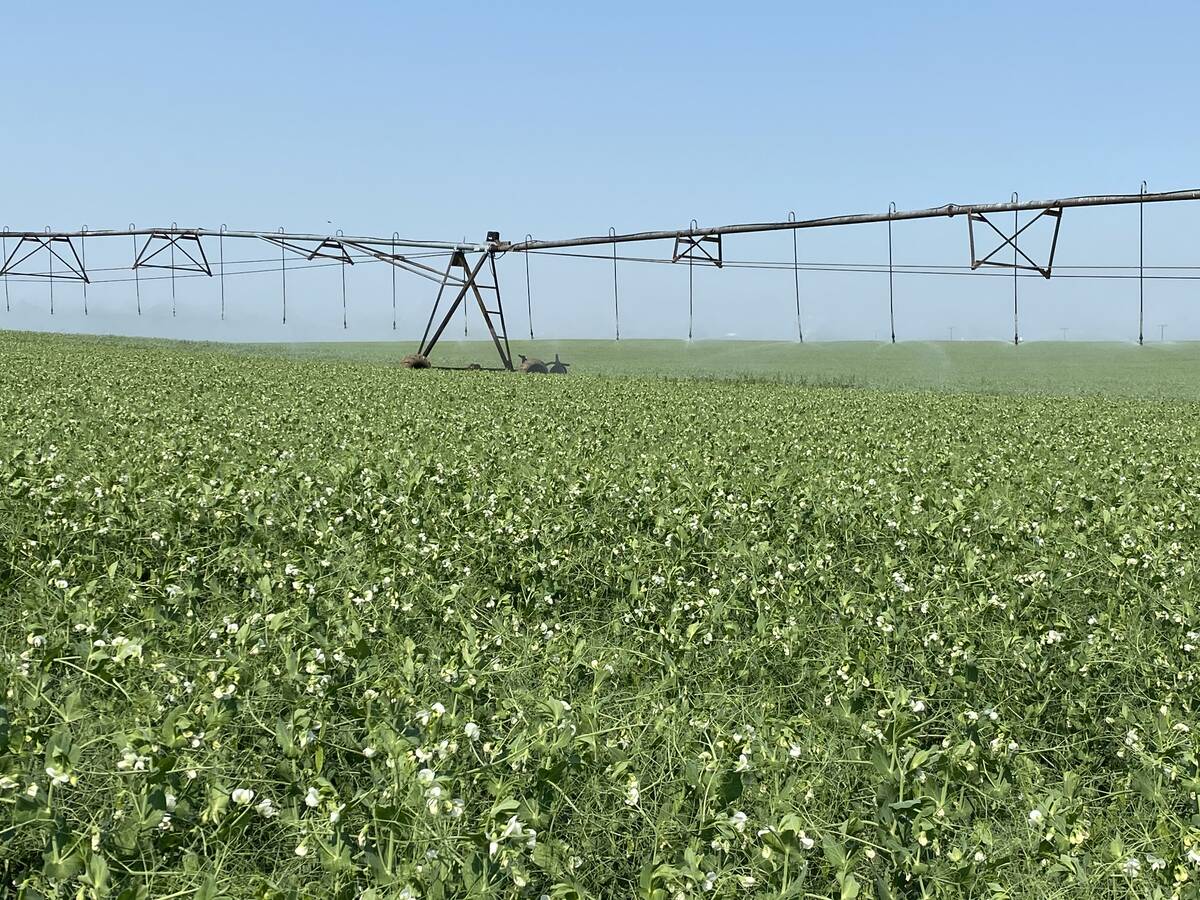
Irrigation has been essential to the development of agriculture in Western Canada.
It’s unlocked higher yields and facilitated diversification into more valuable crops.
Rising production and high-value diversification have supported billions of dollars of investment in value-added manufacturing. In the past five years alone, Saskatchewan has added nearly 100,000 acres of irrigation, reaching a total of 450,000 irrigated acres.
Read Also
These input cost strategies are worth farmers’ consideration
While nitrogen fertilizer and diesel fuel are the big-ticket items getting the most attention, the cost increases will extend much further.
That said, irrigation and its potential benefits are tied to geography.
The more productive the dryland, the more complex the infrastructure, the smaller the incremental benefit and higher the associated cost.
On the numbers, the Government of Saskatchewan’s $950 million Westside Irrigation Rehabilitation Project makes no sense for the taxpayers who are being asked to support it.
When Alberta began major expansions of irrigation in the 1930s, dryland wheat yields averaged 10.6 bushels per acre.
According to the Saskatchewan government, dryland wheat yields in the WIRP region currently sit at 40 bu. and would rise to 85 bu. with irrigation.
While not exclusively the result of irrigation, the incremental gain in wheat yields from when infrastructure was built in Alberta is nearly four times higher than the increment that the WIRP can achieve today.
The project also requires unique infrastructure, with 1,400 kilometres of pipe and some of Western Canada’s largest pumps.
While these pipes and pumps are better for producers in terms of flow rates and evaporation, the infrastructure is far more expensive to build and maintain compared to previous projects that relied on gravity-fed canals.
The province’s Water Security Agency recently released a report touting a $12.9 billion nationwide gross domestic product gain from the project. The majority of this comes from food manufacturing.
Based on the projected crop mix, which includes diversification into high-value black beans and potatoes, crop and animal receipts would rise by $128.4 million, representing less than one per cent of Saskatchewan’s total farm cash receipts.
In contrast, food manufacturing receipts are said to rise by nearly six per cent.
The report reaches this figure by analyzing a single year of data to estimate the relationship between irrigated acres and food manufacturing sales.
The conclusion was that no strong statistical relationship exists between food manufacturing and irrigated acres.
On page 26 of the report, the authors state that the per-acre relationship between irrigation and food manufacturing produced by their model could not be considered a “precise return.” They go on to say that the relationship should not be treated as a forecast.
Despite these findings, the GDP gains from food manufacturing are based on that unreliable statistical model. Food manufacturers are directly concerned with the volume and availability of crop production rather than production methods.
A better model would be based on farm cash receipts.
Using the past 30 years of farm cash and food manufacturing receipts in Saskatchewan, a model with a statistically strong relationship, the probability that food manufacturing sales rise by more than 14 per cent of what the government claims is virtually zero.
Without the level of food manufacturing investment that the government projects, taxpayers, including 99 per cent of Saskatchewan’s producers, face a loss of as much as $675 million, excluding interest on provincial debt.
This is not to say that other taxpayer-supported irrigation expansions would not make sense themselves.
While the full assessment is not public, figures released on the 48,000 acre Luck Lake expansion indicate a per-acre incremental gain in GDP, without counting livestock, land values and food manufacturing, at nearly 90 per cent of the total that the government projects for the WIRP.
Taxpayers deserve the highest value for their hard-earned dollars. While other irrigation projects could deliver that value, the WIRP will not.
Ty Thiessen is a University of Saskatchewan student researching methods of government finance and economic development.